
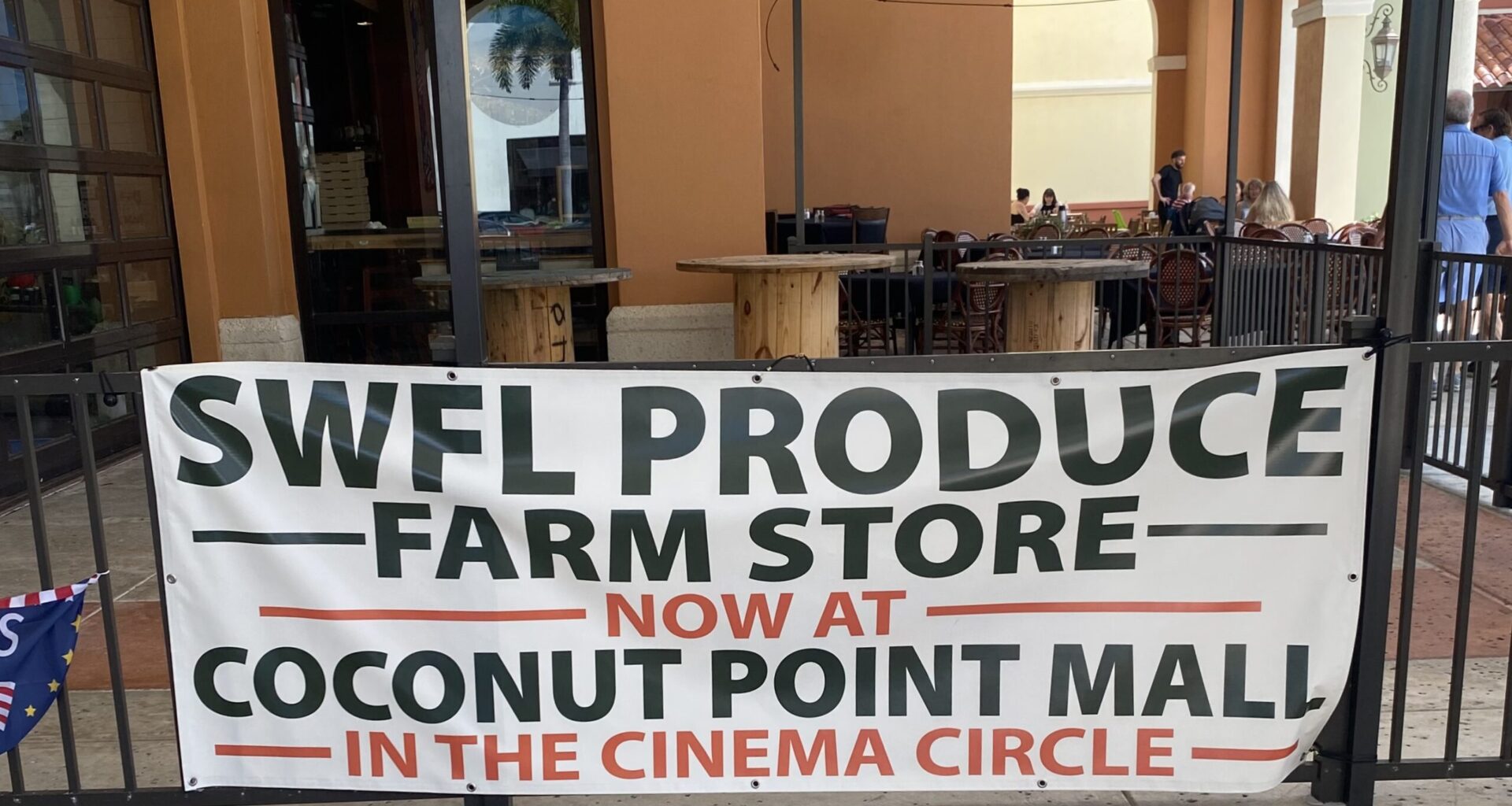
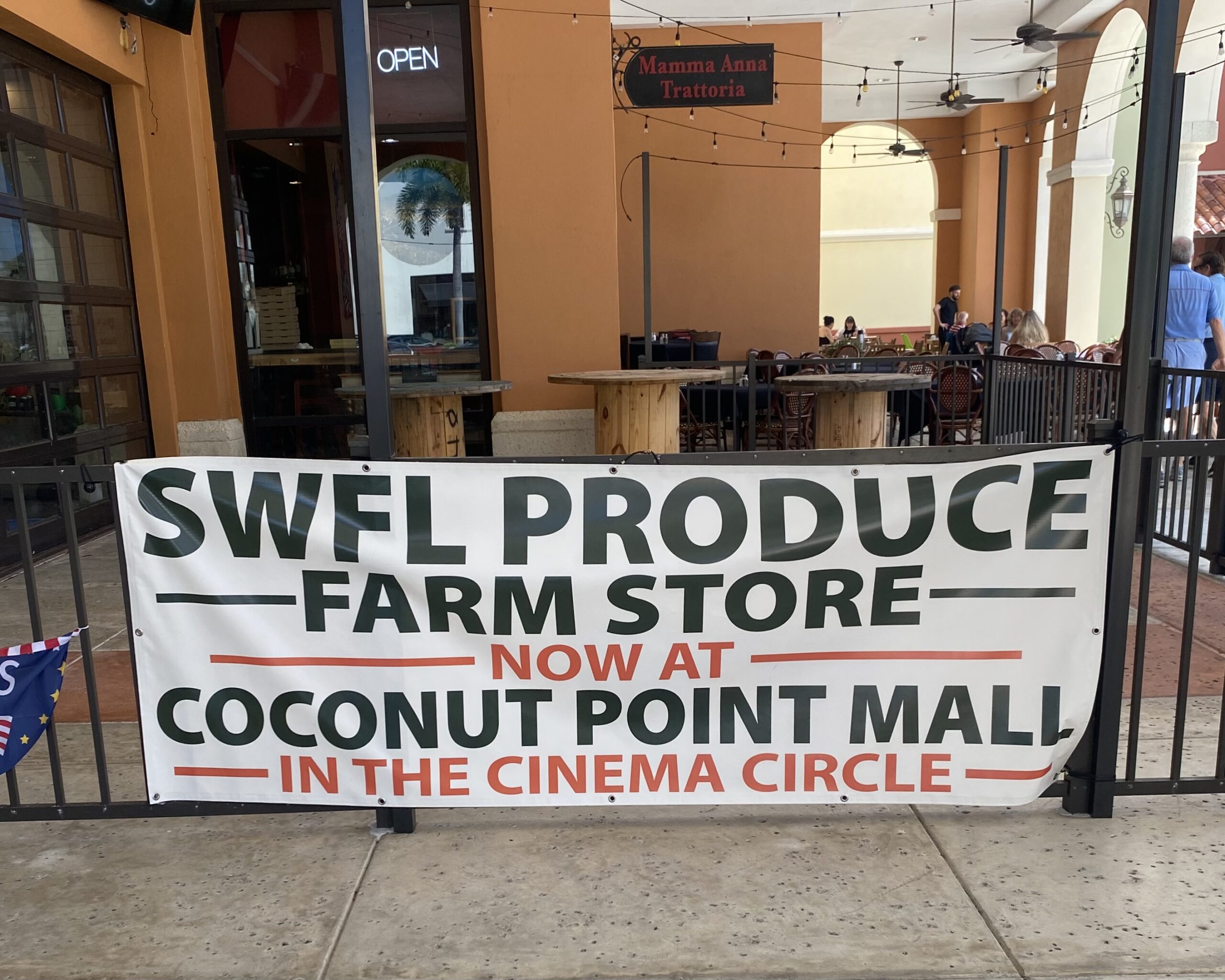
A sign outside the SWFL Produce Farm Store announces the store’s opening at Coconut Point. -BLANCA SANTIAGO / FLORIDA WEEKLY
Walk into SWFL Produce Farm Store at Coconut Point and you might leave with more than you expected.
Maybe it’s a basket of blueberries picked fresh that morning. Maybe it’s a Jersey tomato that reminds a shopper of home. Maybe it’s a pink pineapple or a loaf of locally made blueberry banana bread.
And that’s kind of the point.
The store, which opened at Coconut Point on July 1, is trying to make buying local food less of a weekend activity and more of an everyday option for Southwest Florida residents.
Owner Elizabeth Etnoyer has spent over a decade connecting local farms with Southwest Florida consumers. SWFL Produce started as a small co-op run out of her garage, eventually growing into the storefront at Coconut Point.
But the reason she started it came down to a problem she saw among local farmers: They were growing the food, but getting it into consumers’ hands was another story.
“Farms, they grow the stuff, but then the farms can’t really take it to the farmers market because you have to pay insurance. You also have to pay rent, vehicles, and staff, and all that,” Etnoyer said.
At the same time, many small farms aren’t large enough to supply a grocery chain like Publix, while expecting individual customers to drive out to farms scattered throughout Southwest Florida isn’t exactly convenient.
A middle ground for farmers
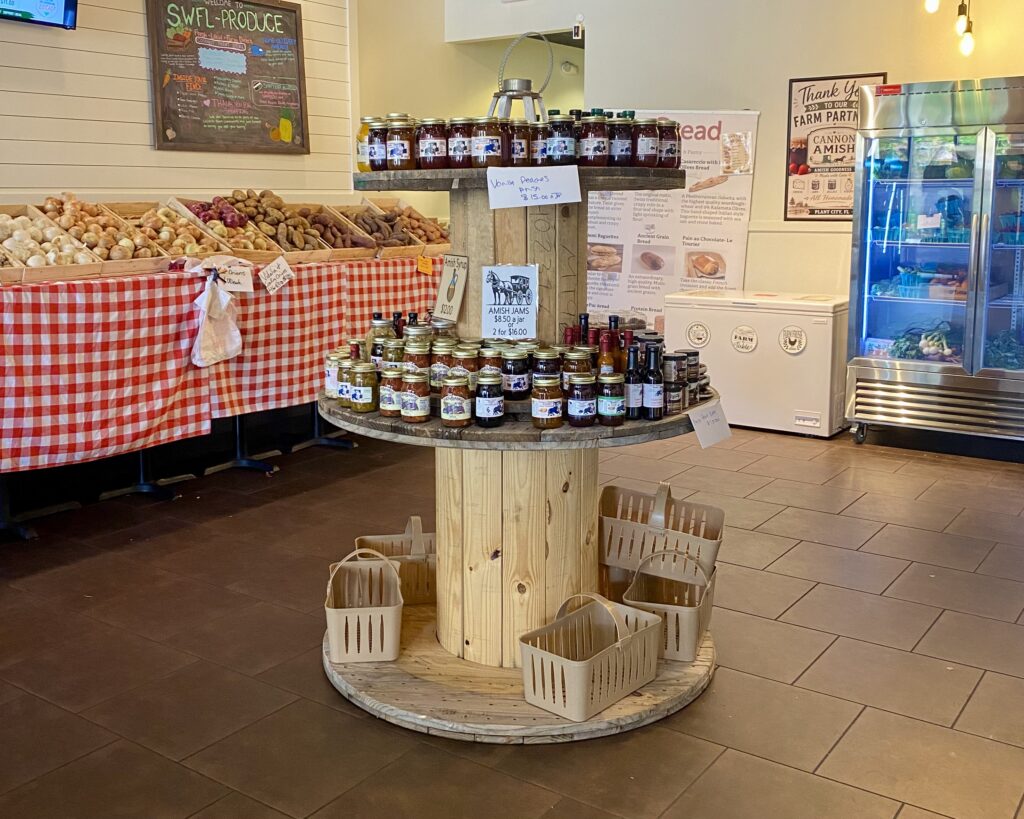
Amish-made jellies are one of the unexpected finds shoppers can take home. -BLANCA SANTIAGO / FLORIDA WEEKLY
So Etnoyer created a middle ground.
The company works as a co-op, buying products from local farms and bringing them together in one place. The result is a farm store where shoppers can find produce from multiple growers without having to spend their day driving from farm to farm.
“We’re like, all right, we’re a co-op. We’ll buy this in bulk,” Etnoyer said. “We’ll get all your lettuce from this farm, we’ll bring it back to our store, and sell it for you.”
Today, SWFL Produce works with about eight local farms, depending on the season, along with its own farm in Punta Gorda.
One of those farms is Blueberry Bunch, a commercial blueberry farm that has been operating for about 20 years. The farm added a U-pick operation in 2020, and its relationship with SWFL Produce goes back about seven years.
Kristian Velasco, the farm’s U-pick manager, said SWFL Produce is often one of the first customers to receive its blueberries when they become available.
“They pick up the same day as fast as possible,” Velasco said. “Sometimes they come an hour or two later, the same day.”
That means a customer shopping at the Coconut Point store could be buying blueberries that were still on the farm earlier that day.
For Velasco, that connection matters more than just selling the crop.
“It’s really important to get fresh from Florida produce, and also just to work with local private companies,” he said.
Farming under pressure
That local connection is becoming more important as the area’s agricultural industry faces a long list of challenges.
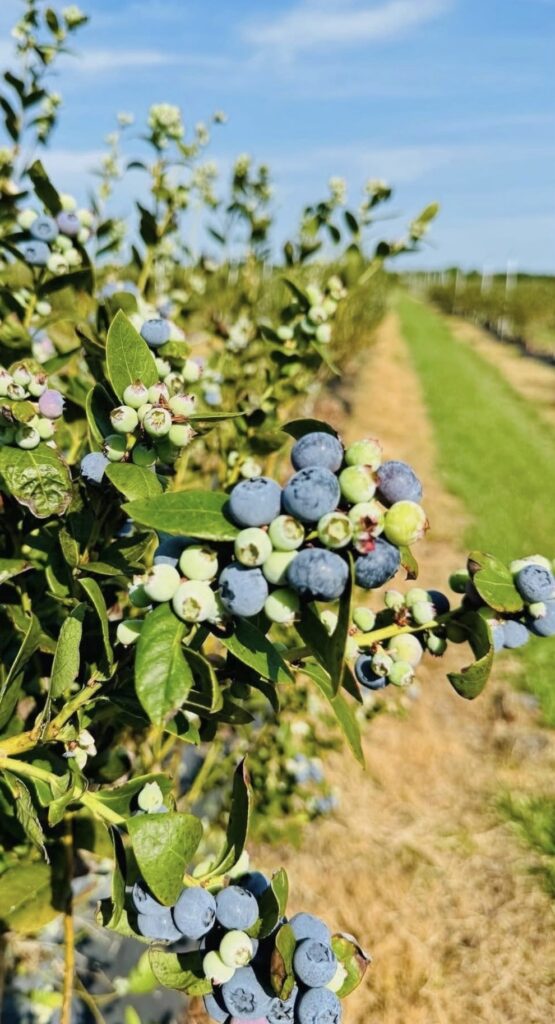
Blueberry Bunch supplies SWFL Produce with fresh blueberries, which can reach the Coconut Point store just hours after being picked. -COURTESY PHOTO
Blueberry Bunch, for example, is still recovering from hurricanes that damaged the farm’s plants. Velasco said the farm has spent the last several years replanting, with about 30,000 to 35,000 blueberry plants being replanted this season.
Weather has brought another layer of difficulty.
Velasco said the farm has experienced increasingly warm conditions, followed by an unusually difficult freeze last year. Instead of the typical one or two freezing nights, he said the farm experienced seven or eight instances of extreme freezing.
Other crops have faced their own struggles.
Velasco pointed to Florida’s orange industry, where many groves have been lost in recent years. He said farmers are looking at what else they can grow, including watermelon and even crops like macadamias.
“If you can, it’s always best to go local and support local farmers,” he said. “It’s hard to compete with South America.”
Making local food convenient
But for many Southwest Florida residents, buying local has traditionally come with a catch: convenience.
Farmers markets are typically held once a week, often during limited morning hours. That’s not always compatible with work schedules, family activities, or running out of fresh groceries in the middle of the week.
“Some days it’s raining, some days it’s really, really hot, so it’s kind of hard to get out to a market,” Etnoyer said. “People run out of food like midweek, and then what are you supposed to do when the markets only open once a week?”
The Coconut Point store is open seven days a week.
For Celine Price, that was part of the appeal.
Price, who has lived in Southwest Florida for 10 years, was having breakfast next door when she noticed the store and decided to walk in.
Price doesn’t normally shop at farmers markets because the hours often conflict with work.
It was her first visit, and she’s already excited to return.
“I know I’ll be coming often. It’s an actual store that I can come to on my off hours from work,” she said.
She picked up locally made blueberry banana bread and found a variety of produce, Amish jellies, and other products she doesn’t typically see at a conventional grocery store.
For her, buying local is also about knowing where her food comes from.
“I’ve been caring about where my food comes from for a long time,” Price said. “I eat mostly organic, and I put a lot of thought into what goes into my body. With everything that’s going on with the viruses and bacteria in produce grown in places where you’re not sure of their regulations, it’s good to know that you have something locally grown.”
Etnoyer seconds that.
“It’s just too much risk of contamination from being in the fields in Mexico, to bringing it to a packing house, to them cutting it, bagging it, and then shipping it over and distributing it from store to store,” Etnoyer said. “It’s going through too many hands. Too many people are dealing with and touching our food.”
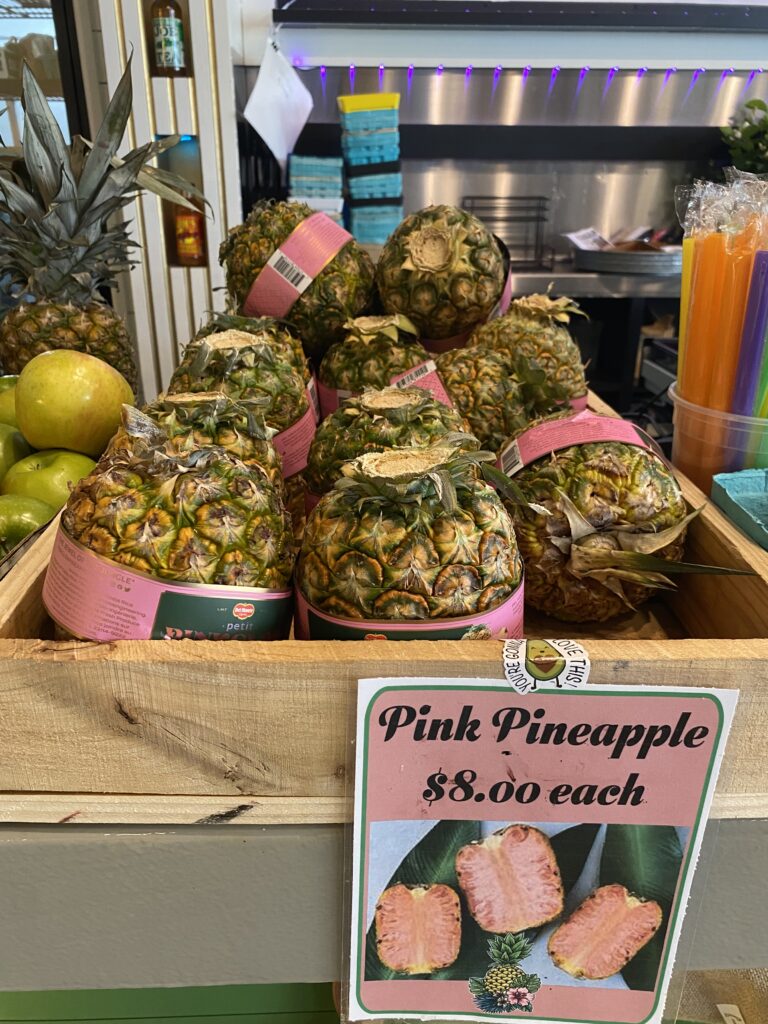
Pink pineapples have quickly become a favorite among shoppers at the new store. -BLANCA SANTIAGO / FLORIDA WEEKLY
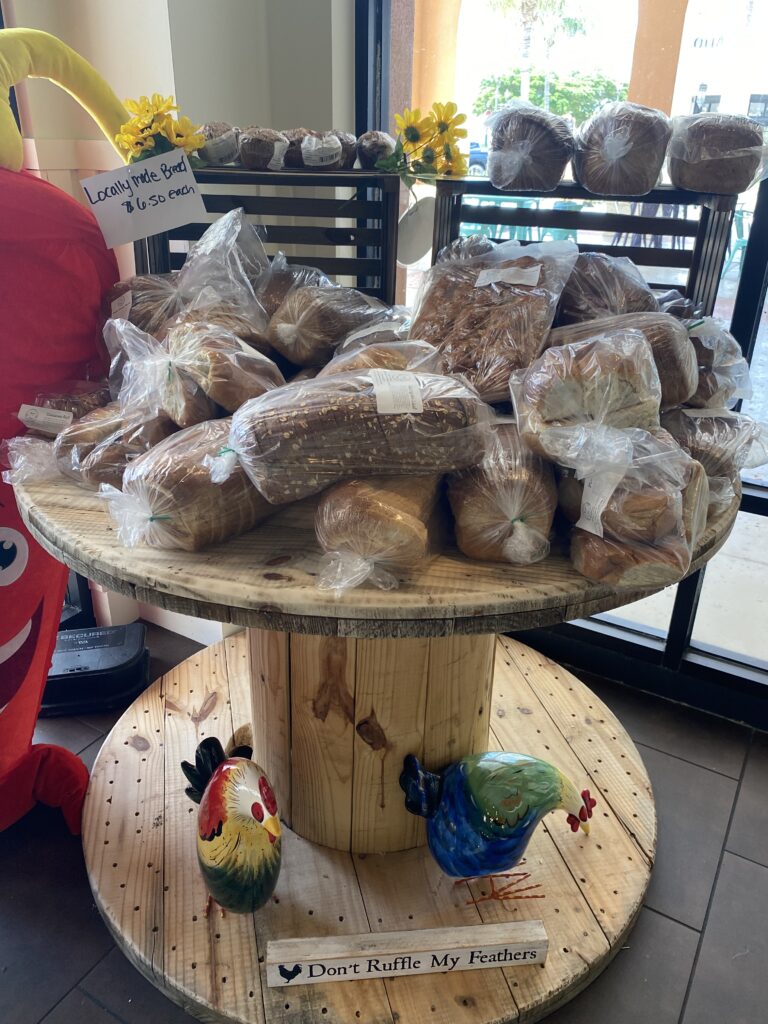
Locally made breads are among the products available at SWFL Produce Farm Store at Coconut Point. -BLANCA SANTIAGO / FLORIDA WEEKLY
Daniel Inman, an employee at the store, said customers frequently ask where the food comes from and whether it’s pesticide-free.
Some products have become very popular, including pink pineapples, lettuce, and peaches from Georgia.
The Jersey tomatoes and Jersey corn have also gotten attention from shoppers who are from the Northeast.
“It’s fun,” Inman said of a typical Saturday when customers come in and out of the store and samples are constantly being passed around. “It gets a little wild sometimes.”
Etnoyer said some of the most excited customers have been children.
The store has a free kids’ section where children can choose a piece of fruit, and Etnoyer said kids also get excited about trying vegetables and deciding what they want to cook for dinner.
The store has also set up a free class that teaches children about farming.
“We want to support local agriculture,” she said. “We want to encourage people to start their own farms and grow things even if it’s a few trees in the back.”
Coconut Point, meanwhile, offers an unusual setting for that message.
Rather than a roadside stand or a weekend farmers market, the farm store sits inside one of Southwest Florida’s major shopping destinations.
According to Etnoyer, Coconut Point approached SWFL Produce about opening there as part of an effort to make fresh food more accessible to residents who live nearby.
The location made sense to her.
“They’re very healthy over there. There’s a lot of classes, it’s a very fit mall,” she said. “So that’s why we just said, all right, this sounds like a perfect fit for us.”
The idea is simple: Put local food where people already are.
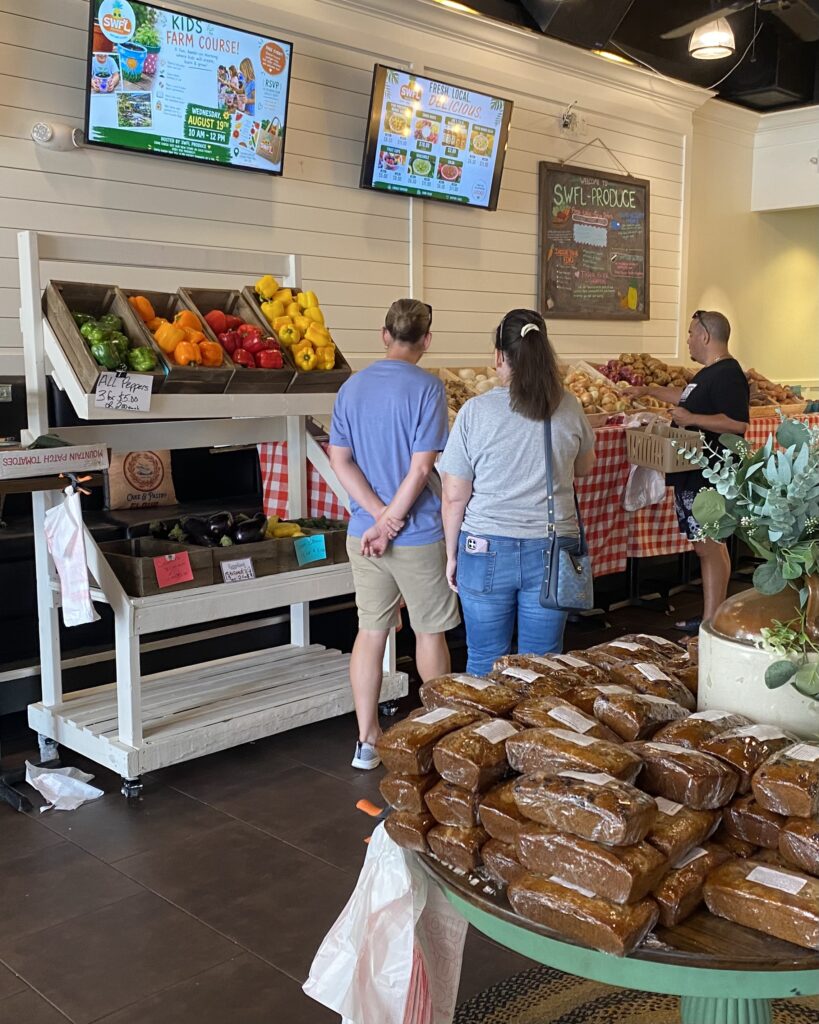
Customers browse for fresh vegetables. -BLANCA SANTIAGO / FLORIDA WEEKLY
For the farmers, that means another avenue to sell crops without having to manage a retail operation. For shoppers, it means picking up local produce on a Tuesday evening instead of planning an entire Saturday around a farmers market.
And for Southwest Florida, it may offer another way to keep consumers connected to an agricultural industry that’s facing increasing pressure from weather, development, and changing economics.
The farm store doesn’t pretend local agriculture can supply everything. Seasonal availability changes, and some products have to come from elsewhere. But Etnoyer believes consumers should have more opportunities to choose what is grown closer to home.
“It’s convenient because the farm store is open every single day,” she said. “We’re trying to fill everybody’s schedule and make it convenient for everyone to stop by and grab some local goods and just experience what good clean food is supposed to taste like.”
For Velasco, it’s even simpler.
His blueberries don’t have to travel thousands of miles before reaching a Southwest Florida kitchen.
They’re picked, delivered, and put in front of shoppers while they’re still fresh from the farm.
And in a region where development is changing the landscape, Etnoyer and Velasco believe local agriculture is worth preserving.
In The KNOW:
WHAT: SWFL Produce Farm Store
WHEN: Monday-Saturday 10 a.m. to 8 p.m., Sunday 11 a.m. to 6 p.m.
WHERE: Coconut Point, 3111 Fashion Drive, #105, Estero
MORE INFO: 239-464-6595 or swflproduce.com