
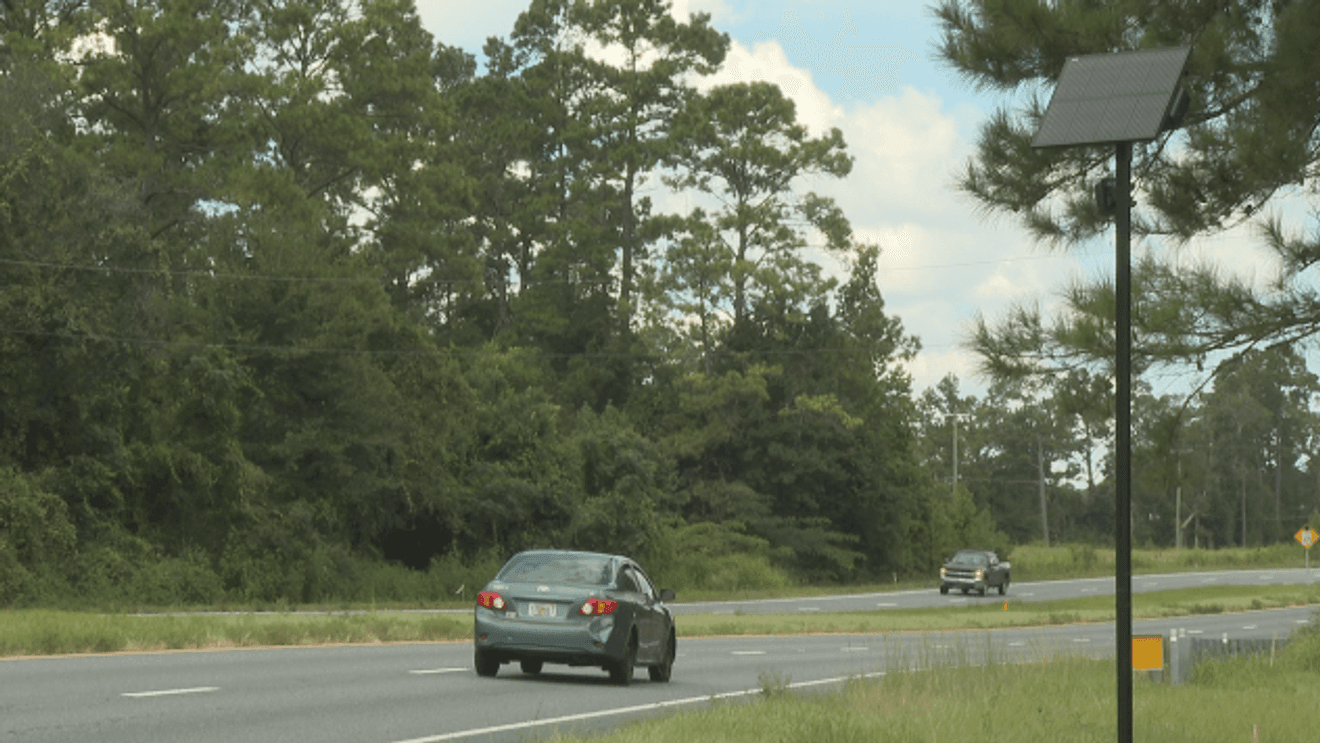
TALLAHASSEE, Fla. — Tallahassee police say license plate readers are helping officers solve serious crimes. Some city commissioners say the public still needs a clearer way to verify how those cameras are being used.
That question is coming back to City Hall next week, after commissioners voted 3-2 last week against beginning the process of removing the city’s Flock cameras.
The fight centers on automated license plate readers, including Flock cameras controlled by the Tallahassee Police Department on local roads. The technology scans passing vehicles and can alert law enforcement when a plate is connected to a wanted person, stolen vehicle or active investigation. It can also create searchable records of where vehicles were seen.
Commissioner Jack Porter, who voted to begin taking the cameras down, has criticized Police Chief Lawrence Revell and City Manager Reese Goad for moving forward without the accountability she believes the community deserves.
“I think what you have here are two individuals who have acted without the accountability that this community deserves to defy common sense, to defy this community’s values and their expectations,” Porter said.
TPD has defended the cameras as a public safety tool. At last week’s commission meeting, Revell said the technology has helped in cases involving missing children, human trafficking victims and violent felons.
“We stand ready to work with you on safeguards to make sure that this technology is used effectively because it is an incredible tool that allows us to keep this community much, much safer than we’ve ever been able to before,” Revell told commissioners.
The Sept. 9 city commission agenda does not include a required vote on whether to end the city’s contract. Instead, it brings the issue back as a discussion item, with TPD expected to present its case for keeping the technology and possible oversight measures.
The agenda points to several categories of cases TPD says were helped by license plate reader technology, including a North Monroe Street bank robbery, endangered missing-person cases and multiple homicide or attempted-murder investigations. Revell also told commissioners about a bank robbery case in which a vehicle left Tallahassee, hit a license plate reader on Thomasville Road and then another reader in Georgia before Georgia State Patrol stopped it within about three hours.
But the debate has shifted since last week’s vote.
FDOT has given local agencies 30 days to remove license plate readers from state road rights-of-way. That order does not automatically remove every Flock camera or every reader on local roads. TPD says it will comply with the state order while continuing to operate cameras on city streets.
Some nearby agencies have gone further, pausing or pulling back their programs as questions grow over access, data sharing and privacy. Porter says next week’s meeting will give residents a chance to respond directly.
“Members of this community are educated and well informed,” Porter said. “They know why they don’t want to see Flock cameras in their communities. They’re gonna tell us why on Wednesday I can guarantee you that, and I hope that will be strong enough to listen.”
Revell says TPD already has safeguards in place. He told commissioners searches cannot be random and must be tied to a case number, a reason and a legitimate legal purpose. He also pointed to TPD’s transparency portal, General Order 56 and internal audits.
According to Revell, TPD reviewed 293 searches flagged by the system as potentially questionable from January to last week’s meeting and cleared every one. He said some were flagged because of missing case numbers or incomplete justifications.
Revell acknowledged license plate reader technology has been misused elsewhere, but argued that does not mean Tallahassee’s system should come down.
“There have been misuses in the medical field. There have been misappropriations in every form of business you could go to,” Revell said. “But to say that the whole system is corrupt is just inaccurate.”
FOX49 asked TPD for an interview with Revell. The department did not respond.
FOX49 wanted to ask what documentation exists after TPD clears a flagged search, whether the department would support independent review of camera use and what limits it would accept on data sharing, data retention or expanded search tools.
The commission previously voted in June to bring back a discussion on safeguards and transparency. Next week’s meeting is expected to show whether commissioners are satisfied with TPD’s current policies or want stronger rules for a technology the department says is useful, but critics say still needs more public oversight.