
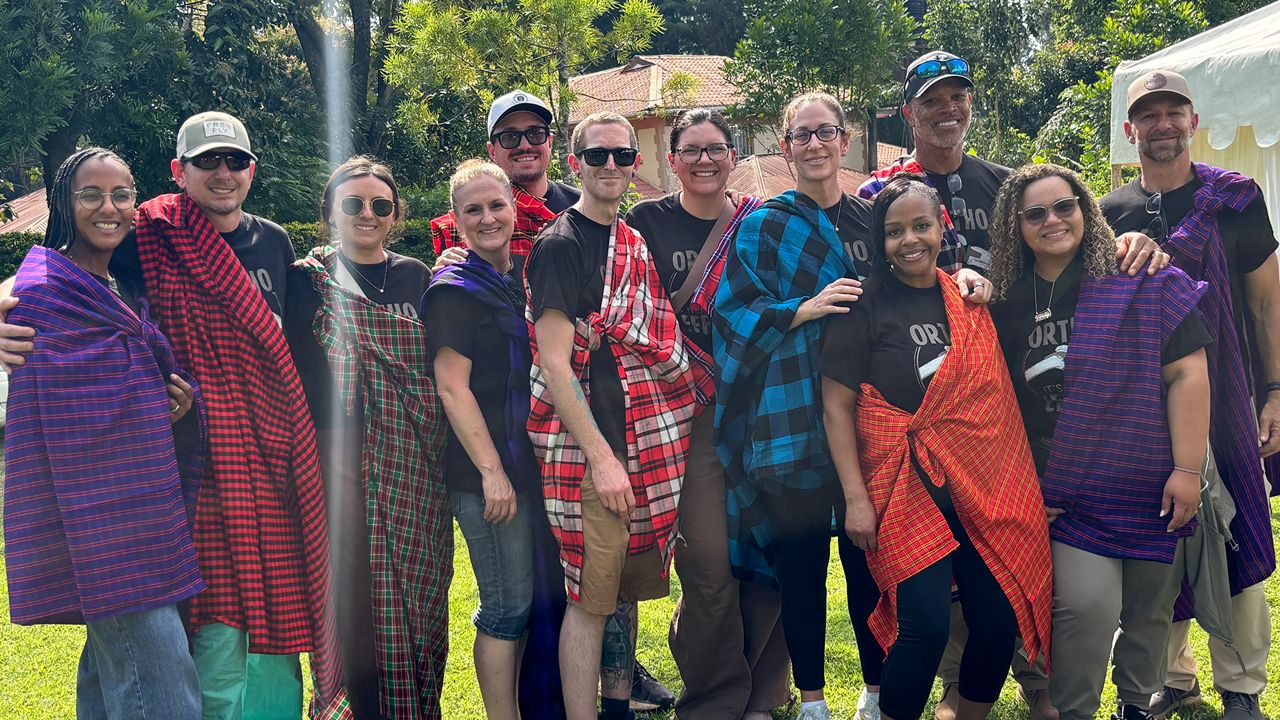
MELBOURNE, Fla. — A Melbourne orthopedic surgeon and a medical team recently traveled to Kenya to provide knee replacement surgeries and other medical care for patients who otherwise may not have received treatment.
Dr. Kenneth Sands, an orthopedic surgeon who practices at Orlando Health in Melbourne, said the mission focused on helping patients regain mobility. He said the team of nearly 30 people evaluated 250 patients and operated on 27 joints in a matter of days.
“Our mission trip was mainly focused on providing knee replacement surgeries,” Sands said. “We also found undiagnosed hypertension, diabetes, even cancer, and got those patients on the right track.”
Sands said the trip presented challenges before the team arrived, including travel disruptions and health concerns in the region.
“One was just getting there,” Sands said. “War in Iran broke out, so it interfered in our airfare … and Ebola broke out in Uganda.”
The trip to Kenya followed Sands’ first mission trip to Bhutan two years ago. Sands said giving patients mobility has been his life’s work, but mission trips have become a new focus later in his career.
In Kenya, Sands operated on a patient named David, whose injury had left him unable to walk or work. Sands said the surgery gave David back his independence.
“Their reaction is one of extreme gratitude,” Sands said. “It is probably one of the best feelings for us as physicians and medical staff, because the patients are truly grateful. These are procedures that never would have been performed for them otherwise.”
Ashlee Kennel, Sands’ medical assistant, said she asked to be part of the mission and was moved by what she saw at the mobile clinic in Kenya.
“I was probably one of the biggest crybabies there was,” Kennel said. “I cried — it was really emotional in a good way.”
Kennel said seeing patients walk after surgery was especially meaningful.
“Seeing them getting up and walking, saying thank you and everything they possibly could,” she said.
Sands said the experience can be meaningful for medical professionals who want to help abroad but may be concerned about unfamiliar conditions.
“If there’s someone who wants to get involved in these types of things, I would say do it,” Sands said. “I think some of the hardest things is there’s a fear of traveling, going to countries and not being familiar with supplies, culture, country. But when you come back, you’re a better person.”
Sands said students also joined the trip, with the hope of encouraging the next generation to take part in similar work. He said the team will likely take its practice next to Vietnam or somewhere in South America.