
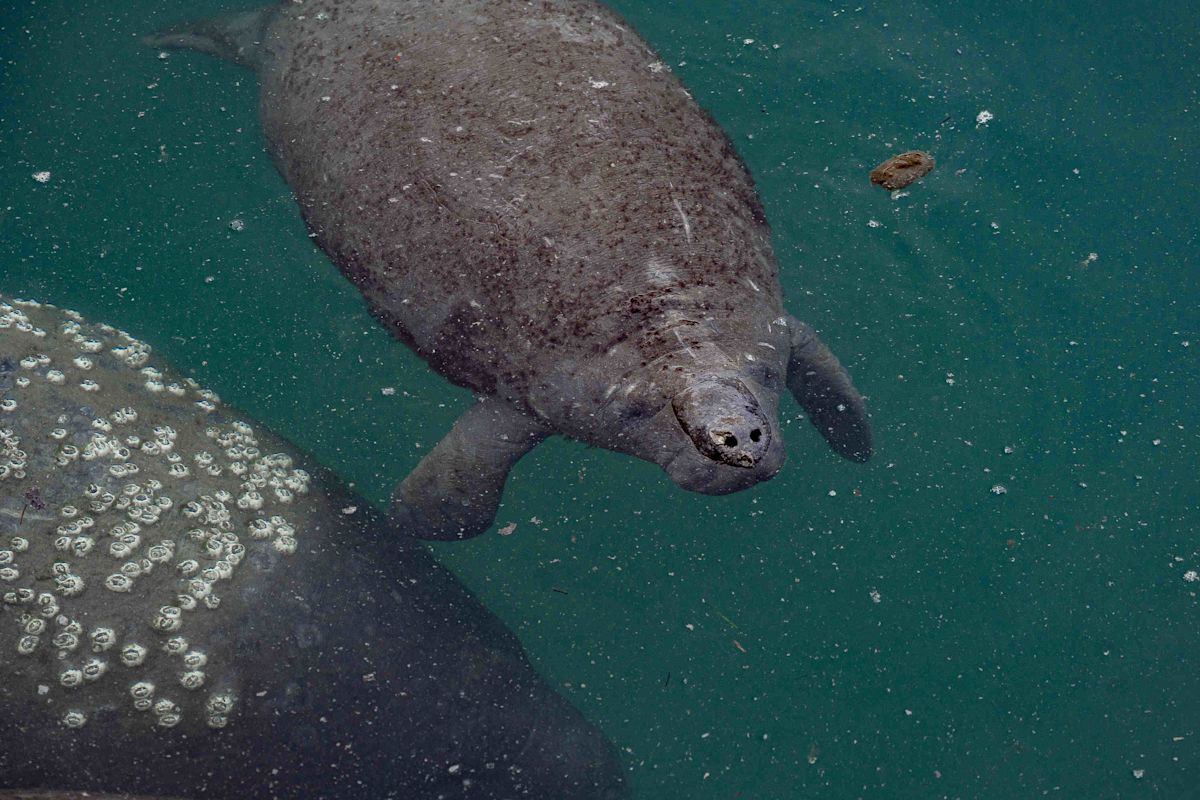
In the summer of 2026, a surge in boat-related manatee deaths on the Wakulla and St. Marks rivers claimed three manatees in three months with a fourth death attributed to human interaction, according to wildlife officials and law enforcement.
Since June 2, five manatees have been found dead in the two rivers, with at least three of the deaths attributed to collisions with boats, a fourth involving human interaction, and the fifth being a still-born calf, according to Florida Fish and Wildlife Conservation Commission (FWC) data.
FWC communications director Shannon Knowles said wildlife officers investigated the boat deaths and found no evidence indicating the collisions occurred within a manatee protection zone or were due to an intentional violation by a boater.
The increase in manatee fatalities is notable because watercraft deaths are uncommon along the St. Marks and Wakulla rivers. The three boat-related fatalities reported since June is the same number of watercraft-caused manatee deaths the county recorded during all of 2023, 2024 and 2025 combined.
Boat collisions leading threat to manatees
According to the Fish and Wildlife Research Institute (FWRI), collisions with boats account for roughly 20–25% of reported manatee deaths statewide. With four months remaining in the year, Florida has recorded 86 watercraft-related manatee deaths in 2026 and is on track to exceed 100 this year. That compares with 98 in 2025, 97 in 2024 and 89 in 2023.
A decade-long FWRI study examining nearly 3,000 manatee carcasses found more than 12,000 watercraft-related scar patterns. Approximately 96% of adult manatees bore evidence of previous boat strikes.
One in four adults had been struck at least 10 times, while some animals showed evidence of more than 40 collisions.
“With only 4% of adults devoid of watercraft-related scars, it appears exceedingly rare that individuals reach late adulthood without having been struck multiple times,” the study concluded.
Florida’s West Indian manatee population, also known as the North American manatee, is estimated between 7,000 and 11,000.
 Manatees linger in the warm water outflow from the FPL electrical generation plant at Manatee Lagoon on Feb. 4, 2026. A recent incident near St. Petersburg is giving scientists insight into the relationship between manatees and sharks.
In all, 249 manatees were recorded on Feb. 3 following the cold temperatures in Palm Beach County.
Sheriff’s office urges boaters to slow down
Wakulla County Sheriff’s Capt. Brett Surace said deputies have joined FWC in public-awareness efforts aimed at reducing collisions along the St. Marks and Wakulla rivers. Ahead of the Labor Day weekend, the sheriff’s office and FWC conducted a joint media event at the St. Marks boat ramp encouraging boaters to heed posted restrictions.
“We basically said, use caution when you’re going through there,” Surace said. “Look where it’s no-wake zones. There’s a reason for no-wake zones.”
“No-wake” signs are in narrow and shallow stretches of the river where the water is not deep enough for manatees to dive and avoid boats.
Surace said large sections of the Wakulla River between Wakulla Springs and U.S. Highway 98 are designated no-wake zones. That requires boaters to be on the lookout for manatees.
Manatees have become a Florida wildlife icon
Manatees enjoy broad public support as a symbol of Florida wildlife.
The “Save the Manatee” specialty license plate is considered Florida’s first conservation specialty plate. Authorized in 1989, it was the first Florida license plate created specifically to fund wildlife conservation efforts.
More than 53,000 Save the Manatee plates were registered in 2025, ranking seventh among all Florida specialty tags. The annual $25 fee supports manatee research, rescue and rehabilitation, mortality investigations, habitat protection and public education programs.

Songwriter, Florida man Jimmy Buffett (wearing sunglasses) with lawmakers holding “Save the Manatee” license plates at the Capital in 1986 during the push to create Florida’s first conservation specialty license plate to fund manatee research and protection
Anyone who intentionally harasses, injures or kills a manatee can face both state and federal penalties, including substantial fines and potential jail time.
That’s because manatees are protected under state the Florida Manatee Sanctuary Act, the Marine Mammal Protection Act, the Imperiled Species Act, and the federal Endangered Species Act.
“We live in a beautiful ‘Old Florida’ area, and we have a responsibility to kind of coexist in this sportsman’s paradise with the wildlife that we have here,” Surace said.
James Call, a member of the USA TODAY NETWORK-Florida Capital Bureau, covers state government. He can be reached at jcall@tallahassee.com. Follow on X: @CallTallahassee.
This article originally appeared on Tallahassee Democrat: Florida manatees threatened by surge in boat strikes