
In South Florida, Black history is all around us. It lives in the families who built communities across Miami-Dade and Broward counties, in churches and businesses that became neighborhood anchors, in educators and civic leaders who opened doors, and in photographs, newspapers, letters, public records and personal stories passed down from one generation to the next.
But history does not preserve itself. It survives because people decide that the stories of those who came before us are worth documenting, protecting and passing on. At this moment, that responsibility is increasingly important.
Across the country, debates continue over how African American history is taught, which books and materials are available to students, and how difficult chapters of our nation’s past are presented and understood.
Those conversations should make one thing abundantly clear: access to our history matters. Our communities need places where people can examine original documents, explore archives, read books, hear firsthand accounts and conduct their own research. We need institutions committed to preserving the breadth of the African American experience so that future generations do not have to rely solely on someone else’s interpretation of our story.
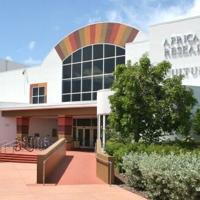
That is why the African American Research Library and Cultural Center (AARLCC) in Broward County is so important. AARLCC is more than a library. It is a repository of memory, a research center and a cultural gathering place where the history and contributions of people of African descent are collected, studied, shared and celebrated.
For young people, it offers an opportunity to encounter stories that reflect their heritage. For families, it can mean uncovering information about the people and communities that shaped earlier generations. For researchers, educators and students, it provides access to collections and primary sources documenting experiences that have too often been overlooked.
For all South Floridians, it reinforces an essential truth: African American history is American history. Here in South Florida, it is our local history.
For more than two decades, the Friends of the African American Research Library and Cultural Center has partnered with library leadership to strengthen AARLCC and connect the institution to the community it serves.
As president of the Friends, I have seen why that relationship matters. Through advocacy, fundraising, partnerships and public awareness, the Friends supports programs, exhibits, archives, special collections, research materials and other resources that advance the library’s mission. Yet maintaining an institution of this importance requires more than librarians, administrators and the Friends organization.
It requires an engaged community.
Archives must be maintained. Collections must grow. Programs need support. Researchers need access. Most importantly, another generation must be introduced to these institutions and encouraged to understand that these spaces belong to them.
Bring your children and grandchildren to the library. Encourage them to research their family histories. Look through old photographs together and identify the people in them. Record elders’ stories while we still have the chance to hear them firsthand.
Once a story disappears, we cannot assume we will recover it.
We are making history now
Preservation also means recognizing that history is not only something that happened decades ago but is still relevant.
We are making it right now.
As the Friends prepare for our 24th Annual Honoree Luncheon, themed “Rooted in Community: Honoring Those Who Brought Change,” we are reminded that preserving history also means recognizing the people and institutions shaping our communities today.
Our history is being written by educators who open doors for students, entrepreneurs who build businesses and create opportunities, advocates who ensure communities are not forgotten and artists, scholars, public servants, parents and mentors whose work changes lives.
Some of their names will become widely known, while others may never appear in a history book. Yet their contributions are part of South Florida’s story, and those stories deserve to be documented and preserved.
What will we leave behind?
One day, future generations will look back on the South Florida we are building today. What will they know about us?
Will they understand the communities we built, the institutions we protected and the people who moved us forward? Or will they discover gaps because we assumed someone else would preserve those stories?
We cannot leave that responsibility to historians, archivists and librarians alone.
Every family has an archive. Every neighborhood has a history. Every generation has stories worth preserving.
Ask your parents and grandparents about their lives. Preserve photographs and documents stored in closets and boxes. Write down names, dates and places while they are still remembered. Record the voices of elders. Tell young people why the places in their communities matter.
And support the institutions doing the larger work of collecting, protecting and making our history accessible.
AARLCC makes South Florida an extraordinary place to do exactly that. But institutions are only as strong as the communities that value and sustain them.
After more than two decades of the Friends of AARLCC doing this work, I remain convinced that preserving our history is not merely about looking backward.
It is about giving the next generation something to stand on.
If we do not preserve our stories, document our contributions and protect the institutions entrusted with our history, we leave it to someone else to decide what will be remembered, and what will be forgotten.
That is a responsibility we cannot afford to relinquish.
Luwando Wright is the president of Friends of the African American Research Library and Cultural Center (AARLCC).

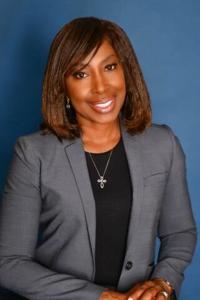
(Harris Public Relations)