
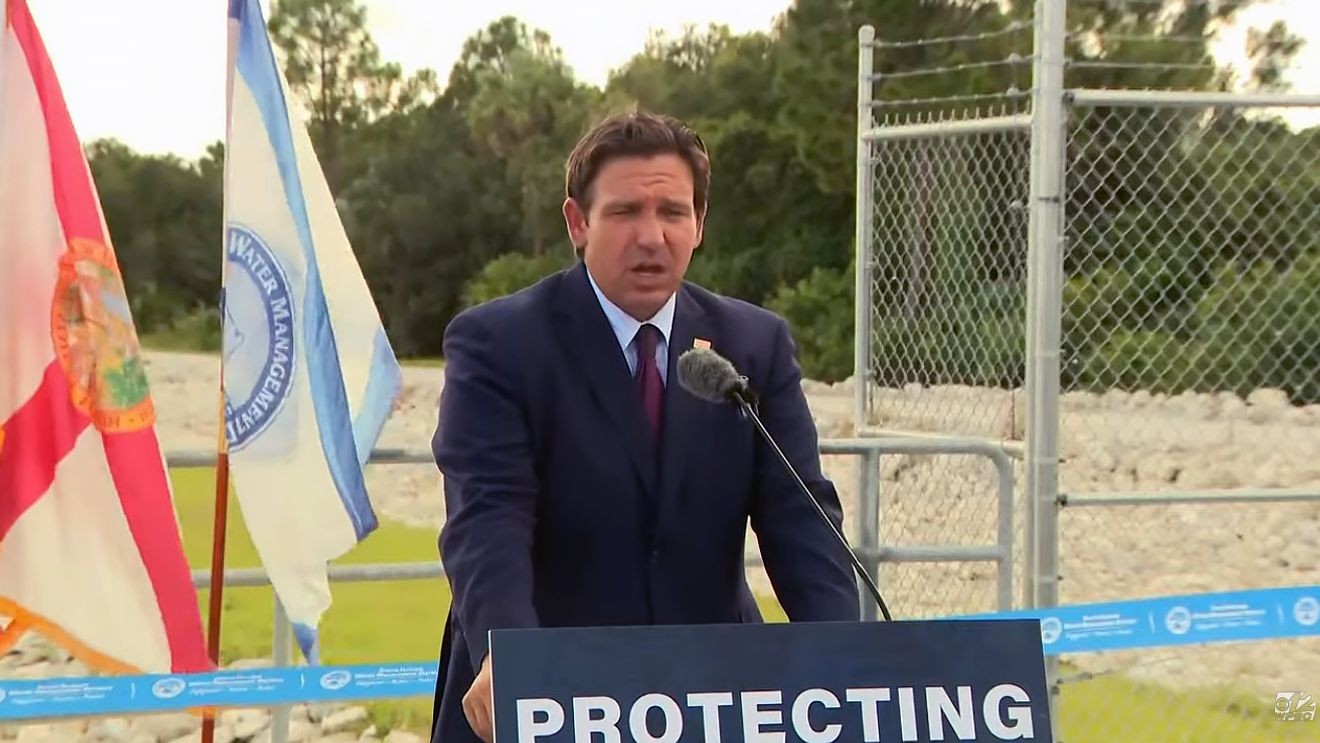
PALM CITY, Fla. (CBS12) — A new water-management project in Martin County is expected to redirect billions of gallons of water away from the St. Lucie Estuary, helping reduce the risk of harmful algal blooms.
Gov. Ron DeSantis joined state environmental officials in Palm City on Wednesday to mark the completion of the C-23 Estuary Discharge Diversion Project.
The project includes nearly seven miles of new canal and a pump station that will redirect excess water from the C-23 Canal to the C-44 reservoir and stormwater treatment area. There, the water can be stored and cleaned instead of flowing directly into the St. Lucie River.
“This is yet another tool to manage water before it reaches the estuary,” DeSantis said. “It will, of course, allow us to further the reduction of harmful discharges and algal blooms within the St. Lucie Estuary.”
The system entered operational testing in May and has already diverted nearly 5 billion gallons of water, according to DeSantis.
Drew Bartlett, executive director of the South Florida Water Management District, said the pump station can move as much as 166 million gallons of water per day.
“It has worked since May 14,” Bartlett said. “I looked at the water quality data. It’s working.”
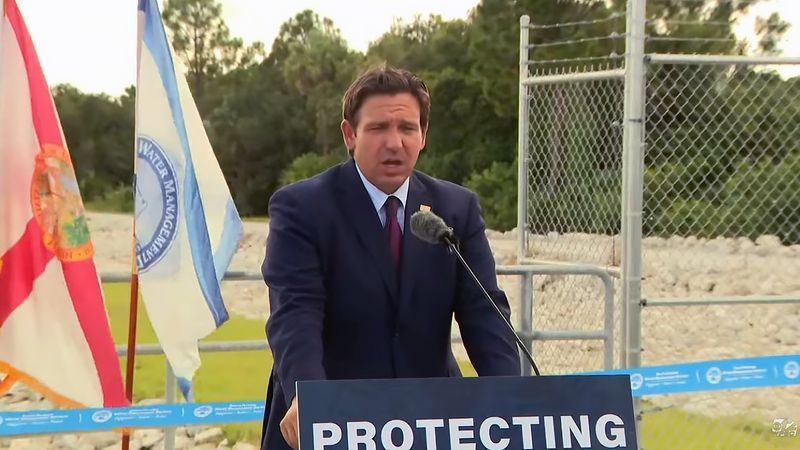
A new water-management project in Martin County is expected to redirect billions of gallons of water away from the St. Lucie Estuary, helping reduce the risk of harmful algal blooms. Gov. Ron DeSantis said the system entered operational testing in May and has already diverted nearly 5 billion gallons of water. (WPEC)
Historically, excess water from the C-23 Canal was routed toward the South Fork of the St. Lucie River. Those freshwater flows can disrupt the estuary’s natural salinity balance while carrying nutrients that contribute to algae growth.
Florida Department of Environmental Protection Secretary Alexis Lambert said the completed project is expected to divert 6.3 billion gallons of water from the St. Lucie River. She said it is also projected to prevent an average of 55,000 pounds of nitrogen and 14,000 pounds of phosphorus from entering the river each year.
“A more natural salinity gradient and better conditions for the estuary will produce better results for residents, for visitors, for business owners all along the Indian River Lagoon,” DeSantis said.
See also: St. Lucie County moves ahead on bulk water agreement for P1 Motor private racetrack club
The St. Lucie River and Indian River Lagoon suffered widespread toxic algae outbreaks in 2016 and 2018. The blooms damaged wildlife habitat, hurt local businesses and kept residents away from affected waterways.
State officials said the new diversion system should help move conditions in the estuary closer to their natural pattern.
The project is part of a broader network of restoration efforts involving the St. Lucie River, Indian River Lagoon and Everglades. The South Florida Water Management District and U.S. Army Corps of Engineers also recently marked the completion of construction on the C-23/C-24 Stormwater Treatment Area, which is designed to remove nutrients from water before it reaches the estuary and southern Indian River Lagoon.
DeSantis said Florida has committed nearly $10 billion to Everglades restoration and water-quality projects since he took office in 2019. His administration has completed or begun work on more than 90 Everglades-related projects, he said.
The governor also discussed the Everglades Agricultural Area Reservoir south of Lake Okeechobee. DeSantis said a state and federal agreement is expected to accelerate that project’s completion from 2034 to 2029.
Once completed, the EAA reservoir is designed to store water from Lake Okeechobee, clean it and send it south toward the Everglades and Florida Bay rather than releasing it east into the St. Lucie River or west into the Caloosahatchee River.