
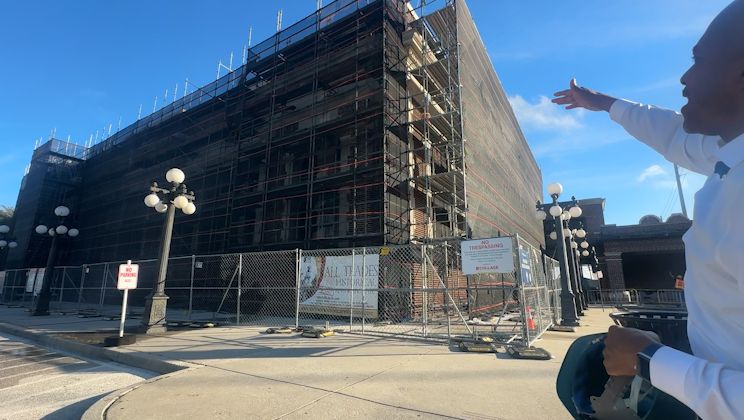
TAMPA, Fla. — Months into a multimillion-dollar restoration of Tampa Union Station, crews are making progress on the historic rail hub as Tampa prepares for continued growth and new development.
The roughly $6 million project is restoring the 114-year-old station while updating the building for the passengers who continue to travel through Tampa by rail.
Inside, the station’s main waiting room remains closed as construction continues. Amtrak service has not stopped, with passengers using a temporary ticketing and waiting area.
Architect Jerel McCants said the work is intended to preserve the character of the 1912 landmark while improving how the building functions today.
“The building was built in an Italian Renaissance Revival style,” McCants said.
That history is guiding many of the decisions being made during the restoration.
“Even though the station has been here for several years, over 100 years, when you walk inside, everything will be updated,” McCants said. “Even the restrooms will be something that will be a sight to see.”
McCants said renovations completed in the early 1990s did not always match the station’s original period aesthetic. This time, the goal is different.
“The renovations going on now will harken back to that 1900 classical style of architecture,” he said.
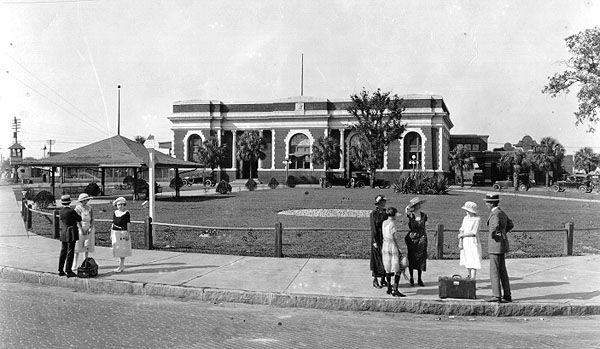
Tampa Union Station as it stood in 1947. (Friends of Tampa Union Station)
Tampa Union Station opened in 1912 and was added to the National Register of Historic Places in 1974. The station has served passengers through two world wars, the Great Depression and eventually the Amtrak era.
“It shows the beauty of the town,” McCants said. “And when you go to different cities, especially in Tampa, we have a train station that’s iconic. That’s right downtown.”
The work is also unfolding as Tampa prepares for another period of major development.
Plans for a new Tampa Bay Rays ballpark and surrounding mixed-use development are expected to bring additional residents, workers and visitors into the city, renewing questions about how the region’s major destinations will be connected.
Bob O’Malley, chief external affairs officer for the Orlando Economic Partnership, said passenger rail can play a role as Florida’s growing communities look for additional transportation connections.
“We saw during the World Cup that rail is a great way to move sports fans between cities for games. I think with the Tampa Bay Rays staying in Tampa and continuing Brightline in Tampa would be a great way to connect fans from across the state of Florida,” said O’Malley.
While the Union Station restoration is separate from the Rays project, McCants sees preserving the station as an investment in a piece of infrastructure that has served Tampa for generations — and could continue doing so as the city changes around it.
The restored Tampa Union Station is expected to reopen in the new year.