
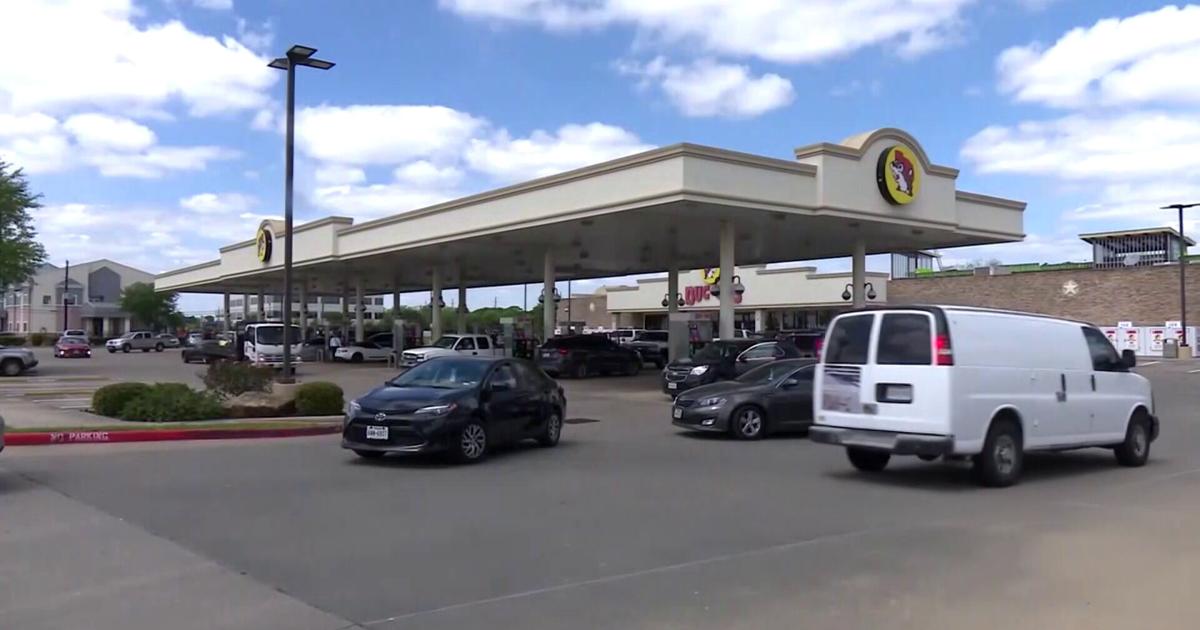


A Buc-ee’s travel center is shown at another location. Charlotte County has approved plans for Southwest Florida’s first Buc-ee’s, a 74,000-square-foot store with 120 fueling positions near Interstate 75 and Harborview Road.
WINK News
Charlotte County is getting a Buc-ee’s after the Board of County Commissioners voted 4-0 on Sept. 8 to approve the final site plan for a 74,000-square-foot travel center with 120 fueling positions and associated infrastructure.
Commissioner Stephen R. Deutsch was absent from the meeting. He was the only commissioner to oppose the project during an earlier land-use and zoning hearing, citing environmental concerns because of its proximity to the Peace River.
Benderson Development, a large family-owned real estate company founded in 1949, sold 28.03 acres to Buc-ee’s for the project, which has drawn opposition from some residents, particularly those who live nearby.
At the Sept. 8 meeting, 13 residents urged commissioners not to approve the final site plan, while one person spoke in favor of the project.
Commission Chair Joe Tiseo said the matter had been slated for the consent agenda but was moved to the regular agenda after commissioners noticed a discrepancy in the final site plan.
The issue involved the number of multifamily residential units used to calculate the project’s transportation impacts. The original plan listed 2,336.4 units, while the final version listed 1,168.
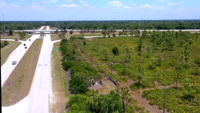
An aerial view shows the site of the planned Buc-ee’s near Interstate 75 and Harborview Road in Charlotte County. Commissioners approved the final site plan for the 74,000-square-foot travel center with 120 fueling positions Sept. 8.
WINK News
Stan Beard, director of real estate development for Buc-ee’s, said the figure was changed in error. He agreed to use the original figure, meaning the 120 fueling positions would have the same calculated transportation impact as 2,336.4 multifamily residential units.
Environmental activist Tim Ritchie, a Punta Gorda resident known as the Citizen Water Czar and founder of March Against Mosaic, said that in the nine years he has attended county meetings and monitored water quality in the Peace River and Charlotte Harbor, he has never before decided to sue the county.
Ritchie said he intends to file a notice of intent and accused commissioners of “not protecting our aquifer.”
Ritchie and other opponents pointed to the project’s proximity to the Peace River and raised concerns about potential effects on fish and wildlife habitat, including habitat for the endangered smalltooth sawfish.
Some residents urged commissioners to acquire the property through eminent domain.
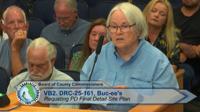
Peace River Audubon Society President Brenda Curtis addresses Charlotte County commissioners during the Sept. 8 hearing on Buc-ee’s final site plan. Curtis raised concerns about the project’s potential effects on waterways, wildlife and migratory birds.
Charlotte County government
Dreama Doolittle, who lives in the nearby Harbor Heights neighborhood, cited concerns about water quality, traffic and the project’s potential effects on the environmentally sensitive area surrounding the Peace River.
Rebecca Scholl said the project would require about 20 football fields’ worth of fill and “conflicts with the Floodplain Management Ordinance.”
Scholl said her 60-year-old home, built at an elevation of about 6½ feet, flooded during hurricanes Helene and Milton. She expressed concern that the higher elevation of the Buc-ee’s site could increase stormwater runoff onto her property and others nearby.
“Older homes will be retention areas for the project,” she said.
Rob Robbins, a marine biologist, suggested Buc-ee’s consider property in North Port that has been discussed as a potential site for a data center.
Other speakers raised concerns about the project’s potential effects on waterways and infrastructure.
Brenda Curtis, a wildlife biologist and president of Peace River Audubon Society, raised several environmental concerns. She said drainage from the Buc-ee’s property would flow toward the area where the Peace River meets Charlotte Harbor.
The estuary provides habitat for numerous fish species, and the area also lies along a major migratory route for birds. Curtis said it is part of the Atlantic Flyway, a major north-south bird migration route stretching thousands of miles along eastern North America.
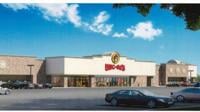
A rendering shows the Buc-ee’s travel center planned near Interstate 75 and Harborview Road in Charlotte County. The 74,000-square-foot project calls for 120 fueling positions and associated infrastructure.
Charlotte County government
During one annual bird count, she said, 38,000 lesser scaup were observed flying over the area.
Artificial light can disorient birds and increase the risk of collisions with structures, Curtis said.
She also said two bald eagle nests are located on opposite sides of Interstate 75 near the project site.
Commissioner Ken Doherty asked Planning and Zoning official Shaun Cullinan to identify the agencies that had reviewed the Buc-ee’s project. Cullinan said the applicable county departments and state agencies had approved the project.
Public Works Director John Elias said the project had received its Environmental Resource Permit and exceeded applicable requirements.
Buc-ee’s is expected to employ about 200 people when the Port Charlotte location opens.