
TAMPA, Fla. — The latest numbers are in from the Florida Department of Health.
Dengue virus cases have nearly doubled to 95 cases in Hillsborough County. Those numbers are from Aug. 30 to Sept. 5.
The week prior, 59 cases were reported from Aug. 23 to Aug. 29.
It’s the worst it has been in decades, according to Gabriella Henderson, Hillsborough County Mosquito Management community relations coordinator.
Adriane Rogers, the executive director of the Pasco County Mosquito Control District, explained why there may be more activity.
“We’ve had a lot of rain lately, very high mosquito production right now,” Rogers said. “And so that combined with people that are out experiencing outdoor activities, and we just had the July 4th holiday, we just had Labor Day over the weekend. So people are outside in areas exposed to mosquito populations.”
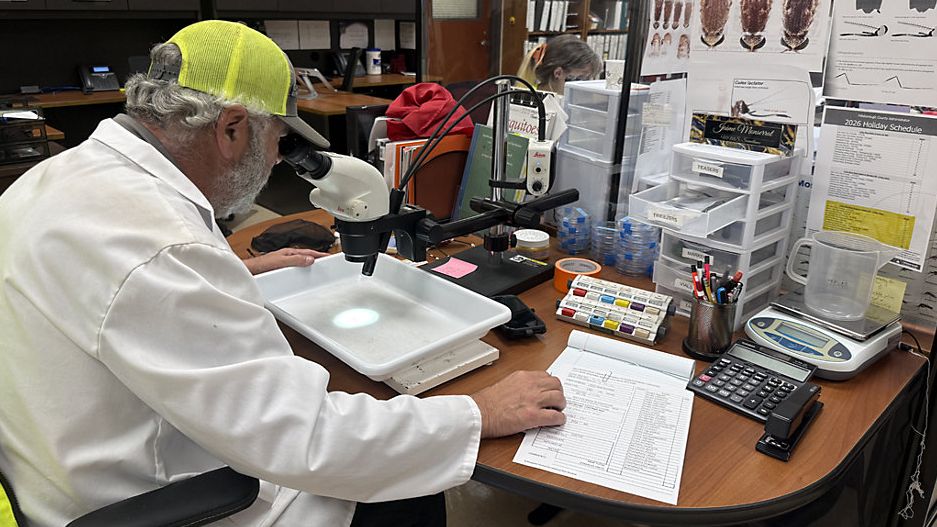
Inside the Hillsborough County Mosquito Management Services building, the team looked at Aedes aegypti mosquitoes, the primary carrier that transmits the dengue virus to humans.
“We are getting back positive pools; that means we are getting back mosquitoes that are testing positive that are in our area right now,” Henderson added.
To curb this crisis, work continued with a regional effort on Thursday.
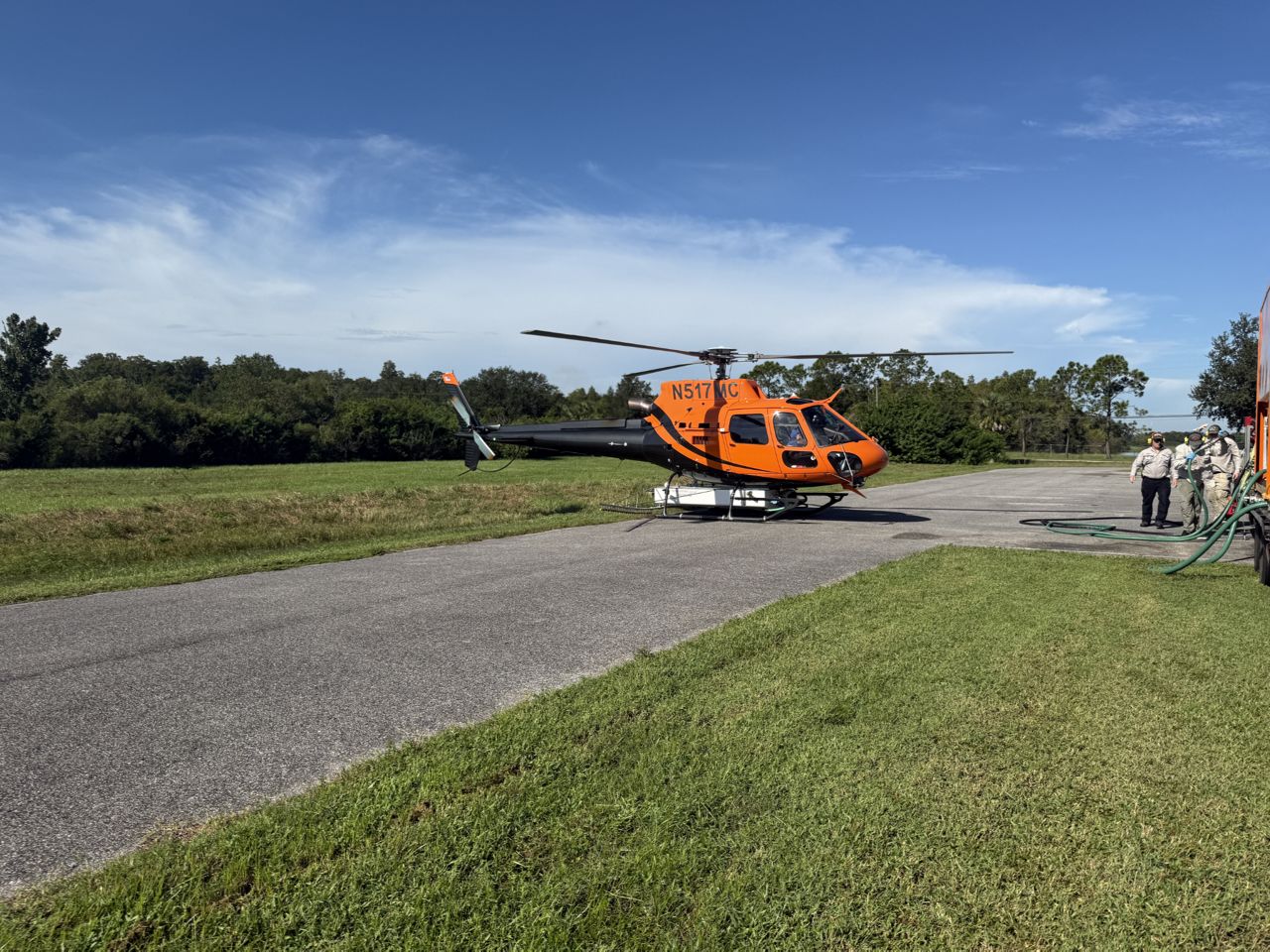
At the Tampa Executive Airport, helicopters fueled up, ready to spray down central Tampa.
The areas targeted on this week’s mission were mostly central Tampa from Busch Boulevard down to San Miguel Street in South Tampa and from Manhattan Avenue to 50th Street in East Tampa. Neighborhoods like Seminole Heights, Ybor City, West Tampa and Palma Ceia.
Helping with this mission is Pasco County Mosquito Control, crossing county lines to fly low and slow.
Henderson said the assistance is helpful.
“There’s only so many helicopter pilots that are trained to treat for mosquitoes in the entire state. So we really have to work together with multiple counties to be able to work around the clock like we are,” Henderson shared.
The plan is to remove as many of these ankle-biting, blood thirsty mosquitos as possible.
Female Aedes aegypti mosquitoes need protein and nutrients in human blood to develop their eggs. That’s why they love to be near homes and hunt during the day.
“If you do see our helicopter flying overhead very low over your house, don’t be alarmed. It’s doing exactly what it should be doing,” Rogers said.
Rogers explained that the helicopters will fly as low to the rooftops as possible.
What makes these choppers unique is their capability to get as close as possible to release rain-sized larvicide spray.
The aerial application is liquid Bti, which is a naturally occurring bacterium. This does not harm people, pets, fish, birds, or beneficial insects, and it breaks down naturally in the environment.
With this heat, Henderson said it could take as little as five days for an egg to become an adult mosquito.
“Flying that low is needed for these helicopters to get that treatment to the mosquitoes in the right areas,” Henderson said. “These helicopters allow us to really reach every nook and cranny in a backyard that you don’t even realize is holding that water, and they need to fly low to do it.”
Mosquito control districts are urging people to dump out any standing water. Just a simple bottle cap can breed more than 100 larvae.
“Really, all it takes is a very tiny amount. I always say, even if you think it’s not enough water for mosquitoes, it is,” shared Henderson.
It’s an urgency to act now, before the bug bites again.
Hillsborough County Mosquito Control urges residents to be proactive:
Dress in light-colored, long-sleeved clothing with closed-toed shoes.
Defend using an insect repellent with a CDC-recommended ingredient such as DEET, Picaridin, IR3535, or oil of lemon eucalyptus.
Dump or cover standing water.
Hillsborough County Mosquito Control District officials said they’ll continue to fly Friday and for the weeks to come.