
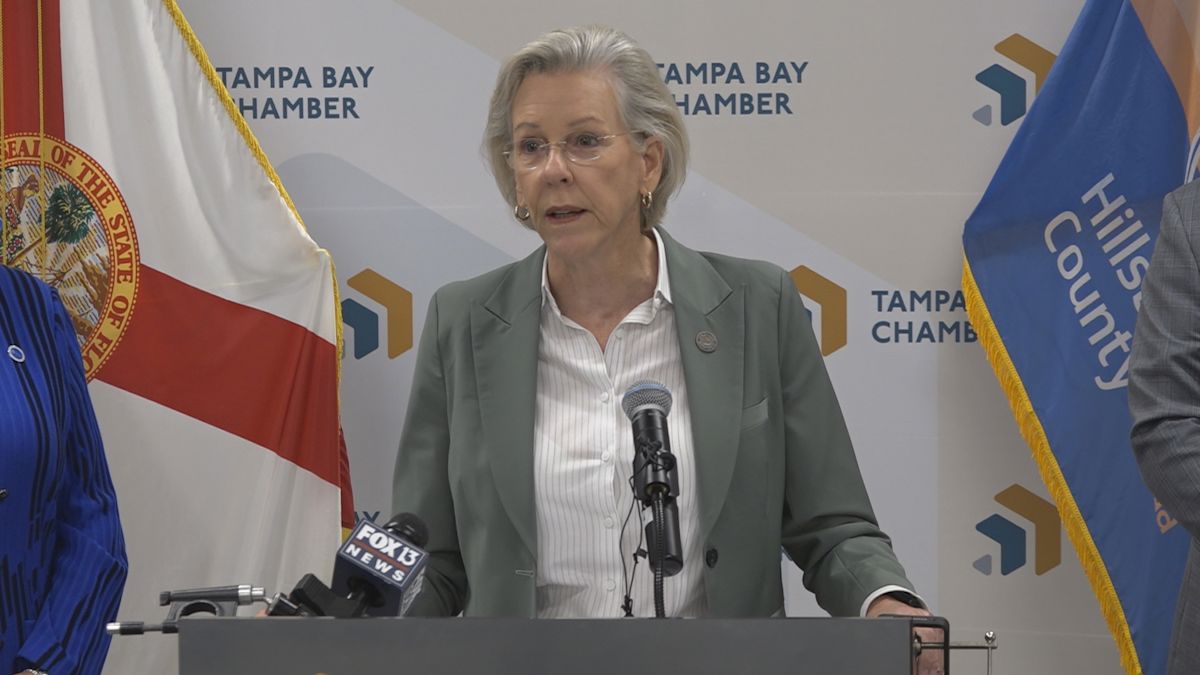
With Florida voters set to decide the fate of a sweeping property tax proposal in November, Tampa Mayor Jane Castor is warning residents that eliminating homestead property taxes could come at a cost.
Amendment 3 would gradually eliminate property taxes on homesteaded properties in Florida by increasing the homestead exemption in phases, beginning with an increase to $150,000 in 2027 and $250,000 in 2028, with additional increases expected in subsequent years.
Castor says the change could significantly reduce the revenue available to the City of Tampa to pay for essential services.
The city estimates Amendment 3 could reduce Tampa’s property tax revenue by between $35 million and $40 million in Fiscal Year 2028. That projected annual loss grows to between $60 million and $65 million in Fiscal Year 2029, and between $71 million and $74 million by Fiscal Year 2032.
“Amendment 3 would be very impactful not just for the City of Tampa, County of Hillsborough, but the entire state of Florida,” Castor said.
Tampa relies heavily on property tax revenue to fund its general fund, which pays for services including fire response, parks, roads, facility maintenance and code enforcement.
Castor pointed specifically to the city’s more than 200 parks, saying property tax revenue helps pay for their personnel and maintenance.
If the amendment passes, Castor said the city would still provide services — but residents could be asked to pay for them in new ways.
“As for the City of Tampa, we will continue to provide services, but there will be fees for those services,” Castor said.
She pointed to the city’s recreation program as one example, saying residents currently pay $15 a year for recreation cards.
“We won’t have $15 a year recreation cards,” Castor said. “Before you go into that booth and check a box, ensure that you are fully informed on what the consequences of that decision may be, because there are consequences.”
Supporters of Amendment 3 argue that Florida homeowners are struggling with rising costs and deserve property tax relief.
Margy Grant, CEO of Florida Realtors, said affordability is a major concern among the organization’s members.
“Our members, over 230,000 of them, have been communicating with us about the challenges of being a homeowner,” Grant said. “Costs continue to rise. Affordability is on the forefront of every homeowner’s mind right now.”
Florida Realtors has formed the Vote Yes on Three campaign to encourage voters to support the amendment.
“Amendment 3 is ultimately about one thing: giving Florida homeowners meaningful tax relief,” Grant said. “The cost of owning a home continues to rise, and Floridians deserve an opportunity to keep more of their hard-earned money.”
The Tampa Bay Chamber, however, opposes the amendment.
Chair Rob Ledford said the chamber agrees that affordability is a challenge but believes Amendment 3 is not the right solution.
“While Florida’s property tax system warrants thoughtful, comprehensive review and reform, Amendment 3 does not provide a responsible or sufficiently defined path to achieving meaningful change and relief,” Ledford said. “The Tampa Bay Chamber strongly believes this is the right question; it’s just the wrong answer.”
Ledford pointed to the Florida Taxation and Budget Reform Commission, which is scheduled to convene in 2027, as a potential avenue for broader tax reform.
Tampa isn’t the only local government examining what Amendment 3 could mean for its budget.
RELATED: What is Amendment 3? Voters will decide on the 2026 Nov. ballot what happens to property taxes
City of Largo officials said at a town hall Wednesday that about 60% of its general fund comes from property taxes and estimated that passage of Amendment 3 could reduce its budget by nearly $16 million.
Pinellas County is also preparing for the potential impact as it works on its next budget, with millions of dollars in cuts expected as officials plan for the possibility that the amendment passes.
Castor said Tampa will ultimately find a way to continue providing services, but she believes residents could feel the impact through new fees and charges.
“I don’t want to be overdramatic. I mean, we’ll survive. There’s no doubt about that,” Castor said. “But it’s going to change the way that services are provided, and the way that those services are paid for.”
Florida voters will need at least 60% approval for the constitutional amendment to pass. If approved, the measure would take effect in January.