
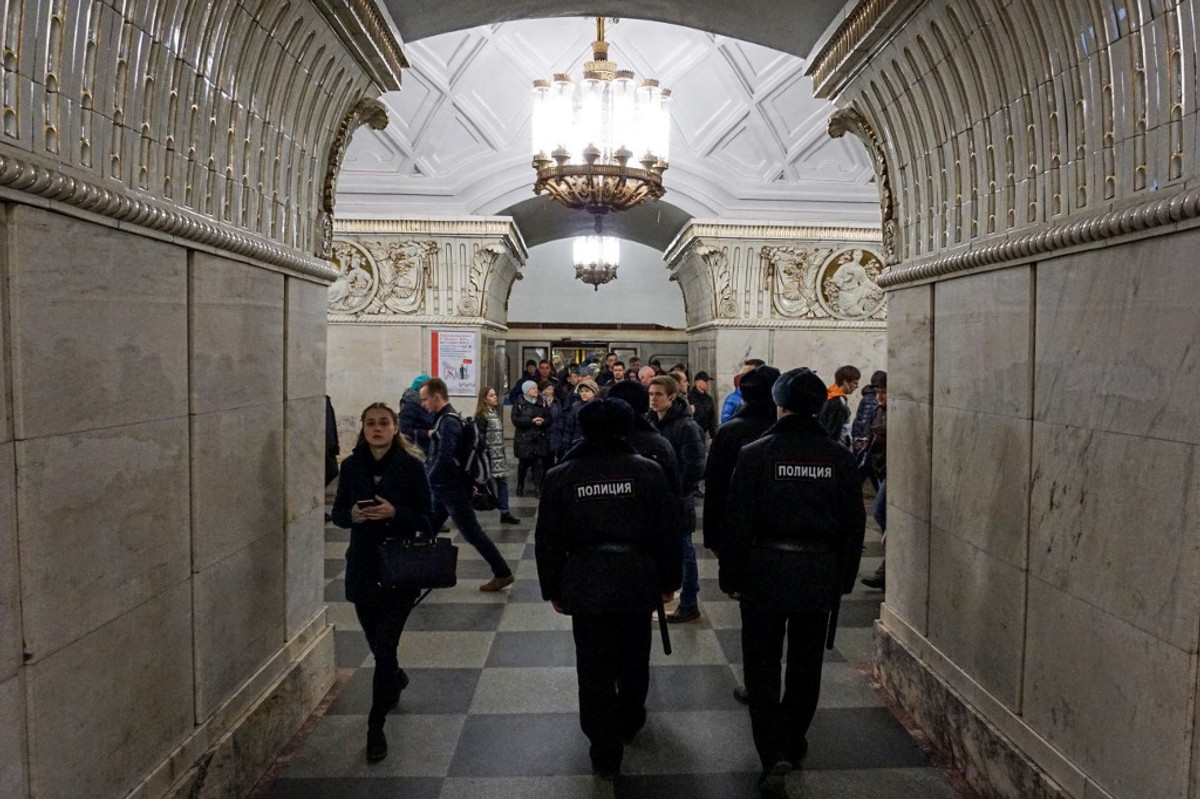
The St. Petersburg Metro plans to adapt nine stations for use as civil defense shelters amid growing concerns over potential emergencies and attacks, Russian media outlet Fontanka reported.
The project also covers four underground sections and around 35 kilometers (22 miles) of metro tracks, according to documents published on Russia’s government procurement portal.
JOIN US ON TELEGRAM
Follow our coverage of the war on the @Kyivpost_official.
On Thursday, the metro began looking for a contractor to prepare a feasibility study for the planned work. The contractor will determine which facilities need to be built, upgraded with additional equipment, or converted into protective shelters.
The study must also assess risks including changes in groundwater levels, ongoing urban development, and aging equipment.
Two emergency scenarios must be considered: an industrial disaster and a fire.
Particular attention will be paid to ventilation systems. If contaminated air enters the shelters, they must be capable of filtering out radioactive dust, aerosols, and toxic substances.
The St. Petersburg Metro had already conducted a similar price-monitoring exercise in March, suggesting the shelter preparations have been under consideration for months.
The city is also carrying out a broader inventory of civil defense shelters. Authorities inspected 2,633 sites in 2025, including standalone shelters and facilities located inside residential buildings. Officials said most required repairs.
Other Topics of Interest
Russian Chemical Giant’s Plant in Perm Targeted in Ukrainian Drone Strike
The reported target was the Azot plant in Berezniki, owned by Russian chemical giant Uralchem and one of the country’s largest chemical-industry enterprises.
St. Petersburg has also begun installing concrete shelters amid the threat of drone attacks.
The first appeared in Kronstadt, home to a key Russian Baltic Fleet base that has been targeted by Ukraine.
On June 3, the Boikiy corvette was reportedly struck in Kronstadt while undergoing repairs. The vessel had previously been seen escorting tankers linked to Russia’s shadow fleet.