
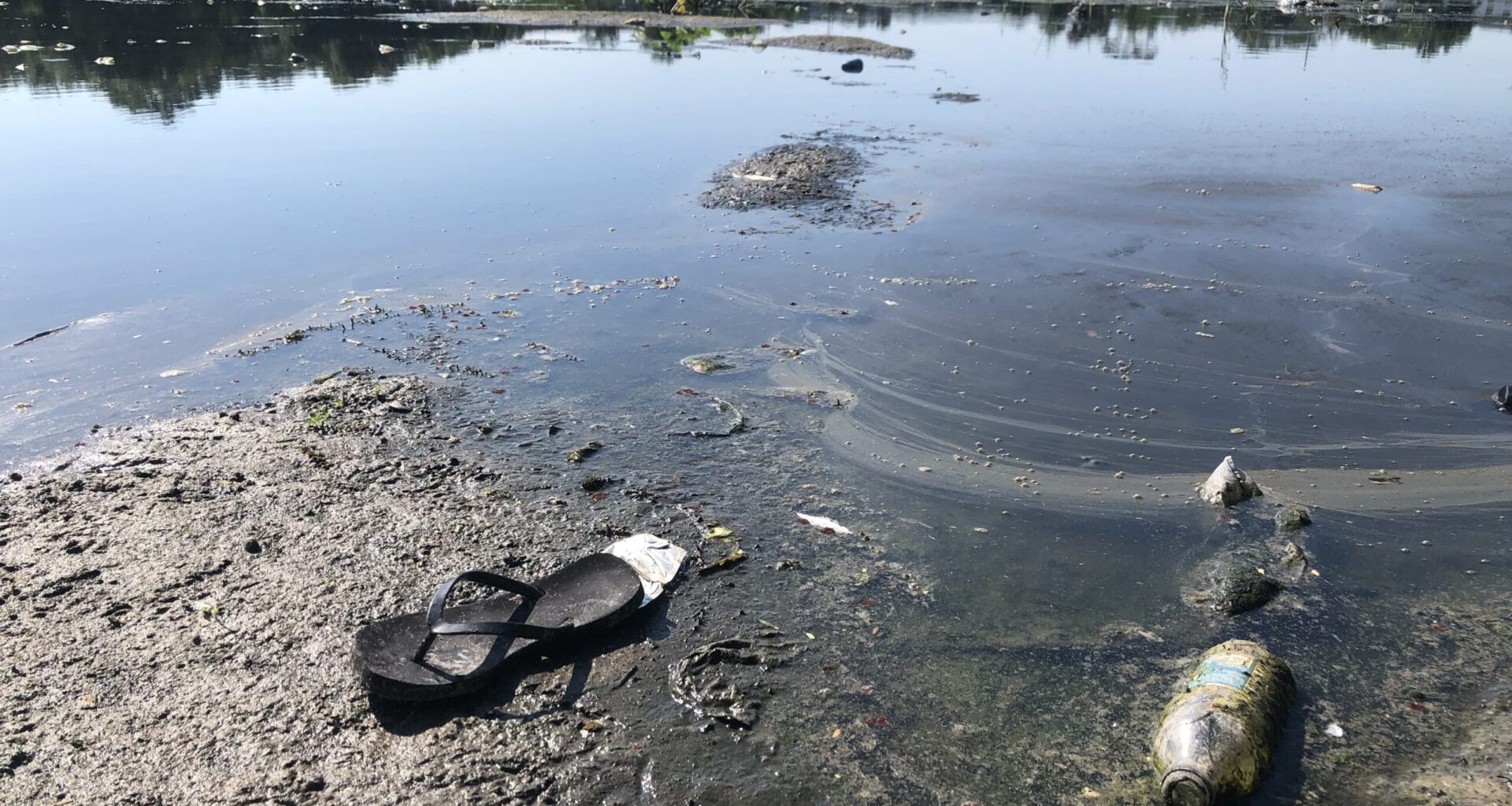
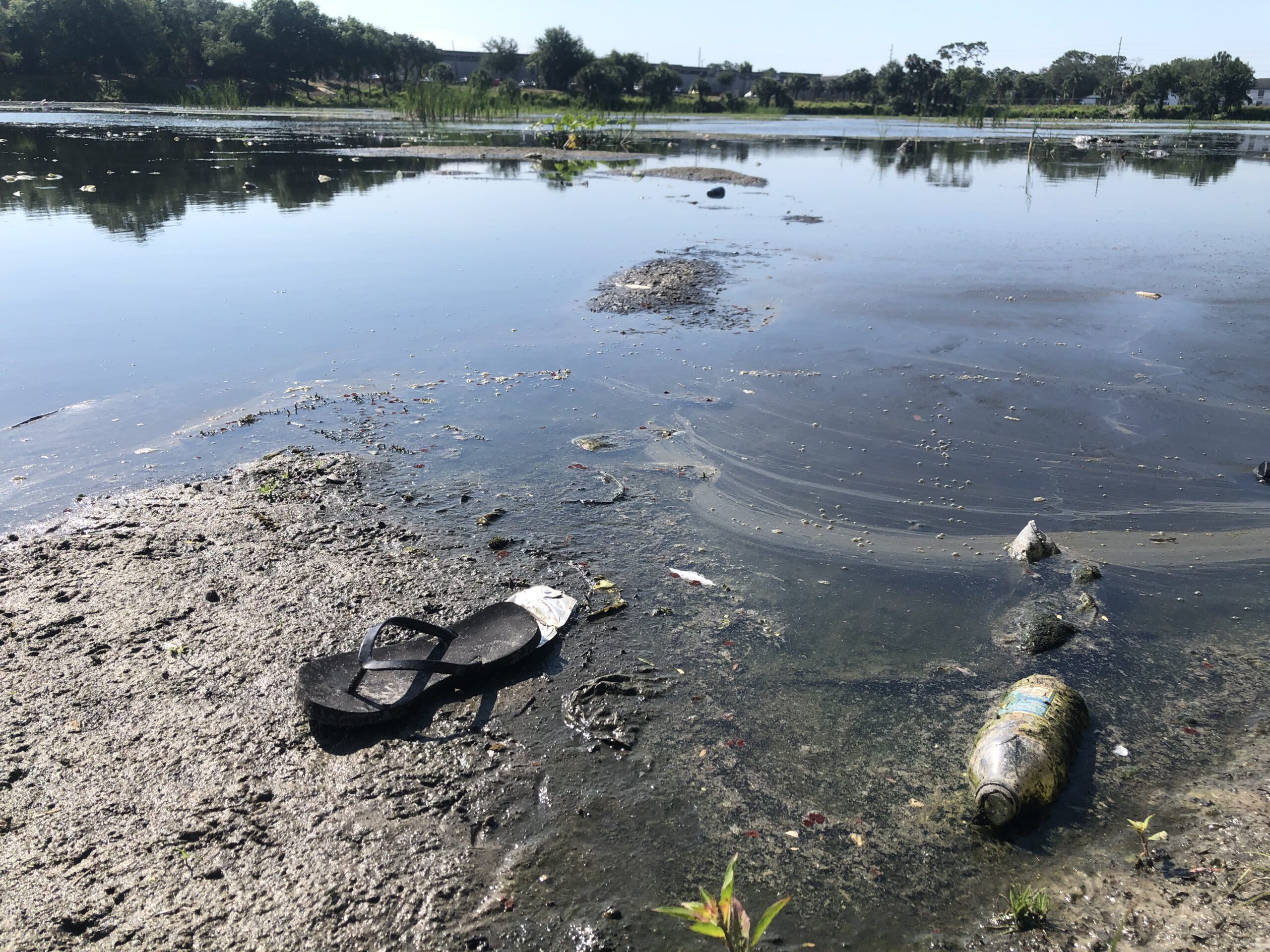
The University Area is one of the lowest lying parts of the Tampa Bay region, which leads to the creation of stormwater ponds. Curtesy of Christian Wells.
Listen here:
Tampa’s University Area is located near the University of South Florida.
It is home to about 10,000 residents, the majority of them renters.
It is also home to Aarans Pond, an artificial pond where contaminants and stormwater collect.
In December of 2024, the Environmental Protection Agency awarded $15 million to the University Area CDC and USF.
It was granted through the Environmental and Climate Justice Block Grant program.
This federal-funded initiative had set $3 billion to support community-led solutions to pollution and climate change in disadvantaged communities.
That’s until 5 months later, the Trump administration issued an executive order.
It’s called “Ending Radical and Wasteful Government DEI Programs and Preferencing”.
It aims to completely remove and ban all diversity, equity, inclusion, and accessibility (DEI/DEIA) projects across the federal government.
Christian Wells is a Professor of Anthropology and Director of the Center for Brownfields Research and Redevelopment at the University of South Florida.
“There’s just this feeling of outrage, I think, that a lot of people have because it’s, as they’ve said to me repeatedly, it’s not about race, it’s about community. It’s about having the same things that other communities have.”
The grant was awarded to address issues in the community relating to flooding, stormwater, and drinking water.
Wells adds that many residents rely on private drinking water wells and septic systems to manage their wastewater.
Kym Meyer is the Litigation Director at the Southern Environmental Law Center.
“The challenge is, even though we filed this case very promptly in March of 2025, it’s now September of 2026, and the funding actually expires at the end of this month. So we are kind of racing against the clock to get EPA to act before the funding expires.”
Despite the setbacks, Wells adds that the University Area is not giving up.
They push to find alternative funding options to advance its efforts in providing residents clean water.