
PORT CHARLOTTE — Charlotte County commissioners are struggling to commit to salary increases, hiring and big ticket items such as repairing hurricane-destroyed piers, citing the possibility of a budget catastrophe if Amendment 3 passes in November.
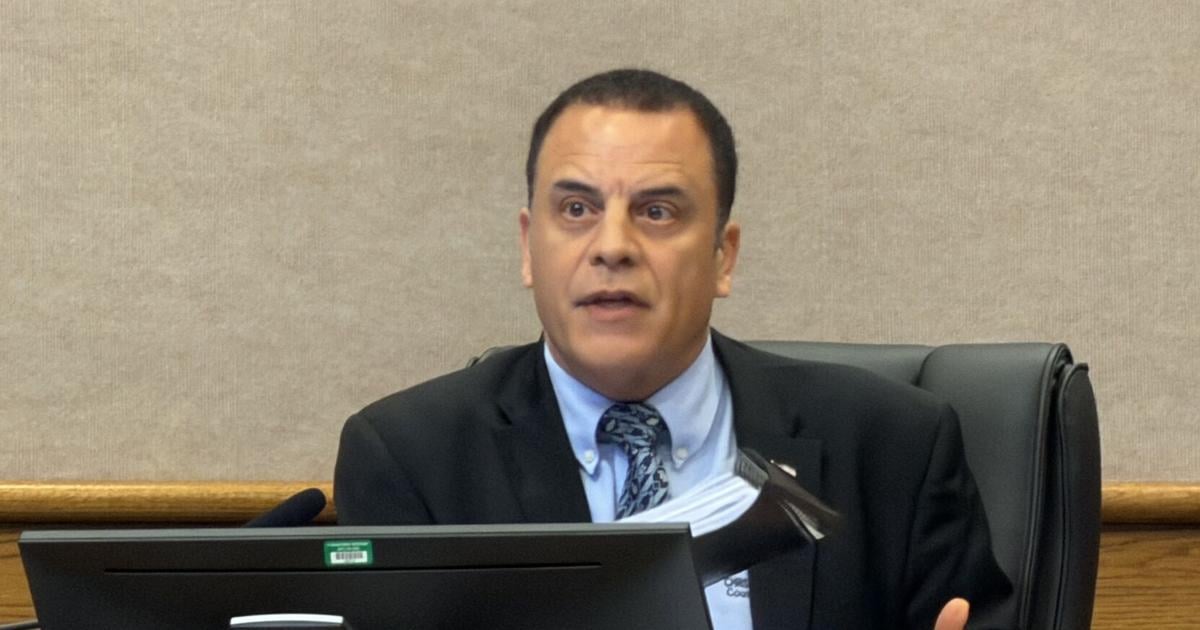
At the board’s Tuesday meeting, Commissioner Christopher Constance questioned whether the top three county executives should get a 4% raise when the county could be looking at staffing cuts.
In the end, commissioners voted 4-0 to grant the salary increases, which are the same for other county staff whose salaries the commission do not negotiate. They agreed the staff are probably paid less than they are worth, given their level of responsibility and accomplishment.
Commissioner Stephen R. Deutsch was not present.
Commissioners also postponed a decision on whether the five commissioners should each have a personal assistant. Instead, they voted 4-0 to not replace any of the five commission assistants who leave before Nov. 3, and decide what to do permanently after that.
Amendment 3 was put on the Nov. 3 ballot by the Florida Legislature in a move that could eliminate large amounts of property tax revenue available to local governments in a state with no income tax.
Contrary to the proposal by Gov. Ron DeSantis, the Legislature kept the largest amount of property tax assessment for schools, but introduced large reductions in other taxable property value that pays for public safety and all other public services.
The reduced taxes would apply only to full-time residents, after they have been in Florida for five years. It would not apply to the 62% of Charlotte County property owners who are not full-time or are commercial and industrial, but it lowers the cap on how much the county can assess that property, too.
In June, fiscal staff confirmed to commissioners that the new system would reduce county anticipated property tax revenue by 16% in the first year and another 26% in the second year when the property value exemption jumps from $150,000 to $250,000. The levy continues to decline after that.
“I said I was going to start talking about austerity,” Constance said Tuesday. “We’ve got financial issues we’re going to be dealing with in this county, and I think they’re going to get worse after November. I want that in perspective when we’re deciding whether we’re going to be giving salary increases (to the top three executives) at this point.”
Commissioner Ken Doherty urged a wait-and-see approach.
“I think we’re going to have to make some very, very difficult decisions if the amendment is successful, but we don’t know that…It could get painful after Nov. 3 and that’s when we begin the real planning…I’m going to wait and see what happens on Nov. 3.”
Constance also proposed a hiring freeze on the five administrative assistants for commissioners, but other commissioners pointed out that there are currently five, so a freeze does not address any cost savings.
Commissioners Bill Truex did all agree with going back to three, as was done 14 years ago, given the huge population increase.
“If somebody happens to leave, then no replacements until we find out about Amendment 3,” Truex said.
They agreed that the assistants should be supervised ultimately by the county administration rather than commissioners, particularly if the number goes to less than five.
In the wake of complaints about the county’s failure to replace hurricane destroyed docks, piers and boardwalks, Parks and Recreation Director Tommy Scott presented detailed descriptions of the options for rebuilding at three sites: Bayshore Live Oak north of Sunseeker Resort, Live Oak Point to the south of Sunseeker and Port Charlotte Beach Park.
With the recommended cost of replacements totaling more than $22 million, the County Commission balked at committing to more than the design phase.
“I don’t want to move on any of this stuff until I have a better understanding of the dollars,” Doherty said. “It does fall back into need instead of want.”
Tommy Scott appreciated it, adding a polite caveat.
“We’ve been trying to be expedient…I know there’s been some chatter that nothing’s happened.”
Just getting permits for construction could take years, he said.
Scott was referring to complaints that the Charlotte County fishing piers were still gone four years after the hurricanes, leading the state Department of Transportation to try to block crowds fishing off the U.S.41 bridge at Charlotte Harbor.
“I don’t think we stopped the design and permitting,” Doherty said, “but we may have to logically stop at a certain point.”
Commissioners agreed with county staff decisions to go with heavy timbers to rebuild the piers rather than the more expensive cast concrete. Several commissioners suggested skipping the rebuild on the outermost pier south of Sunseeker Resort, and just repairing the inner pier that provides a connection under U.S. 41 to the Live Oak Point Park. This would save several million dollars, they noted.
What if a future board of commissioners complains about a mangled pier, Tiseo asked? Wait to see if the Federal Emergency Management Agency commits to paying, Constance said.
FEMA has only paid about 30 cents on the dollar, county staff told commissioners.
No one felt confident of when and whether FEMA would reimburse further for hurricane damage.
“I’m questioning the future of funding from the federal government,” Doherty said.
Commissioners also held off on approving six new bathrooms for county parks.
“With property tax on the ballot, I don’t have an appetite for moving forward,” Constance said.
They asked staff to research the current status of bathrooms, including those with only portable toilets.
Another big ticket item is helping Don Pedro Island pay for beach rebuilding following hurricane destruction.
Commissioners agreed the county should split the cost with the residents. Fears of future budget problems however, led the board to commit to one year at a time in deciding how to pay for a multi-year project.
Both the county and the residents have each committed to paying close to $10 million for the entire project.
Commissioners postponed a discussion on how much they can draw from tourism tax dollars and how much is left in the hurricane contingency fund they created earlier.