
Welcome to the Catalyst’s Community Voices platform. We’ve curated community leaders and thinkers from all parts of our great city to speak on issues that affect us all. Visit our Community Voices page for more details.
During the 2024 hurricanes, between 10,000 and 15,000 homes and many businesses and city critical facilities were flooded as a result of 20 inches of intense rainfall and a seven-foot surge. Damage estimates from Hurricanes Helene and Milton exceeded $2 billion. The lion’s share of this, between $1.3 and $1.5 billion, impacted neighborhood homes. And some $500 to $700 million of this is still under construction or awaiting repair. Many residents lost or have not yet returned to their homes.
Such devastation was part of a pattern of accelerating extreme weather. The 2024 hurricanes highlighted infrastructure vulnerabilities and water service disruptions. The storms threatened two of St. Pete’s three wastewater treatment plants with flooding, ruptured water pipes citywide, forced shutdowns of both water and sewer, and caused sewer spills.
Shore Acres neighborhood impact
While many neighborhoods were flooded throughout the city, one of the hardest hit was Shore Acres, one of our city’s largest neighborhoods with approximately 2,700 homes. In 2024 the neighborhood experienced a record-breaking 6.3-foot storm surge from Hurricane Helene.
According to City staff, approximately 2,200 Shore Acres homes were flooded during Helene and Milton. Water level in some homes reached as high as four feet, and streets were not drivable. Property values plummeted. While Shore Acres has a wide range of property values, in the past year 55% of homes were sold or have a contract pending below $400,000.
Shore Acres is the lowest lying neighborhood in the city. While the hurricanes impacted Shore Acres severely, the neighborhood also experiences elevated flooding from “sunny day” flooding due to gradual sea level rise and king (exceptionally high) tides.
A major reason for all of this is the neighborhood’s geology. It is shaped like a saucer with roughly one to two feet above mean sea level in some areas. Conventional gravity drainage becomes ineffective as tide levels rise.
There are similar challenges in other neighborhoods. For example, the topography surrounding Emerald Lake in North Kenwood is shaped like a bowl. Normally stormwater is handled by draining into Emerald Lake and then is piped to Bayboro Harbor. But during the 2024 storms the outflow pipes could not handle the extreme rainfall, flooding homes throughout the 93 acres surrounding the lake.
The City has done extensive planning and committed substantial funding to mitigate flooding in Shore Acres. Recently the City received a $2 million state grant for a pump station on Denver Street. The pump station will pump stormwater water into the bay. The Denver Street project will cost a total of $25 million.
It is currently in the design phase and expected to be completed in 2028. The project will reduce flooding for nearby homes, and keep streets in that area clear from tidal and rainfall flooding. (It will not help against storm surge flooding, other than to more quickly drain water out after a surge. During a surge drainage pipes exiting water into the bay are delayed or blocked by the higher surge water.)
The Denver Street project will be the second pump station for Shore Acres. The first is the $32 million Connecticut Avenue Station approved by the City Council last December. The Connecticut Avenue project is expected to break ground in the spring of 2027. Two additional pump stations are planned for Shore Acres in the Arizona Avenue area and near the Shore Acres Recreation Center (4230 Shore Acres Blvd.)
According to Public Works administrator Claude Tankersley, once the Connecticut Avenue station is installed it will have the ability to suck out and pump away the equivalent of four Olympic swimming pools (100,000 gallons) every minute. There are presently four operating pump stations in the city, located across Riviera Bay, Emerald Lake and 38th Avenue N.
Despite the 2024 flooding, Shore Acres continues to be a resilient community where neighbors take care of each other. With each storm, lessons are learned, not just for Shore Acres but the entire city, and consequent improvements are made in flood control planning and technology to better mitigate future storms.
City-wide planning for flood control
All of this is part of the City’s St. Pete Agile Resilience Plan (SPAR). SPAR includes an array of projects designed to address stormwater flooding, sewer backups, sewer spills and drinking water disruptions. The “agile” part of the plan means the City can adjust projects over time based on infrastructure needs, engineering feasibility, cost, funding availability, community benefit, changing conditions and lessons learned from earlier projects.
General Obligation bonds
For the fiscal years 2027 through 2050 City capital projects for stormwater, drinking water, and wastewater disposal are estimated at $4.4 billion of which SPAR projects represent $2.7 billion. SPAR projects currently are paid for using utility rate funding. Projects are undertaken as funds become available over time.
Rather than increase utility rates to accelerate SPAR projects, the City is proposing the issuance of $600 million in General Obligation (GO) bonds. If adopted and approved by voters Nov. 3, the General Obligation bonds will increase the City’s capacity to deliver SPAR projects five years earlier than planned.
Bonds will fund three types of improvements: Stormwater, drinking water and wastewater infrastructure:
Stormwater mitigation
It is estimated by the City that approximately 42% of bond revenue would be used for prevention and mitigation of stormwater flooding affecting homes, businesses and critical public infrastructure. While this includes flooding from hurricanes and other catastrophic storms, also included is flooding from intense afternoon thunderstorms and king tides.
Possible improvements include upsizing pipes and culverts, expanding capacity in canals, creeks and ditches, elevating roads, increasing water collection and storage, backflow preventors and pump stations. Funds may also be used to mitigate surge, including use of living shorelines, living seawalls, “sponge parks” and other natural “blue green infrastructure” strategies.
Safeguarding drinking water
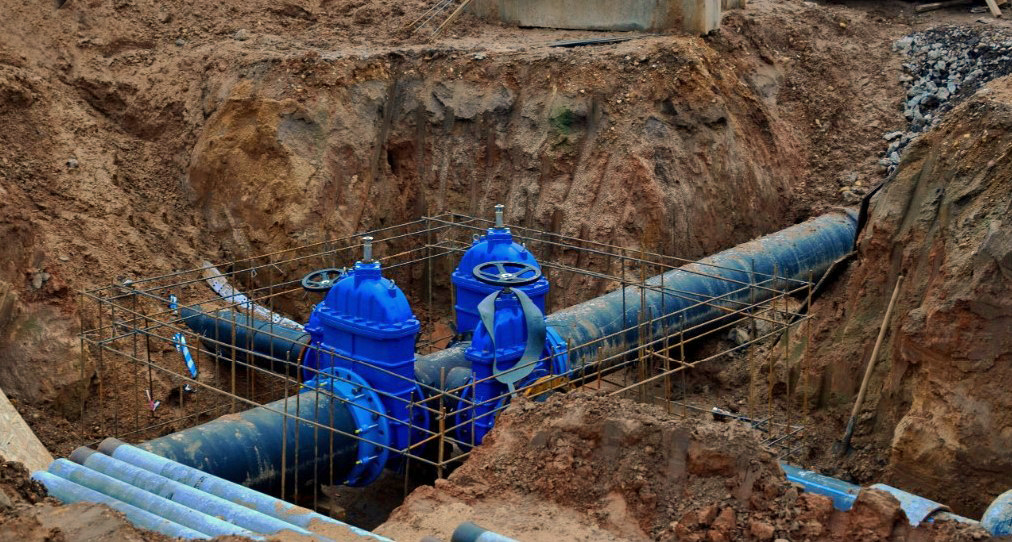
Some 16% of the bond revenue would be used for improvement of drinking water infrastructure. The drinking water supply is subject to disruption during severe weather events, sometimes leading to water contamination. Projects would include construction of new and improved pipelines, replacement of corroded pipes, and improving interconnection between pipelines.
Wastewater disposal improvements
The remaining 42% would be used for wastewater infrastructure improvements to reduce sewer treatment disruption, backups and overflows. Improvements would include upsizing existing pipes, reduction of pipe inflow and infiltration from stormwater, protecting and upgrading sewer lift stations, constructing wet weather express sewer pipelines, elevating critical plant equipment, installing flood barriers, enhancing emergency backup power and providing for emergency storage of sewage. Without immediate infrastructure upgrades, the next storm could mean more sewer spills, and water or sewer service disruptions for hundreds of thousands of residents.
Cost benefits
Many studies document the cost savings of such an investment. For example, the National Institute of Building Sciences has determined that every $1 spent on federal hazard mitigation saves approximately $6 in future disaster losses. Investing in flood control prevents or mitigates damage to property, reduces insurance costs, increases property values and minimizes economic disruption including business closings and job displacement. Above all, there is the human cost of physical and mental trauma.
Bonds would be repaid through a dedicated property tax. The entire $600 million would not be issued at once, but only as required over time. Assuming the bonds were issued at once, the City estimates the effect on property taxpayers would be approximately on average $96 per year per $100,000 of taxable value.
If the first bond issue were for $150 million, the repayment associated with that would be approximately $24 per $100,000 taxable assessed value, and so forth. The City has determined issuance of bonds would be significantly less costly than increasing utility bills for 89% of property tax payers.
Resiliency for the future
Both the Council of Neighborhood Associations (CONA) and the Sierra Club support the GO Bond alternative. The CONA statement reads in part, “CONA supports significant, responsible investment to strengthen critical infrastructure and prepare St. Petersburg for the future.”
CONA also emphasizes the need to provide a strong oversight committee with significant neighborhood representation for implementation of SPAR projects funded through the bond initiative. Also emphasized are the importance of blue green infrastructure and further planning and development of projects to mitigate surge.
The Sierra Club statement notes the “bond is urgent triage for woefully outdated stormwater, wastewater, and potable- water infrastructure.” The Sierra statement also emphasizes blue green infrastructure, an oversight committee and development of a more comprehensive citywide resilience plan which includes significant mitigation of surge. The City Council Health, Energy, Resilience, and Sustainability (HERS) Committee will address these measures at their September meeting.
Recently the Chamber of Commerce polled 246 of its members regarding the Flood Bond Initiative. Some 44% supported the bond initiative; 13% opposed; and 43% were undecided. The large number of undecided is an indication that more information is needed regarding the initiative is needed by the public.
For additional information on the SPAR Plan, General Obligation Bonds, and proposed flood control, wastewater and potable-water projects, including an interactive map showing the locations of proposed projects, visit: https://www.stpete.org/residents/sustainability/spar/index.php
(An earlier version of this article was published in the Northeast Journal.)
Will Michaels is a former executive director and trustee of the St. Petersburg Museum of History. He presently serves as chair of the Council of Neighborhood Associations Committee on Flood Control Planning and Resiliency. He may be reached at wm***********@***il.com.