
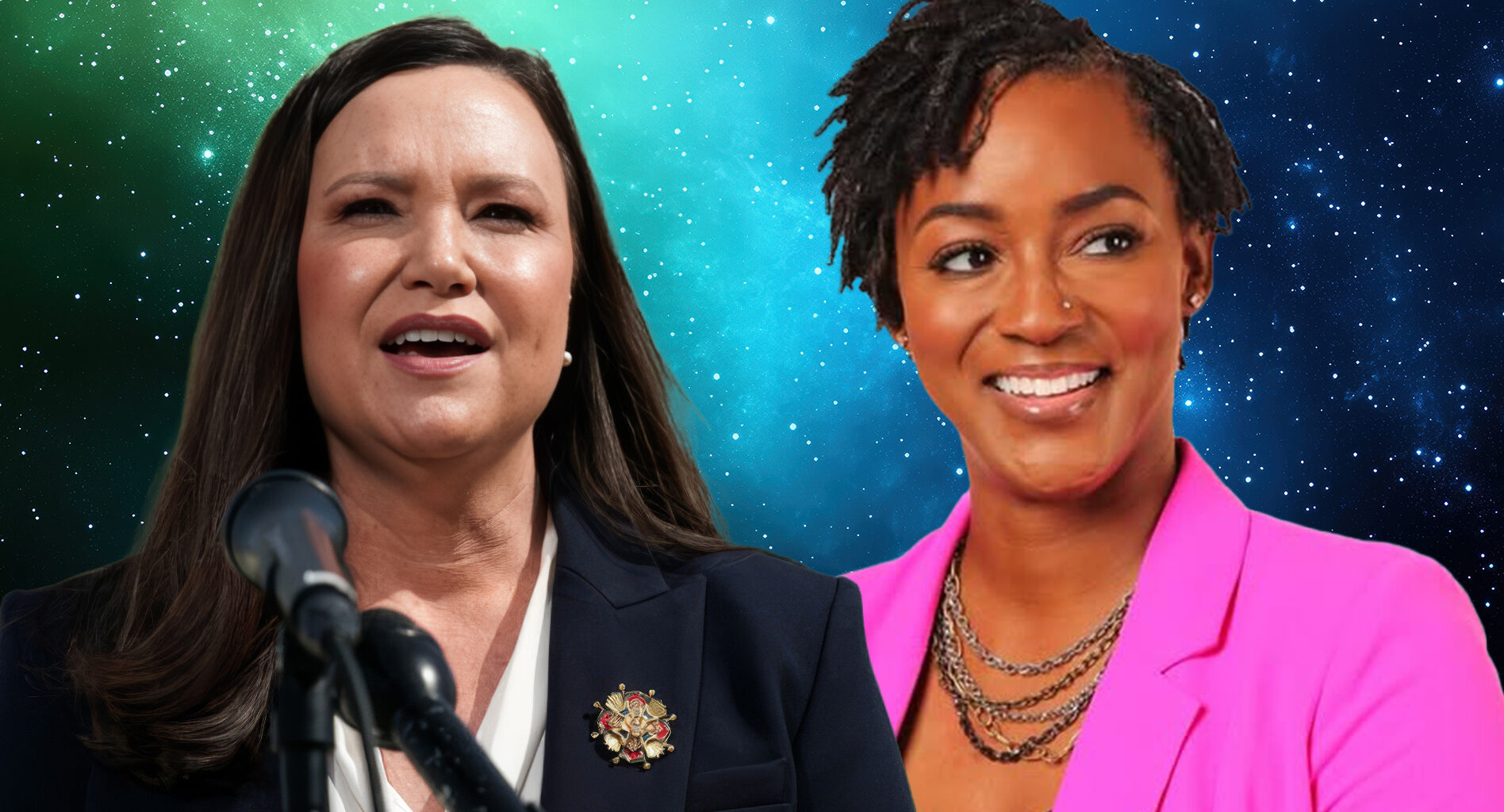
U.S. Sen. Ashley Moody and Democratic challenger Angie Nixon are essentially tied in Florida’s U.S. Senate race, according to a new St. Pete Polls survey conducted for Florida Politics.
Moody and Nixon each have 45% support among likely General Election voters. Before rounding, Moody leads by four-tenths of a percentage point. Another 3% picked someone else and 7% are undecided with less than seven weeks until Election Day.
The survey of 913 likely voters has a margin of error of plus or minus 3.2 percentage points.
Republicans hold an advantage of more than 1.5 million registered voters over Democrats in Florida, according to the Division of Elections. The sample was weighted to match the active voter rolls: 42% Republican, 31% Democratic and 27% no party or minor party. Republicans made up 45% of respondents before weighting.
The same survey had Republican Byron Donalds at 44% and Democrat David Jolly at 43% in the race for Governor.

Nixon leads 50% to 37% among voters outside the two major parties, with 10% undecided. She also takes 12% of Republicans. Moody gets 8% of Democrats and holds 77% of her own party, compared with 85% of Democrats for Nixon. St. Pete Polls reports its demographic breakdowns before weighting.
Moody, a Plant City Republican, was twice elected Attorney General before Gov. Ron DeSantis appointed her last year to replace Marco Rubio, now Secretary of State. She won the GOP Primary with 80% of the vote.
Nixon is a state Representative from Jacksonville and a member of the Democratic Socialists of America. She won the Democratic nomination with 56% of the vote over Alex Vindman, who outspent her by more than 10-to-1.
Nixon leads 64% to 25% with voters under 30 and 54% to 35% with those 30 to 49. Moody is ahead 47% to 42% among voters 50 to 69. She leads 61% to 32% with voters 70 and older, and 4% of them are undecided.
Black voters back Nixon 74% to 14%, with 8% undecided. A University of North Florida poll in July had her ahead 78% to 8% with that group. Moody leads 53% to 37% with White voters and trails 51% to 39% with Hispanic voters.

Men lean Moody 46% to 44% and women split 45% each. The UNF poll also had women evenly divided, at 46%.
Moody leads 49% to 41% in the Tampa media market, the largest in the survey and her home base. She also leads Fort Myers 53% to 32% and West Palm Beach 49% to 40%. Nixon leads in her home market of Jacksonville, 52% to 42%, and in Miami, 52% to 40%. Orlando is closer, with Nixon up 47% to 42%. The smaller markets have too few respondents to draw conclusions.
A Quantus Insights survey taken Sept. 8-10 had Moody ahead 50% to 43%. Its sample was 47% Republican and 34% Democratic. The UNF poll in July had Moody up 50% to 42%. An Emerson College poll this Spring had her ahead 47% to 36%.
A Change Research poll this month had the race tied at 47%, though pollster Steve Vancore questioned its likely voter screen in a review for Florida Politics.
Across those four surveys, Moody ranged from 47% to 50% and Nixon from 36% to 47%.
The RealClearPolling average showed Moody ahead by nearly 9 points before this survey.
Moody raised $11.3 million through the end of July and had $8.4 million on hand after the Primary. Nixon had raised less than $1 million by then. Her campaign has reported increased fundraising since she won the nomination. Moody declined the first of three debate invitations earlier this month.
St. Pete Polls conducted the survey Sept. 15-17 for Florida Politics, using automated phone calls for 57% of responses and peer-to-peer text messages for 43%. Respondents were drawn at random from the state’s registered voter file as of Aug. 11. Results were weighted by political party, race, age, gender and media market to match Florida’s active voter population. Voters who said they do not plan to vote in the General Election were excluded. Of those who remained, 95% said they plan to vote in November and 5% were unsure. The margin of error is plus or minus 3.2 percentage points at a 95% confidence level.
— Ed. note: This story was drafted with assistance from AI. Editorial judgment, sourcing, and final review were performed by Peter Schorsch and the Florida Politics editorial team.