
Hours after writing that he was awake at 2:30 a.m. wrestling with one of the most consequential votes of his tenure, Tampa City Council Chair Alan Clendenin cast the deciding vote to approve the $100.4 million South Howard Flood Relief Project.
Clendenin had spent the night weighing a project that has divided neighborhoods, businesses and City Hall for months.
“Today I’ll make what may be one of the most difficult and consequential decisions I’ve faced since joining City Council,” Clendenin wrote on Facebook. “I’ve wrestled with this one because I know whatever decision I make will have a very real impact on people’s homes, businesses, and lives.”
The Council ultimately voted 4-3 to move forward, approving a $92.7 million construction agreement with Kimmins Contracting Corp. and related funding measures for a major new drainage system serving Parkland Estates, Palma Ceia Pines and surrounding neighborhoods.
Clendenin joined Council Members Lynn Hurtak, Charlie Miranda and Luis Viera in support. Bill Carlson, Guido Maniscalco and Naya Young voted against the project.

The decision pushes Tampa past a debate that has stretched for years and intensified in recent weeks as residents, business owners and Council members made competing cases over whether the city should start digging or reconsider its approach.
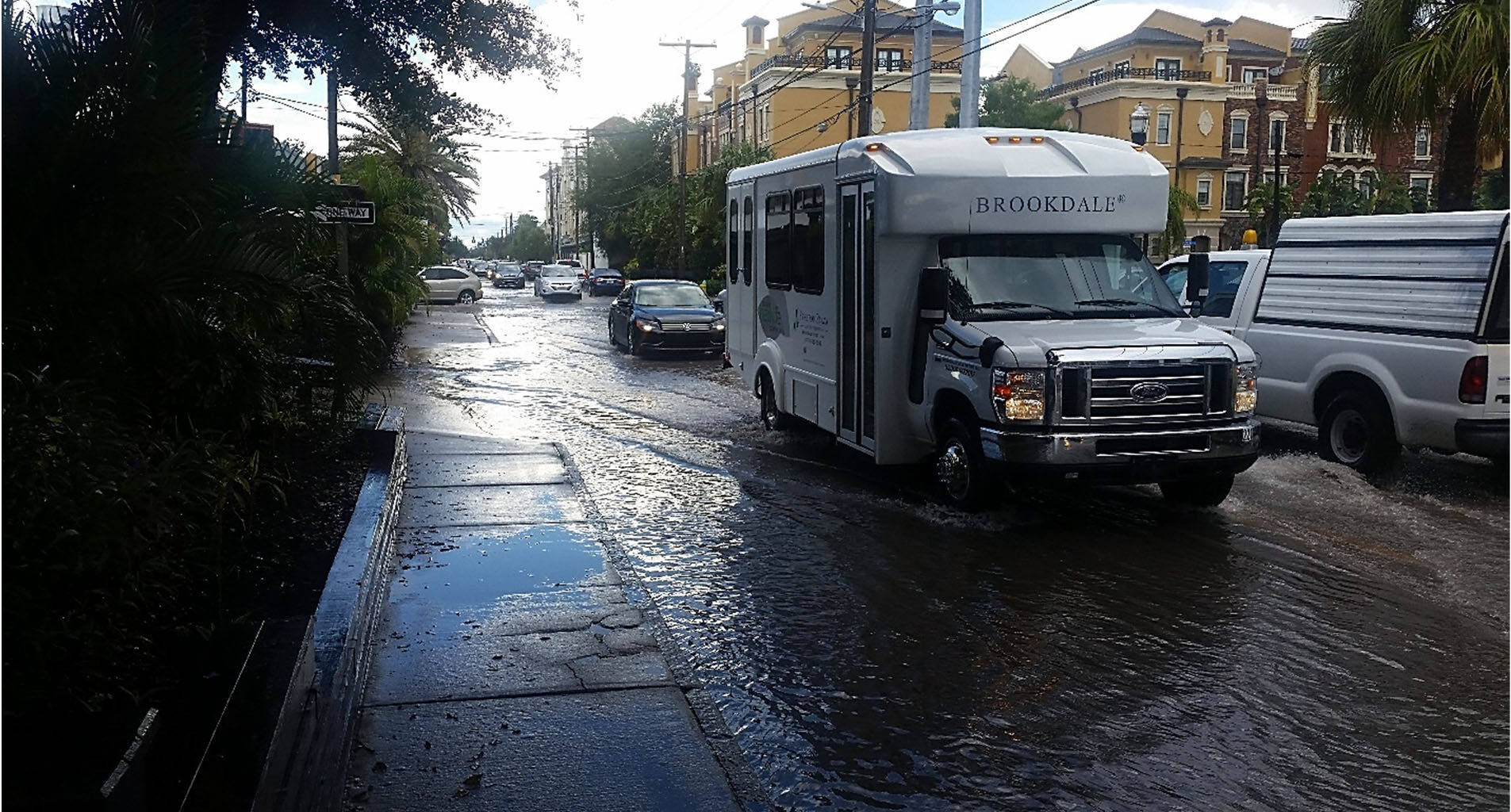
Supporters say the project is an overdue response to chronic flooding that has damaged homes, submerged streets and complicated access through low-lying parts of South Tampa. They argue Tampa has studied the basin for years, has a designed solution in hand and that waiting longer leaves residents exposed to the next major rain event.
Palma Ceia Pines resident Beth Steimle said her home flooded while she was recovering from her final surgery for breast cancer.
“I mention that because it changed what flooding meant to me. At a time when I needed my home to be a safe place to recover, it wasn’t,” Steimle said.
“For those of us in Palma Ceia Pines and Parkland Estates, this is not an abstract infrastructure project. We know the damage, we know the cleanup, we know the disruption and the anxiety that comes every time another major storm is in the forecast. There are people in these neighborhoods who are older, caring for children, dealing with illness, recovering from surgery or caring for aging parents. They should not have to wonder whether their home will flood or whether they will safely get to where they need to go.”

Opponents don’t dispute that flooding needs to be addressed, but question whether this project is the best use of roughly $100 million, whether alternatives could provide similar relief with less disruption and what nearly four years of construction could mean for businesses along South Howard. Others have questioned how much stormwater funding would remain for flood-prone neighborhoods elsewhere in Tampa.
Body by Design owner Linda Misner said the city still had not adequately explained how customers and employees would reach her business during construction and worried nearby excavation could damage its century-old bungalow.
“Both the city and Kimmins staff repeatedly refused to answer questions about what happens if our 100-year-old bungalow is damaged by the vibrations of the digging, the massive trenches nearby,” Misner said.
“They have said we will need to get an inspection before the project and another after the project at our own expense to prove that we have damage. That is ridiculous. It was recently suggested to me that maybe we could pause our business for a few months while we can’t reach our own building, and that is unacceptable. We are a business. It is our livelihood. It is our employees’ livelihood. It is not a hobby. We deserve better.”
The South Howard Flood Relief Project is meant to improve chronic flooding in Parkland Estates and surrounding neighborhoods.
At the center of the project is a 10-foot-by-10-foot drainage box designed to create a much larger path for stormwater trapped in low-lying neighborhoods to reach Hillsborough Bay.
The work would add roughly 7,000 feet of stormwater infrastructure, upgrade nearly 12,000 feet of water mains and relocate another 3,200 feet of sewer lines. Tampa has already spent about $7.7 million on design, bringing the overall project cost to approximately $100.4 million.
City engineers say the project would eliminate structural flooding at about 96 homes and businesses during the five-year, eight-hour storm it is designed to handle, improve drainage for more than 1,000 homes and numerous businesses, and help maintain access to HCA Florida South Tampa Hospital and nearby medical offices. Modeling also found the system could have spared roughly 230 homes and businesses that flooded during rainfall comparable to Hurricane Milton.
Construction is expected to take about four years. Officials have said crews would generally work in sections of about 400 to 600 feet rather than disrupting the entire corridor at once and plan a “SoHo Open” campaign aimed at keeping customers coming to the district during construction.
The SoHo Business Alliance and many local businesses pushed Tampa to give greater consideration to alternatives they argue could provide flood relief with less excavation along the commercial corridor.
Business owners told the Council that the disruption would extend well beyond individual storefronts, pointing to hundreds of employees whose jobs and income depend on restaurants, hotels, medical offices and other businesses along South Howard. Several warned that prolonged access problems could cost them weddings, group bookings, corporate contracts and other business long before construction is finished, with some saying the uncertainty is already affecting future bookings.
Council Member Bill Carlson has raised a broader concern, arguing Tampa should consider alternatives before committing nearly $100 million and questioning what the investment would leave available for other flood-prone neighborhoods.
City finance officials clarified Thursday that Tampa’s five-year capital plan would still provide about $30 million for other stormwater projects already programmed through fiscal year 2031. But the plan does not provide funding during that period for additional projects outside those already included in the capital plan, keeping alive Carlson’s concern about neighborhoods that are not yet on the list.
At the Council’s Sept. 3 discussion, Clendenin zeroed in on another major uncertainty: the CSX railroad crossing between the neighborhoods and Hillsborough Bay.
The current construction price assumes Tampa will retain an existing 5-foot-by-10-foot culvert beneath the railroad and bore an additional 60-inch pipe beside it. The city would prefer a full 10-foot-by-10-foot culvert, which officials have said could save roughly $3 million but would require CSX to allow the tracks to close for four to six weeks.
Neither option had received final CSX approval when the Council last considered the project.
Clendenin said during that discussion that he wanted to “get to yes,” but questioned committing roughly $100 million without greater certainty that the system could get beneath the tracks at its intended capacity.
City staff gave him additional assurances Thursday. Mobility Director Brandon Campbell told the Council that a denial from CSX would be “extremely unlikely.” He said the railroad has responded to the city’s latest submission with four requirements and indicated a permit would follow if those conditions are met. Campbell also said Tampa has successfully secured permits for at least 40 to 50 previous CSX crossings without a denial.
Clendenin acknowledged that the railroad question remained unresolved, but said at the meeting the remaining uncertainty no longer outweighed the consequences of waiting.
“I don’t like that we don’t have the issue completely resolved. It bothers me, and I’ve made that very clear to everybody concerned,” Clendenin said. “But difficult decisions rarely come to us with every uncertainty eliminated. So I’ve had to weigh the uncertainty against something else that is very real: the consequences of doing nothing. Doing nothing is also a decision.”
He ultimately said flood protection is a basic public safety responsibility of city government, alongside police, fire and emergency response.
After weeks of questions and what he called “a lot of soul-searching,” Clendenin said he had reached his conclusion.
“I believe the greatest risk is failing to act,” Clendenin said. “To those who have lived with the flooding and the next generation that will benefit from this project, I stand with you. And to those who disagree with my decision, I respect you and I heard you, and my questions will not stop tomorrow.”
Even with Thursday’s approval, the project will not solve every flooding problem in the area.
City officials say the first phase should eliminate structural flooding in Palma Ceia Pines during the storm it is designed to handle, but additional improvements would eventually be needed to more fully address roadway flooding there. Staff has estimated future work at roughly $27 million to $40 million, with no construction schedule set.
Supporters argue the South Howard system has to come first because future neighborhood improvements need a larger drainage route capable of carrying water to the bay. Skeptics point to that additional work in questioning how far the city’s initial $100.4 million investment will ultimately go.
Mayor Jane Castor, who does not vote on Council contracts, has consistently backed moving the project forward, arguing additional study would leave flood-prone neighborhoods waiting longer for relief.
“Thank you to the City Council members who voted to move the South Howard Flood Relief Project forward. This is a major investment in Tampa’s resilience and, most importantly, in the residents and businesses that have lived with flooding for far too long,” Castor wrote on social media following the vote.