
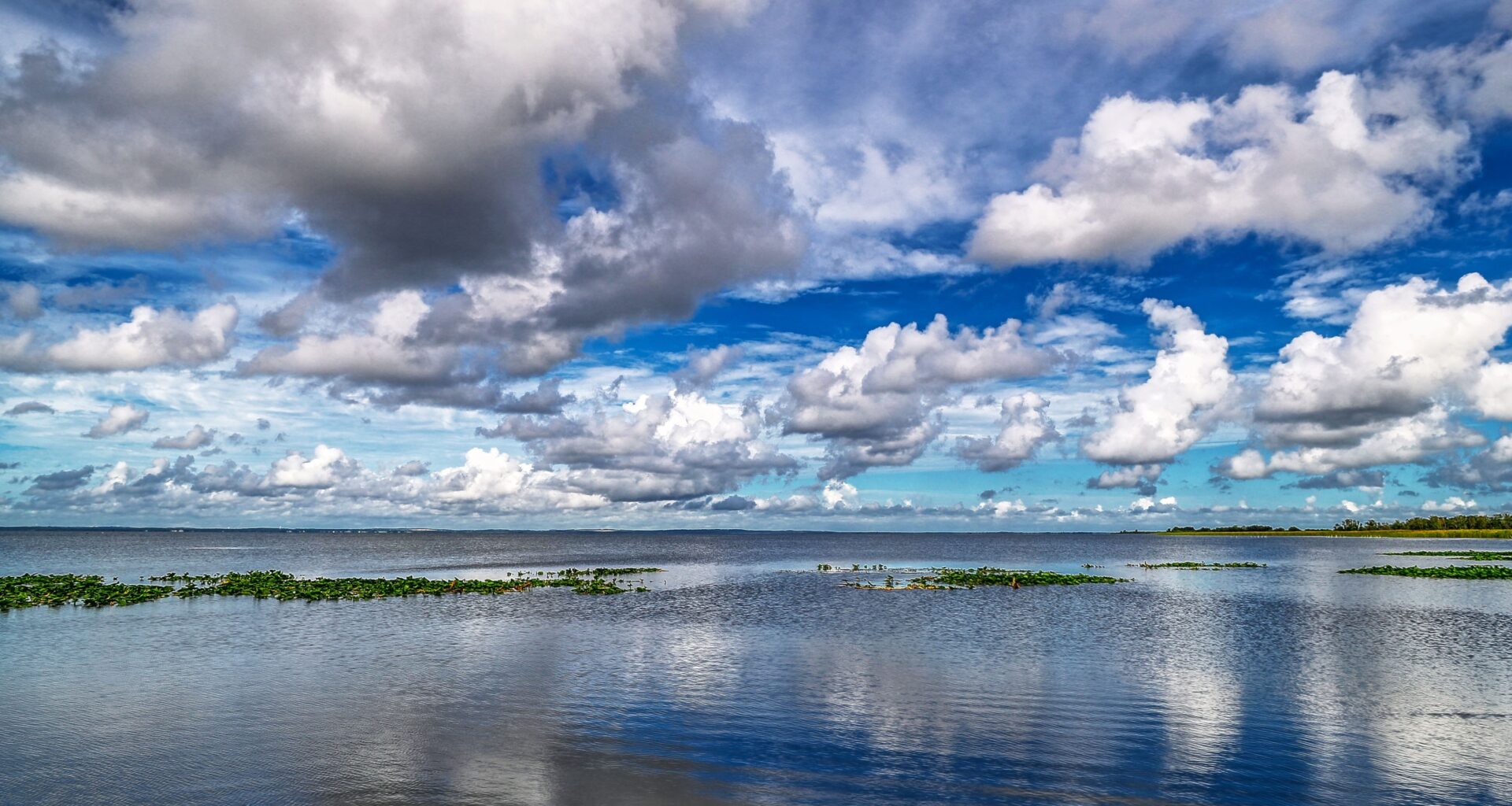
Lake Apopka’s history is a cautionary tale of what can happen when nutrient pollution and altered hydrology overwhelm the natural balance of an aquatic ecosystem. The once clear-water system has been burdened by decades of persistent algal blooms, murky water, poor fishing conditions and native plant loss.
However, after years of restoration efforts, the story of Lake Apopka is being rewritten.
The environmental challenges facing Lake Apopka today are rooted in decisions made nearly a century ago.
Beginning in the early 1940s, thousands of acres of marsh along the lake’s northern shore, which once acted like enormous natural filters, were drained and converted into farmland. The area’s rich organic soils supported agricultural success for decades, but draining the historic wetlands fundamentally changed the ecosystem. As the soil dried out, it compressed and shrank, eventually sinking more than six feet below the lake’s water levels in some areas.
A network of levees was constructed to hold back Lake Apopka and facilitate continued agricultural operations. Water was constantly pumped from the farmland back into the lake to maintain suitable growing conditions. The water contained excessive nutrients, primarily phosphorus, which acted as a food source for algae. The resulting algal growth reduced water clarity, shaded out native vegetation and decreased habitat quality for fish and wildlife.
Recognizing the problem, the Florida Legislature enacted a land acquisition program led by the St. Johns River Water Management District (SJRWMD) in the 1980s. Nearly 20,000 acres of farmland along the northern shore, now known as the Lake Apopka North Shore (LANS), were purchased and converted back to wetlands and marsh habitat. Restoring these natural habitats helped reduce the flow of excess nutrients into the lake. However, more than 50 years of excessive algal growth have left behind large deposits of soft, nutrient-rich muck on the lake bottom that foul boat motors, reduce water depth, limit regrowth of beneficial native vegetation and continue to release nutrients.
The LANS demonstrates how long-term restoration efforts can contribute to improvements in environmental conditions through pollution control measures. The area now supports a diverse population of aquatic wildlife, which the public can see via the Lake Apopka Wildlife Drive and many other accessible areas. There are additional ongoing beneficial projects in and around Lake Apopka, but more are needed.
 Lance Lumbard. (Courtesy photo)
Future restoration efforts within the lake are anticipated to include the removal of muck sediments adjacent to the Newton and Magnolia Park boat ramps to reduce sediment resuspension and facilitate boating access. Continued planting of native floating and submerged aquatic vegetation will promote sediment stabilization and provide habitat for sportfish. Continued efforts to manage nuisance vegetation routinely will protect the progress made within the lake and limit the need for large-scale control measures.
While Lake Apopka’s recovery has made significant progress, it is not yet self-sustaining. The next phase of work is intended to help the lake reach a point where healthy ecological conditions can be maintained naturally with far less human intervention.
The challenges faced by Lake Apopka are not unique. Many communities across the country are facing similar challenges with their water resources.
Solving these problems will require more than individual entities or a single restoration project.
It is unlikely that Lake Apopka will return to its exact historical conditions, but setting a goal for self-sustaining restoration is possible. Success will depend on wide-scale cooperative efforts and regional-scale projects to support natural resource needs as well as a continued willingness to foster innovation. Long-term success depends on people and organizations working together, including government agencies; commercial, agricultural and nonprofit organizations; and landowners.
Lake Apopka’s restoration is often cited as an example of water quality and ecosystem recovery across Florida and beyond, but the work is not yet complete. Continued time, funding and commitment are needed to support a self-sustaining recovery intended to improve lake health, support wildlife and recreation and protect Lake Apopka’s role as the heart of its surrounding communities.
Lance Lumbard of Orlando is the vice president of water quality for the engineering firm WSP in the U.S.