
Sometimes it takes an all hands on deck approach to protect and save distressed wildlife in Southwest Florida, whether it’s on land or in the water.
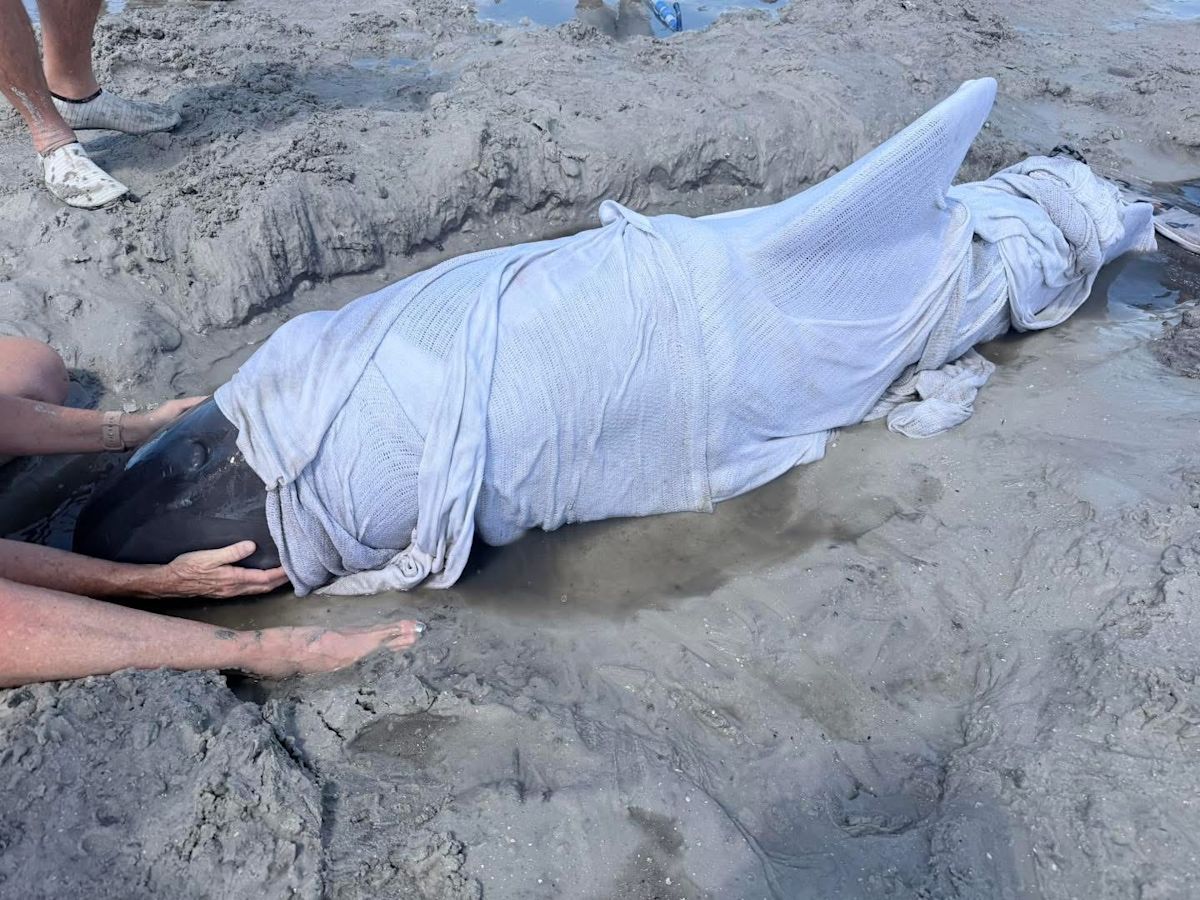
This was certainly the case on Sept. 17 when a dolphin was stranded on a sandbar in Matlacha, near Pine Island.
The Matlacha/Pine Island Fire Control District was alerted and responded and documented the rescue on its Facebook page.
According to the Facebook post, the Florida Fish and Wildlife Conservation Commission’s (FWC) Marine Mammal Rescue team also responded from Charlotte County to assess the dolphin and ensure it could be safely returned to the water.
More: Illegal gill net stuffed with wildlife removed from Sanibel waters
The Facebook post went on to say: “Working alongside FWC and local community members, our (Matlacha/Pine Island Fire Control District) crew assisted with the successful release of the dolphin back into the waters of Matlacha. Marine biologists also tagged the dolphin to monitor its movements following the release.”
There was a feeling of satisfaction and gratitude all around for saving the dolphin.
The Matlacha/Pine Island Fire Control District said: “A special thank you to the local residents who recognized the dolphin needed help and took action, as well as FWC’s Marine Mammal Rescue team and marine biologists for their expertise and assistance. A great example of our community working together for a successful outcome!”
Dolphins in Florida: What to know
According to the FWC website:
APPEARANCE: Several dolphin species occur in Florida costal waters. The most common of these is the bottle-nosed dolphin, mistakenly called porpoises. Bottlenose dolphins have robust, powerful bodies that are blue-gray on top with lighter sides and bellies. As adults they are typically 6 to 12 feet long and can eat more than 20 pounds of mullet, sheepshead, pinfish, flounder and marine invertebrates each day. Bottlenose dolphins show a high degree of intelligence, have a wide range of vocalizations, and may cooperate in fishing or taking care of injured conspecifics.
HABITAT: Dolphins live both inshore and offshore along temperate and tropical coasts worldwide.
HUMAN INTERACTION: It is against federal law to feed or harass wild dolphins. Swimming with or feeding dolphins can be dangerous for both human and dolphin and should not be attempted. The NOAA Fisheries Service warns that disruption of normal behavior and activities can ultimately harm these mammals.
DID YOU KNOW: Dolphins have been known to live into their 50s, and reach weights of up to 140-650kg.
Mark H. Bickel is the Audience Development Director for The News-Press & Naples Daily News. Reach him by emailing mbickel@usatoday.com.
This article originally appeared on Fort Myers News-Press: Dramatic dolphin rescue: Photos show what it took to save Florida mammal