
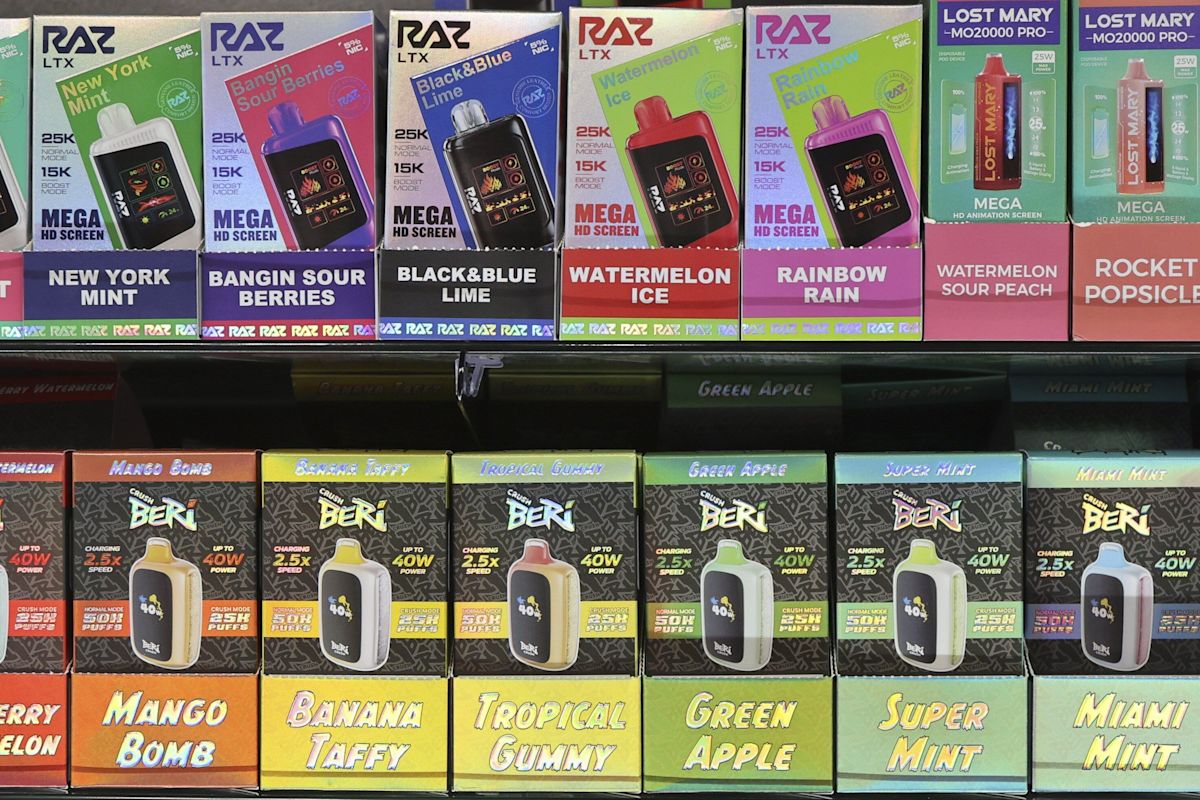
Tampa Bay school districts appear to be getting a handle on the vaping phenomenon that plagued their students after the pandemic.
Statewide, Florida schools sawdips in tobacco infractions for two consecutive years, according to a Tampa Bay Times analysis of state and district data from the most recent available school year, 2024-25.
And though nine of every 10 of these tobacco incidents were vaping-related, those incidents were also down throughout Florida and in Tampa Bay.
From 2022 to 2025, overall tobacco use, including e-cigarettes, declined among U.S. high school and middle school students, according to the Food and Drug Administration’s 2025 National Youth Tobacco Survey, published earlier this year.
During that time, referrals for vaping-related tobacco incidents fell by 30% in the Pasco school district and 28% in Pinellas, according to the latest state discipline data.
Both school districts credit their students with leading the charge for the decline.
“The students are driving the work that we’re doing,” said Lisa DePaolo, managing officer of prevention for Pinellas County Schools. “Their feedback … and how we can do the work was really driven by the students.”
Hillsborough’s school district appeared to have lower vaping rates in the most recent years of data available, but the data appeared undercounted, something the district said could have been due to record-keeping changes. As a result, it’s not possible to make exact year-to-year comparisons. But last school year, Hillsborough district categorized 1,672 referrals as tied to vaping, district spokesperson Tanya Arja said.
Tobacco incidents were on the rise before the pandemic and spiked even higher after it was over, a Tampa Bay Times analysis last year found. Now, reported tobacco incidents in Pasco and Pinellas have not only declined, but are below pre-pandemic levels.
All Tampa Bay districts have moved to place vaping detectors in school restrooms in the past few years, with Hillsborough middle and K-8 schools the latest addition to its school district’s vaping detection and education program.
“The detectors have been successful in helping schools identify vaping incidents more quickly and allow administrators and staff to respond promptly,” Arja said.
In the first month of this school year, fewer than 100 vaping- related referrals were reported across 25 Hillsborough high schools.
Pinellas leaders participated briefly in adding vaping detectors in four schools in the district before stopping due to mixed results.
DePaolo saidhigh schoolers in Pinellas were tired of seeing vaping in schools.
“(Vaping) is a gateway,” DePaolo said. “We know kids start with vaping and then they increase to THC, and then maybe it’s something else. We really wanted to focus on substance abuse and prevention.”
The district’s anonymous reporting system allows students to send concerns directly to leaders when they are concerned not only about vaping, but about peers who they suspect are abusing other substances. Students also lead educational forums and seek peer feedback on the vaping prevention measures already in place.
By partnering with the student-led Student Rights and Responsibilities Group, Pinellas has been able to mix student input with local and state collaboration from the Department of Health and the Tobacco Coalition to combat incidents.
“Schools are just a microcosm of the community,” DePaolo said. “When we see vaping in adolescence, there’s vaping going on with adults, and it’s just teaching the community the dangers and how to support each other.”
Pasco underwent similar efforts, partnering last year with Tobacco Free Florida and the district’s Student Congress.
“Middle and high school students developed and implemented peer-to-peer awareness campaigns and prevention initiatives within their schools, helping to educate fellow students about the risks associated with vaping,” district spokesperson Jessica Meek said in a statement.
Both districts also implemented diversion and educational intervention programs to establish a first-time offender consequence system that educates students on the dangers of vaping and nicotine use.
Pasco rolled out enhancements to its program that serves as an alternative to suspension.
“While many factors influence student behavior,” Meek said, “Pasco County Schools remains committed to working with students, families, community partners, and school staff to reduce vaping and support healthy choices through prevention, education, and early intervention.”
The Tampa Bay Times Education Hub reports on Florida’s schools and universities and the students they serve. You can contribute to the hub through our journalism fund by clicking here.