
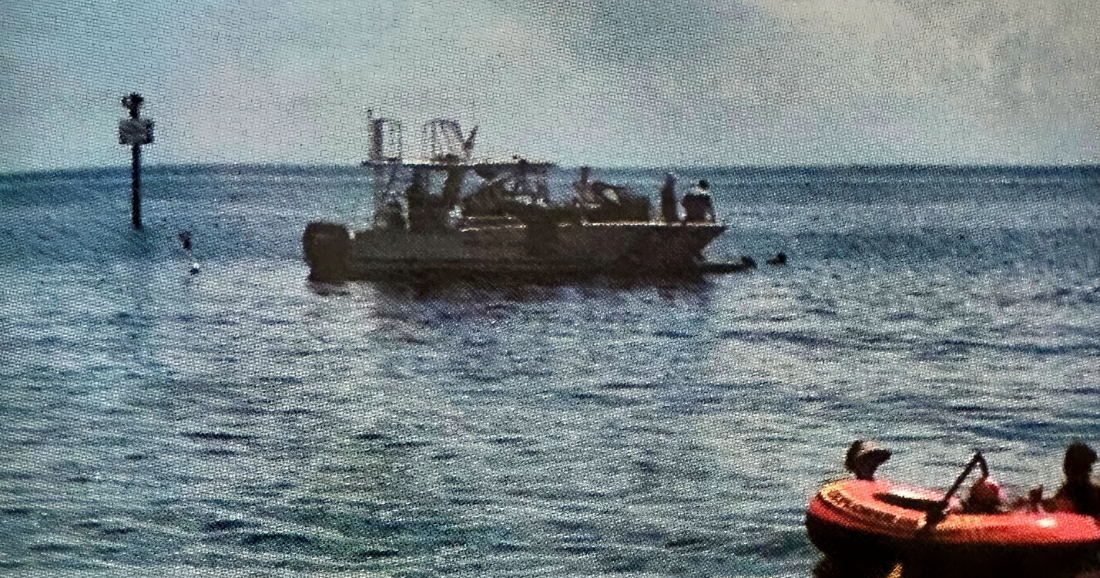
Protecting Key Biscayne’s shoreline by mitigating wave impacts with an artificial hybrid reef system will be the crux of a two-year feasibility and preliminary design study, unanimously approved by Village Council this past week.
Moffatt & Nichol, Inc. has been selected through an RFQ (Request for Qualifications) format, upon the recommendation by Dr. Roland Samimy, the Village’s Chief Resilience and Sustainability Officer.
The project, if eventually approved, would not only protect the coastline from wave attacks but also extend time between expensive beach re-nourishments after sand has been whisked away.
Moffatt & Nichol engineers will be working with University of Miami Rosensteil School experts on “a lot of modeling,” in addition to examining the best type of reef that could be used and where exactly to place it; what regulatory hurdles there are to overcome; and even whether corals could be grown on the structure.
Cost of the study is $1.075 million, but $412,000 is the required match cost for the Village after federal and state monies are contributed and a grants reimbursement is issued.
An artificial reef could cost some $20 million, but Dr. Samimy said that’s just a random guess at this point, not knowing the size.
“We don’t know it’s a viable thing (yet), that’s why we are doing the feasibility study,” Dr. Samimy said, adding that funding sources will then have to be tapped if the Council decides to move forward toward a finished product.
An artificial reef might be important at this stage, since the Army Corps of Engineers’ proposed shoreline defense enhancements have paused over the past two years and sea level rise has continued to increase.
Asked why Miami Beach’s similar study on a possible artificial reef could not be used in this case, Village Manager Steve Williamson explained that the “locations are completely different” with seagrass involved off Key Biscayne, while a completely sandy floor is prevalent off Miami Beach’s coast.
Meanwhile, the Key Biscayne Community Foundation has been teaching the values of artificial reefs.
“People have to understand why this is valuable,” Dr. Samimy said.