
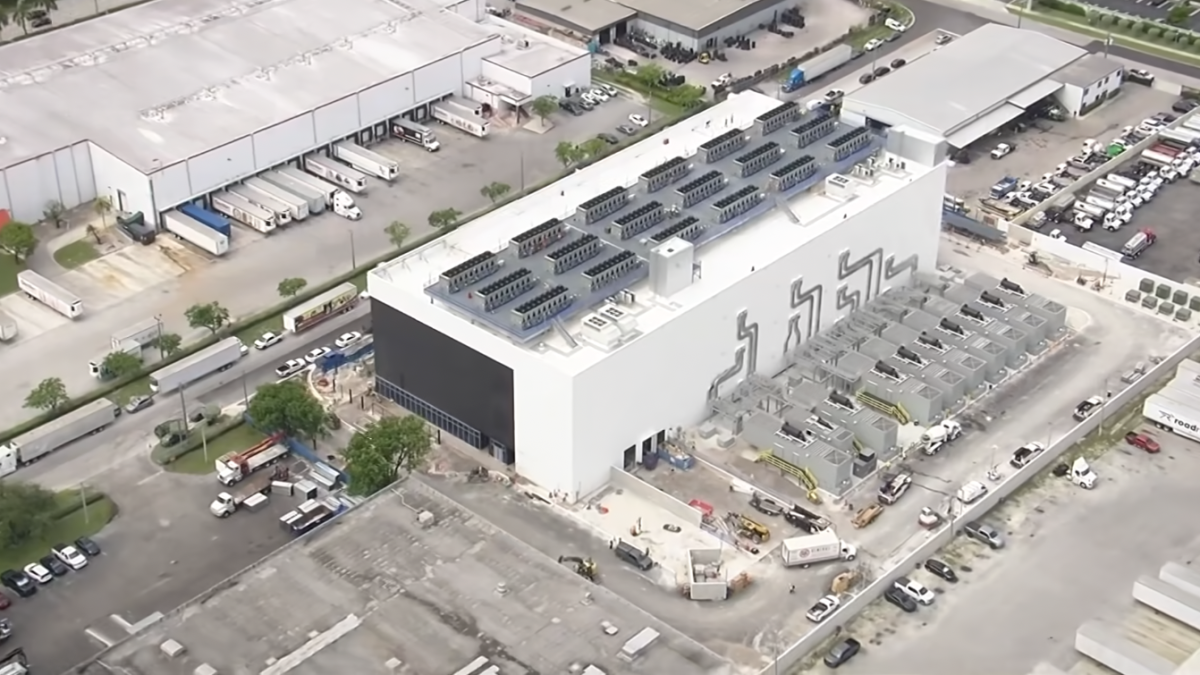
Across the country ,more than 3,000 data centers work to power AI systems that roughly half of Americans use daily, and according to PEW Research, more than 40% of Americans now live within 5 miles of an operating or planned data center.
And that’s the case right here in South Florida.
A groundbreaking ceremony was held in 2025 for an upcoming data center by a company called Iron Mountain.
NBC6’s search for information about the project led to a northwest Miami-Dade area and resident Amy Dawkins.
“I was in utter disbelief, completely devastated to think that something like that would be here literally, practically in my backyard,” she told NBC6 over the phone.
The Miami-Dade Beacon Council is overseeing this project.
Dawkins says it was not until she got a phone call from a canvasser that she found out a data center was being built 1,500 from her home.
“Nothing ever brought to our attention about a data center,” she said. “No type of notification, no type of any type of warning or anything to say. You know, this is potentially what could be coming down the pike.”
In April, other residents who live in the area came together for a meeting with the same concern.
Commissioner Marleine Bastien represents the area. When we asked her about the residents’ concerns, she told us in part that she has also heard from many residents and has been “engaging with Iron Mountain-1 to help mitigate impacts and advocate for meaningful community benefits.”
She added that “under Miami-Dade County’s existing zoning regulations, data centers are classified as telecommunications hubs, which are permitted uses on land designated for industrial use.”
However, many industrial zones in Miami-Dade are close to residential areas like in Dawkins’ neighborhood.
Bastien also said that Iron Mountain made a zoning request in front of the Community Zoning Appeals Board in 2023 which was made up of community residents. She said that the meeting discussed requests related to the buildings height and parking, not whether or not the data center could be built, as existing county code already permits it.
What residents like Dawkins are hoping for now is an opportunity to speak with county officials about how construction will impact them short-term and how a 24/7 running data facility could affect homeowners in the future.
“What benefit does this have for the community? What benefit does this have for Miami-Dade County?” Dawkins said. “There’s just more questions and answers at this point.”
In a Miami Times op-ed, the commissioner said she worked with the county mayor and the Beacon Council to support legislation that secure community benefits for this project, including 30 permanent jobs.
NBC6 contacted Iron Mountain several times for comment but never received a response.
Bastien’s full statement is as follows:
My commitment has always been, and will always be, to put people first.
In recent weeks, I have heard from many residents with questions and concerns about the proposed Iron Mountain-1 data center. I believe it is important to provide clarity. Under Miami-Dade County’s existing zoning regulations, data centers are classified as telecommunications hubs, which are permitted uses on land designated for Industrial Use.
Iron Mountain 1 made a zoning request in front of Community Zoning Appeals Board 8 in 2023, a board made up of community residents and acts independently of myself and the Board of County Commissioners. The zoning action in question involved requests related to building height and parking requirements, not whether a data center could be built on the property in the first place. Under the County’s existing zoning code, that use was already permitted.
As your District 2 Commissioner, my responsibility goes beyond what the law allows. My role is to engage residents, listen to their concerns, and work to secure the best possible outcome for our community. That is exactly what I have done by engaging with Iron Mountain-1 to help mitigate impacts and advocate for meaningful community benefits.
My commitment has not changed. Development should serve our residents — not the other way around. I will continue fighting for thoughtful growth, transparency, and a planning process that puts people first.
For those interested in a more comprehensive discussion of my perspective, I encourage you to read my recent Miami Times op-ed, where I provide a deeper look at the facts, process, and my continued commitment to ensuring development is driven by the people it serves.