
You’ve probably shared the road with them at some point.
No human behind the wheel.
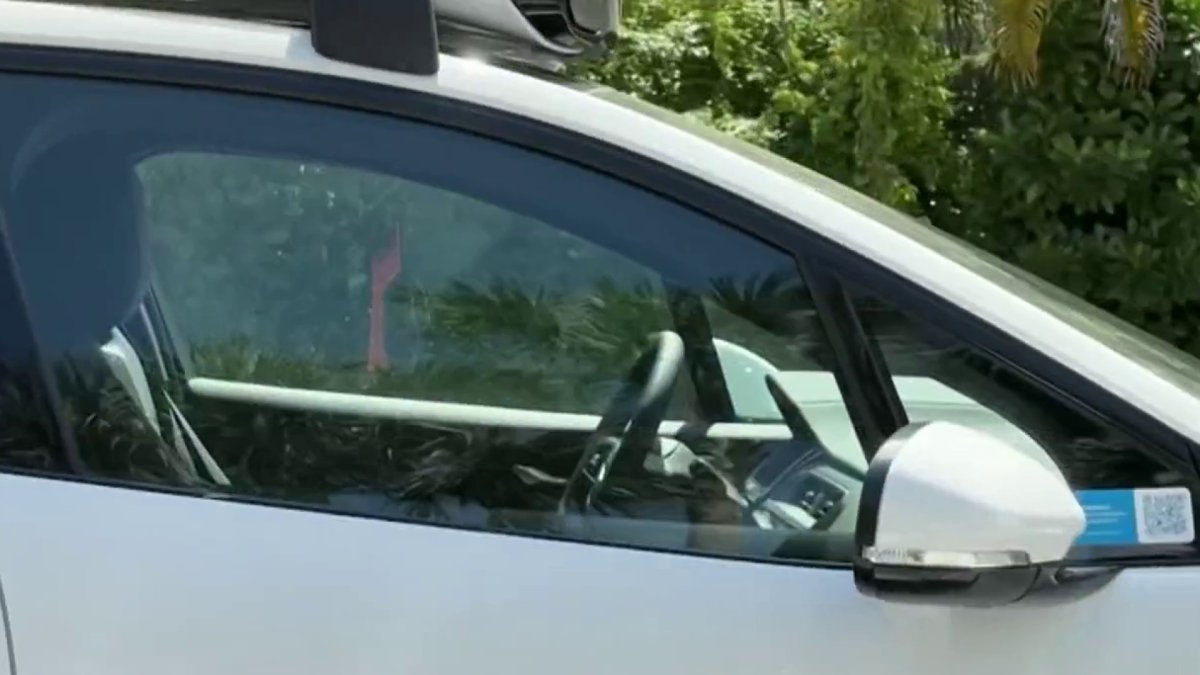
Waymo’s fleet of autonomous vehicles is expanding across South Florida. But for these robotaxis, passengers aren’t the only priority.
The company is also preparing for the people who may have to deal with these vehicles in an emergency: police officers, firefighters, and paramedics.
Coral Gables Police Chief Ed Hudak said understanding how to access and disable the vehicles during emergency situations is critical.
“Minutes count, right? So, I mean, I think whether [it’s] how we break a window, how do we get in, how do we disable the vehicle?” Hudak said.
Coral Gables Police is getting hands-on training with Waymo vehicles, learning how to communicate with them, access them and even move them if needed.
They’re one of several South Florida agencies participating in this type of training, part of the company’s effort to engage early with first responders before more of these vehicles hit local streets.
“They’re very first responder driven on this. They know we’re going to get there first,” Hudak said. “If they’re stuck in the middle of traffic, they’re going to call the cops.”
And that scenario has already played out on South Florida roads.
The autonomous ride-hailing service has been available to public riders in Miami since late January.
In April, video showed a Waymo stopping in the roadway after a police vehicle activated its emergency lights.
And in July, multiple Waymos stopped on the Venetian Causeway, disrupting traffic.
Rob Patrick is Waymo’s manager of emergency response and outreach. He says part of Waymo’s training includes teaching first responders how to move a vehicle if it becomes necessary.
“We want to give them the tools that if they decide that’s the most expedient way to resolve a situation, we want them to be able to move our cars,” Patrick said.
NBC6 Investigates took a ride in a Waymo along with Patrick, who is also a retired California Highway Patrol officer. The car traveled from Miami Beach to Miami in rainy conditions familiar to South Florida drivers.
Patrick said outreach begins before the company launches in a new city.
“When we know we’re going to come to a new city, we reach out early to the first responders and we give them the information and let them know that they’re going to see these cars in their city,” Patrick said.
Waymo says it has trained more than 40,000 first responders, including personnel from 14 agencies in South Florida.
The company argues its vehicles are making roads safer, in part by eliminating many of the human behaviors that contribute to crashes.
“These vehicles don’t get intoxicated and drive. These vehicles don’t get drowsy,” Patrick said. “These vehicles don’t look at their phone when they should be looking at the roadway.”
NBC6 Investigates reviewed National Highway Traffic Safety Administration data and found there have been 55 reported crashes in Florida since 2021 involving vehicles operating in fully autonomous mode at the time of the crash.
Twenty-three of those reports occurred in Miami and most involved Waymo vehicles. The company reported that in each of those instances, another driver caused the crash.
“I think the data supports the fact that these vehicles are making our roadways and our community safer. And I think the first responders see that as well,” Patrick said.
A recent study from the Insurance Institute for Highway Safety found Waymo’s driverless vehicles were involved in police-reportable crashes at a rate 68% lower than human drivers in the same areas.
As the NBC6 Investigates crew followed behind a Waymo vehicle, the light at an intersection turned yellow. The vehicle eventually completed a turn, prompting questions about how traffic laws are enforced when there is no driver behind the wheel.
Patrick said officers should still be empowered to investigate possible violations.
“If an officer believes they saw a violation, we want them to have the ability to take whatever action they believe is necessary,” he said.
This summer, California implemented a system allowing officers to ticket driverless vehicles that violate traffic laws.
When asked whether Florida has a similar system, Patrick responded: “Not that I’m aware of.”
Coral Gables Police Chief Ed Hudak said part of the training includes educating officers about who they should contact within the company if they need information during an investigation.
“With a subpoena, we can see the data, see the video, and see exactly what’s happened,” Hudak said.
For first responders, the goal is to understand the technology before they have to deal with it during an emergency.
“I think that there should be some level of confidence that… the humans are trying to keep up with the technology as quickly as we can,” Hudak added.