
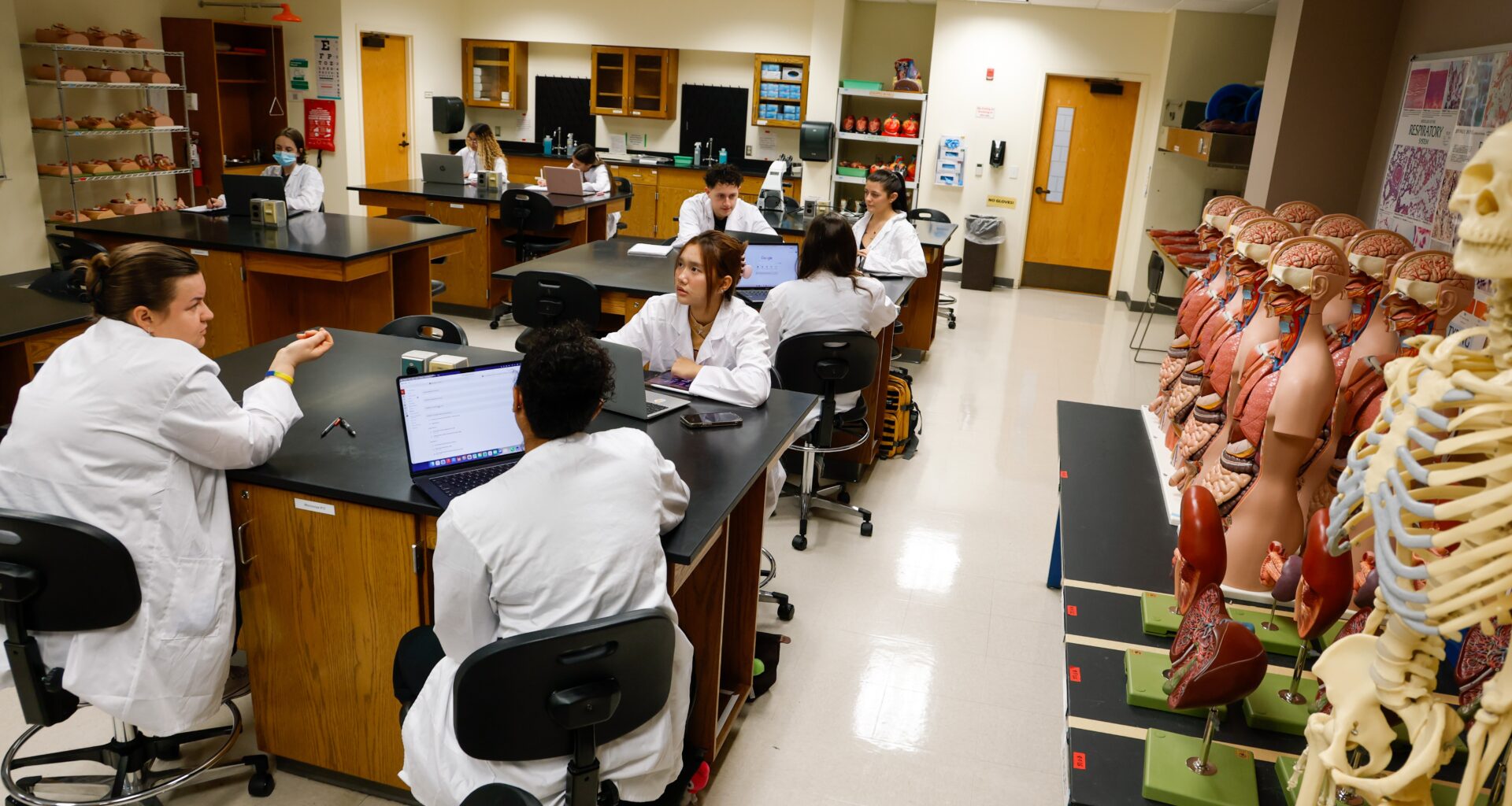
Valencia College will shutter four degree programs in the coming years so it can pay to expand its nursing and healthcare offerings, which currently turn away qualified students, the school announced Friday.
The college, which serves Orange and Osceola counties, will begin phasing out its biotechnology, new media communications, plant science and STEM programs — none of which lead directly to good-paying jobs — starting in the 2027-28 academic year, said Kathleen Plinske, the school’s president, in an interview. Money now spent on those programs will be shifted instead to the healthcare ones.
Valencia will also require students to attend more on-campus classes, reversing a pandemic-era trend of relying on online courses, Plinske said. Both changes are an effort to meet industry demands and ensure Valencia graduates find employment after college, she said.
“The old model of just going to college and getting a degree and trusting that you’re going to get a job — that equation no longer works the way that it has in the past,” she said.
About 2,200 students will be impacted by the program closures, said Linda Shrieves, a Valencia spokesperson. It wasn’t immediately clear how many faculty members would be impacted by the changes, but the college expects that professors in programs being cancelled will be retained to teach other courses.
The college will allow students currently in the to-be-discontinued programs to finish their associate degrees or to transfer into a related degree program.
Valencia has about 75,000 students enrolled across ten campuses in the two Central Florida counties.
The college hopes to double capacity in its School of Nursing and its School of Allied Health, which includes degree programs such as cardiovascular technology and dental hygiene.
Valencia produces about 330 nursing graduates every year, according to a state report. But 640 qualified applicants were turned away from the school’s nursing program in the last academic year because of a lack of capacity, according to college data.
Florida has an ongoing nursing shortage, and conversations with local healthcare employers confirm that Valencia isn’t meeting the industry demand for healthcare graduates, Plinske said.
That state is expected to have a shortage of almost 60,000 nurses by 2035, according to a a 2024 report from the Florida Hospital Association.
“We don’t have a shortage in Central Florida of talented, qualified students who have an interest in a healthcare field. Just historically, we haven’t created the capacity in those programs,” she said.
The expansion of nursing and health programs would come in about three years as the school phases out the four closed degrees, Plinske said.
Valencia, like other colleges, also must adjust to new standards for federal funding under the One Big Beautiful Bill, which generally requires the local median salary of graduates to be higher than those with just a high school diploma.
Valencia estimates its graduates must earn a median salary of about $42,000 in order to meet the new federal requirements, a target the four closing degree programs fail to hit, according to a 2025 audit report.
Valencia also plans to “pivot pretty significantly” back into on-campus, in-person instruction, reversing the surge in online classes that stemmed from the COVID-19 pandemic, Plinske said.
“The pandemic forced us to ask the question: ‘Can we teach this class online?’ What I’m now suggesting is a different question, which is: ‘Should we teach this class online?’” she said.
A recent Valencia study on the future of workforce development found that because of the rise in artificial intelligence use, employers are more focused on interpersonal skills in job applicants. In-person classes help foster those skills better than online courses, Plinske said, which could make Valencia graduates more competitive in the job market.
Plinske has not yet set a bar for how much in-person coursework would be required or when those changes would go into effect, adding that conversations with the college’s faculty were ongoing. General education coursework, such as writing, speech, science and math classes, she said, would be a good place to start implementing the in-person requirement.
Chris Borglum, an English professor and past faculty union president at Valencia, said he would welcome more courses taught on campus. Currently, only about half of his meet in person.
“I can absolutely see better connection with my students and better outcomes when they are in-person,” Borglum said.