
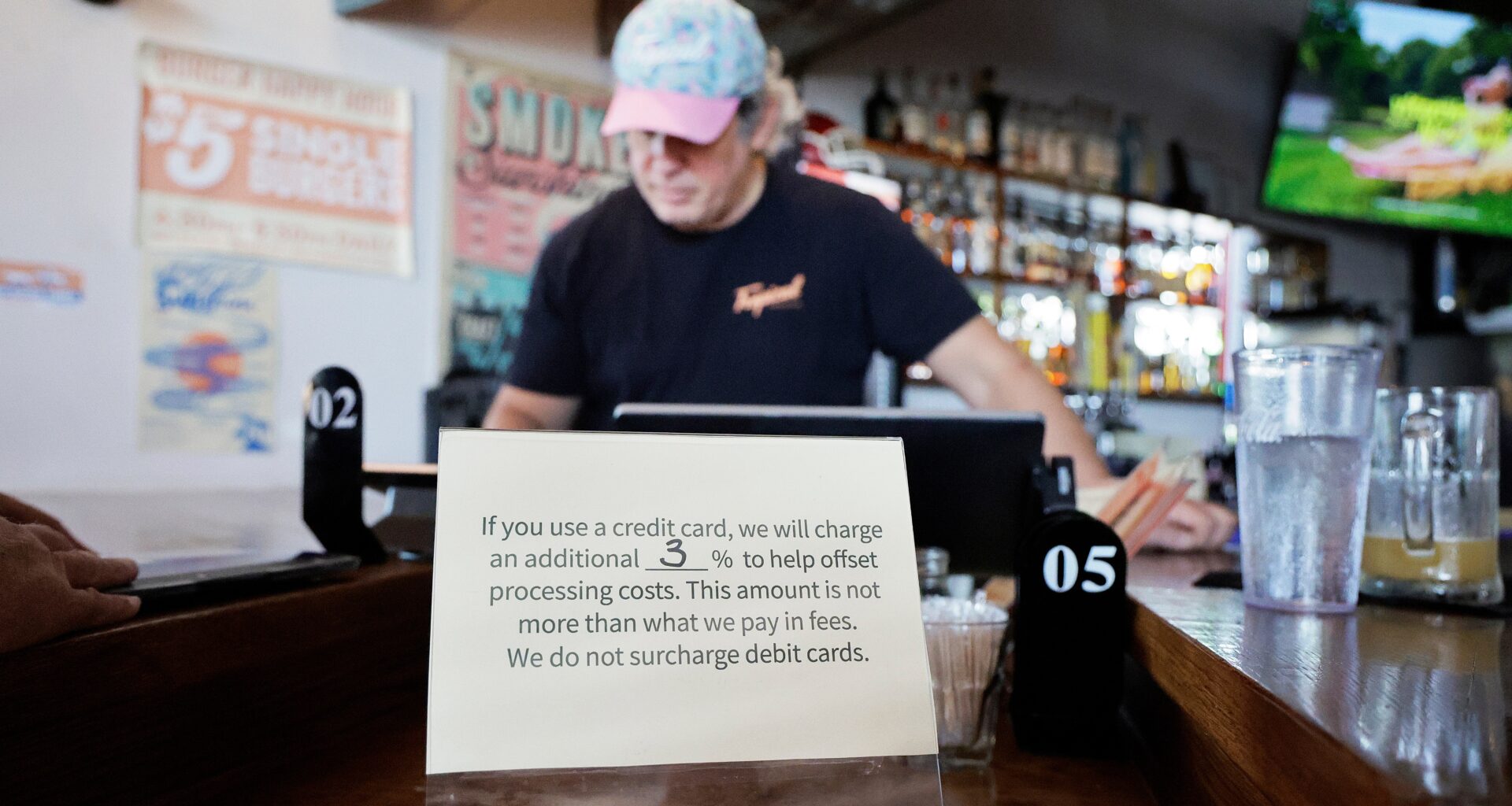
It’s gotten confusing out there.
When customers are ready to pay at South Florida businesses, they’re often not sure what type of money the venue will accept and what the conditions will be. They have to ask:
Is cash accepted, or is it strictly credit card-only? Will paying with plastic incur a surcharge? Do old-fashioned dollar bills unlock a discount?
Retail worker Lauren Petschek has witnessed the bewilderment firsthand. At her downtown Delray Beach shop, customers often approach the counter warily to ask whether using a credit card comes with an extra fee.
It doesn’t. But Petschek said her doctors’ and veterinarian’s offices have added in fees for credit card use. She tries to pay with cash whenever she can, although it’s often not accepted.
“I feel like we should have the option,” said Petschek, 69, a Delray Beach resident who objects to mobile payment terminals that servers bring to restaurant tables for quick credit-card tallying. “I tell them, ‘I’m paying cash. I want the check please. Put it on the table.’ ”
As Americans increasingly rely on credit cards, cash enthusiasts such as Petschek are not relishing their minority status. A 2026 Pew Research Center survey shows this club is small: Only 12% of Americans say they use paper money for most transactions.
Many baby boomers and their senior counterparts were saddened when the penny, a tangible connection to their pre-credit card youth, was discontinued last year. But younger generations rarely use coins, or cash in general, and the U.S. government said each penny costs 3.69 cents to manufacture.
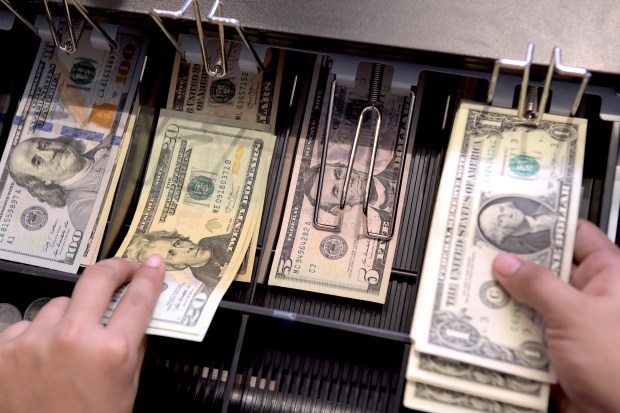 Only 12% of Americans say they use paper money for most transactions, according to a recent survey. (nimon_t/stock.adobe.com)
“Over time, in my opinion, we will move further and further away from cash,” said Peter Ricci, director of the Hospitality and Tourism Management Program at Florida Atlantic University. “The elimination of pennies is just a starting point. Later will come nickels and then dimes and so on. Everything will simply round up or down to a dollar, and we’ll eliminate coins completely at some point.”
In the meantime, there are no national laws that offer guidance on whether businesses are required to take paper money and coins.
“Private businesses are free to develop their own policies on whether to accept cash unless there is a state law that says otherwise,” the Federal Reserve System website states.
Neither the state of Florida, Broward County nor Palm Beach County has laws on acceptable forms of payment. Miami-Dade passed a law in 2022 that states businesses in the county aren’t allowed to refuse cash, although there are some exceptions, including online sales as well as insurance agents, accountants, attorneys and interior designers.
Since it’s up to each Broward and Palm Beach County establishment to create its own policy, consumers have to figure out which payment system is best for their budget and peace of mind. Here’s some guidance.
Cash advantages
Make a purchase and you don’t have to worry about a bill that’s still to come: “Cash is King … who wants to rack up a huge credit card bill?” commenter Robert Gold noted during a recent discussion in the Sun Sentinel’s “Let’s Eat, South Florida” Facebook group.
Some discounts: For the past two years, Bruce Garnett, owner of 3G’s Gourmet Deli & Restaurant in Delray Beach, has given about 4% off to customers who pay with cash in an effort to counter the credit card fees he pays. “Once I did that, the number of people paying in cash increased about 25%,” he said. He doesn’t charge extra to customers who pay with credit cards.
Cash disadvantages
You may not have the right amount of money on hand for what you want to buy, especially if it’s a large purchase. Many financial experts recommend against carrying substantial amounts of cash; some say $100 is the max to keep in a wallet.
If you get robbed, your money is gone: According to a Facebook video from the Delray Beach Police Department, “Only carry what you need.” The department also advises cash holders to avoid counting money in public and to put away cash and cards immediately after paying.
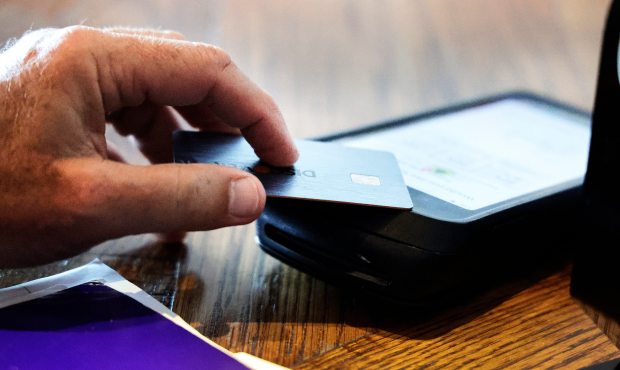 A customer pays with a credit card at Tropical Smokehouse in West Palm Beach on Wednesday, Sept. 23, 2026. (Carline Jean/South Florida Sun Sentinel)
Credit card advantages
Card is easily replaced if lost or stolen: Most credit card companies, such as Chase, send out replacements within five days and typically don’t require you to pay for any charges reported after the card was lost.
Customers can get perks such as points to be used at hotels and restaurants: “Let’s Eat, South Florida” member Bill Whitmer shared how he has transitioned from cash to credit cards for this very reason. “Up until about five years ago, I paid mostly everything with cash. But once I realized that I actually get miles on my airlines credit cards, I put everything on there to get the miles. Even utility bills and other bills that I can put on it to get credit,” he said.
Some businesses have become credit-card only and don’t accept cash: Choices about where to shop and eat become limited if you don’t want to pay by card. Clearly Payments, a payment processing company, says that as of 2024, 40% of American businesses were no longer accepting paper money.
South Florida restaurants that have gone cashless include:
• Little Hen, locations in Fort Lauderdale, Weston and Miami; littlehen.com
• Lobster Bar Sea Grille, Fort Lauderdale; lobsterbarseagrille.com
• Houston’s, Boca Raton and Pompano Beach (at North Miami Beach location, “cashless payment preferred“); houstons.com/locations
• Serena Pastificio, Boca Raton; serena-pastificio.com/locations/boca-raton-fl
Credit card disadvantages
Some businesses require credit card users to pay fees: Credit card companies typically charge businesses 3% to 4%, and local establishments say they need their patrons to share that expense. “A lot of people get pissed off that we are charging credit card fees,” said Jason Lakow, co-owner of Tropical Smokehouse in West Palm Beach. “As a business, when we absorb certain costs, we do have to pass them on to consumers.”
Interest accumulates: Debt that compounds on credit card bills can damage credit scores and create overspending risks, according to Experian, a consumer credit reporting company. Pompano Beach resident Donna Weyd, 64, said she ran into financial trouble as she put too much money she owed on her credit cards and had to pay exorbitant interest rates. She said she managed to pay off the cards and now uses cash as often as she can. “I put myself on a budget. It gave me more freedom to spend,” she said. “I enjoy going out to eat, and I do that with cash now.”
Functioning side by side
As consumers navigate these evolving payment dilemmas, most businesses still take both cash and cards, and Ricci, the FAU professor, expects this practice to continue for a while.
“It’s truly a time of both scenarios existing peacefully for the moment,” he said.