
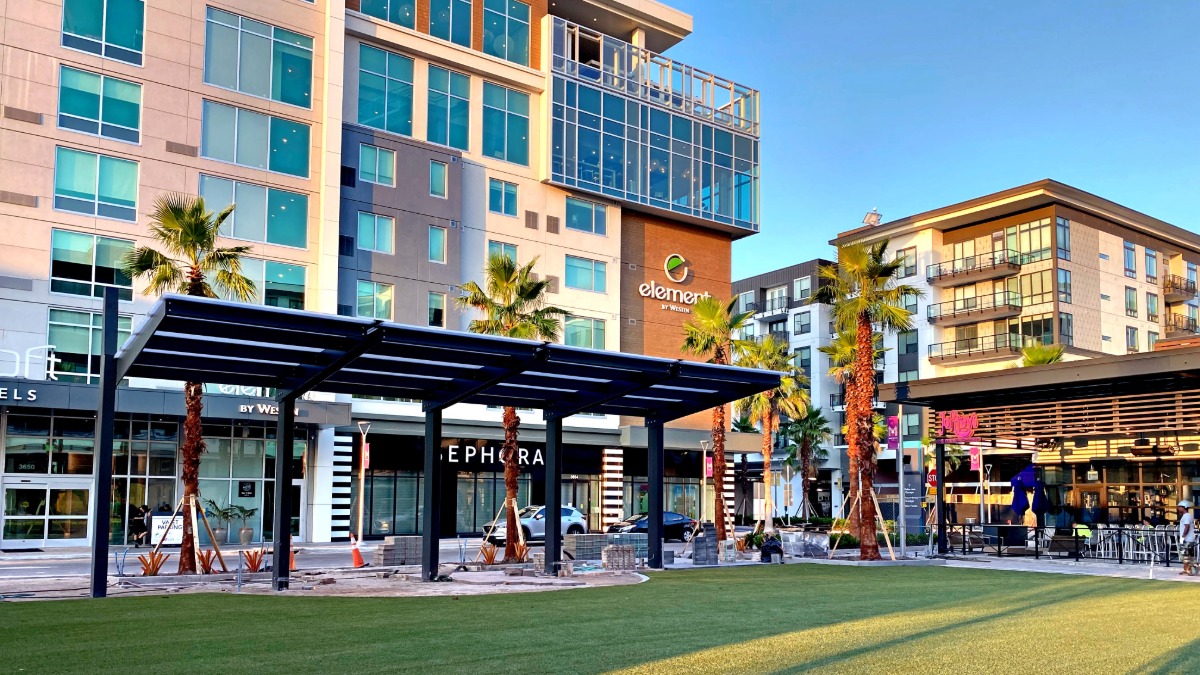
A new report from JLL highlights a shift reshaping the American office market. While traditional office spaces continue to face high vacancies, properties in lifestyle office markets that combine office, retail, dining, residential and entertainment are outperforming across the board.
According to JLL, these vibrant experience-driven districts command 32% higher rents, lease up twice as fast and maintain far lower vacancy rates than the national average.
As companies compete to attract and retain top talent, the findings reflect a larger shift toward offices located where people want to spend time.
SIGN UP FOR TBBW’S FREE NEWSLETTER
The trend has clear relevance for Tampa Bay, where mixed-use developments like Midtown Tampa, Water Street and Gasworx have redefined what modern workplaces look like.
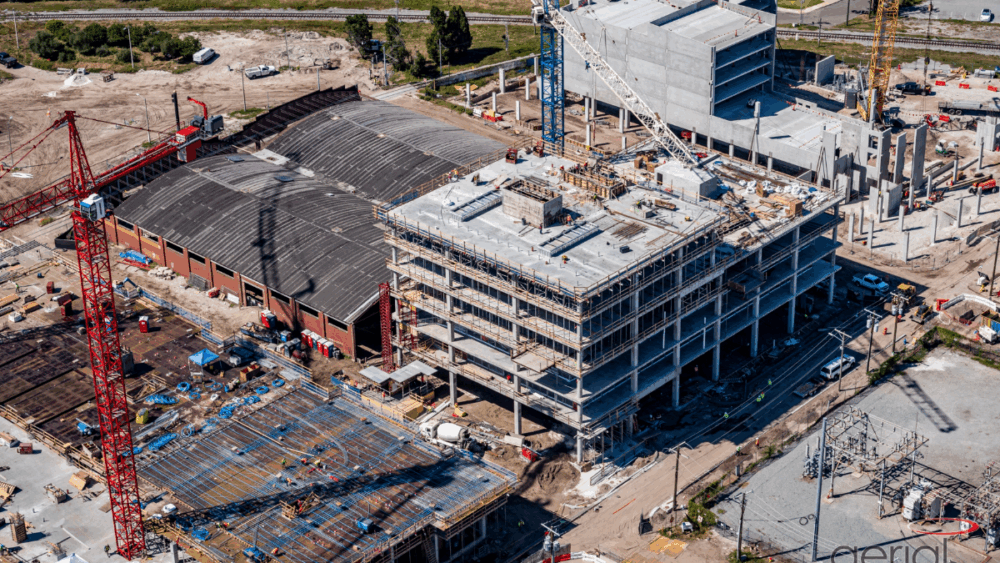 Construction progresses at Gasworx in Ybor City, a major mixed-use development reshaping Tampa’s urban core.
What happened
JLL’s Lifestyle Office Markets report identifies a growing preference for live-work-play districts that pair urban amenities with suburban convenience.
These areas feature moderate density, access to transit, walkability and round-the-clock activity, all of which drive stronger leasing and investment activity.
While lifestyle office properties currently account for just 4% of U.S. office space, JLL projects that they will represent 30% of the national inventory by 2040. Tenants are choosing these districts for community and experience rather than just workspace.
READ: United Way Suncoast CEO heads south to helm Sarasota foundation
Jeff Eckert, president of Americas Office Agency Leasing at JLL, said the findings mark a structural shift in how the market values workplace environments. Companies are paying a premium for locations that offer authentic and engaging experiences that cannot be replicated remotely.
Key findings from JLL include:
32% rent premium for lifestyle office markets over standard Class A space
Twice as fast leasing velocity, reaching 90% occupancy in two years compared to four for traditional projects
Vacancy rates of 12.5% compared to 22.5% across the broader office market
Institutional investors are taking notice. Allocations to lifestyle office projects have increased to 8% of all institutional office acquisitions nationwide, up from minimal levels prior to 2015.
What’s happening now
The surge in demand is driving developers and municipalities to adapt. Downtown cores and suburban business parks are investing in what JLL calls lifestylization by adding entertainment, green space, dining and public gathering areas to create destinations rather than work zones.
Examples include The Battery in Atlanta, The Domain in Austin and Reston Station near Washington, D.C., all of which have recorded higher occupancy and leasing momentum than traditional developments.
READ: Outback opening new Lakewood Ranch restaurant Nov. 11
In major markets such as Miami, Boston, Chicago and New York, JLL reports that mixed-use districts, including Wynwood, the Seaport District, Fulton Market and Hudson Yards, are outperforming their downtown peers by wide margins.
Each combines energy, accessibility and a strong sense of place that aligns with the expectations of a post-pandemic workforce.
What this means for you
For Tampa Bay’s real estate community, the message is clear: the future of office space is experiential.
Developers who integrate hospitality, retail and residential components into office projects are likely to attract stronger leasing activity and retain tenants longer.
For investors, the data underscores that amenity-rich mixed-use environments are both resilient and capable of sustaining rent premiums.
READ: Tampa RV giant Lazydays to delist from Nasdaq
For employers, the lesson extends beyond location. As hybrid work continues, office spaces must earn relevance through connection, convenience and purpose. Workplaces that foster collaboration and community will stand out in a competitive talent market.
Takeaway
The rise of lifestyle office markets marks a turning point for commercial real estate strategy. As cities nationwide reimagine one-dimensional business districts, Tampa Bay’s mixed-use growth positions it squarely at the forefront of this national movement.
From Water Street to Midtown, developers across the region are already embracing what JLL calls the office market of the future, one defined by experience, flexibility and engagement rather than square footage.
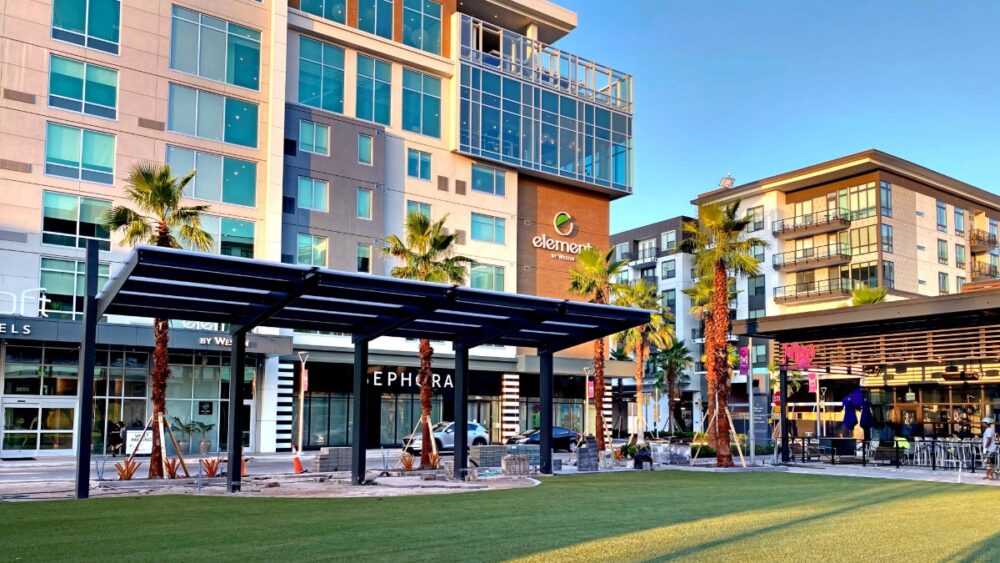 Midtown Commons serves as the social heart of Midtown Tampa, blending green space, dining and retail in a walkable urban setting.
Stay Connected
Follow TBBW on social media