
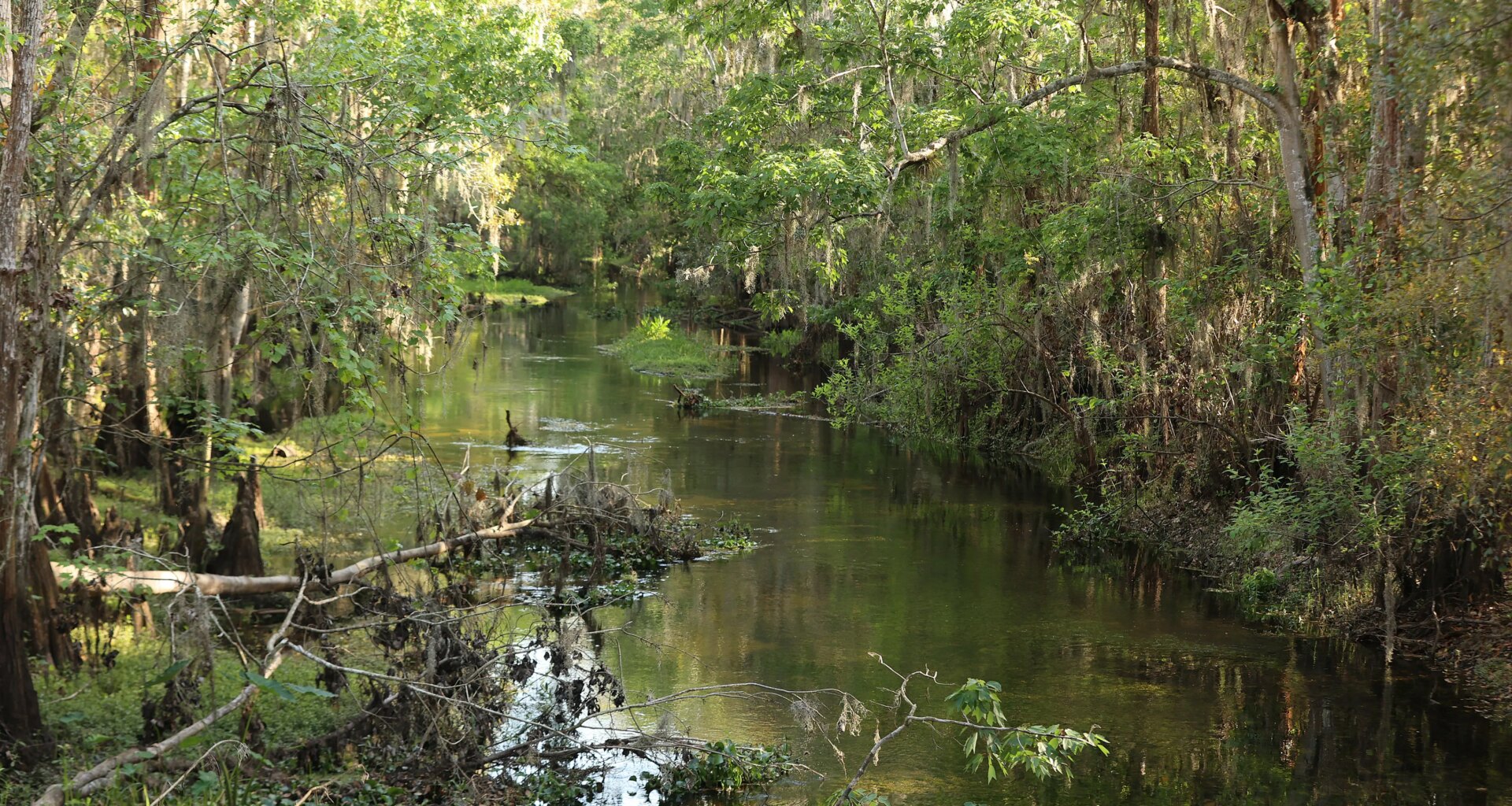
After almost three hours of debate that ranged from the slow movement of water through wetlands to the limits of Orange County’s cash reserves, commissioners voted 4-3 Tuesday to approve a modified version of Tuscana, a large mixed-use development planned near Shingle Creek with apartments, hotels and commercial space.
The massive Shingle Creek-area development, proposed by Geyer Development LLC and Shingle Creek Co-Owners LLC, entities associated with Israeli developer Zari Kovo, had been unanimously rejected by the board last year.
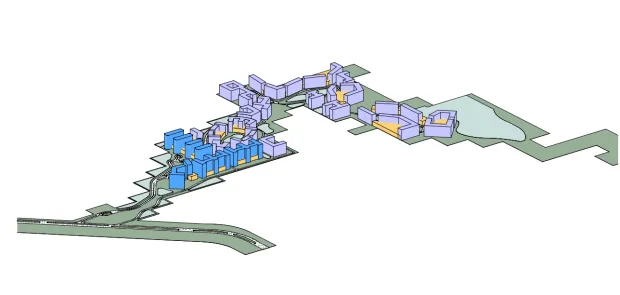 The plans for Tuscana call for over 1,200 hotel rooms, 4,814 multifamily units, and 653,400 square feet of commercial space. (Courtesy of Baker Barrios)
Orange County Mayor Jerry Demings and three commissioners changed their votes. The reversal came 16 months after commissioners denied the project in May 2025 amid concerns that building thousands of apartments and hotel rooms on the 227-acre property would destroy wetlands and potentially worsen flooding downstream. The 2025 plan would have directly affected more than 22 acres of wetlands, about 20 acres of them for two access roads required to serve the development.
District 5 Commissioner Kelly Martinez Semrad warned at the time that development in flood-prone areas had consequences beyond the loss of environmentally sensitive land. She pointed to rising property-insurance costs and said water does not respect property boundaries.
“The issue is not just about environmentally sensitive lands; this issue is about public safety,” Semrad said.
What brought Tuscana back was a state property-rights process that unfolded after that rejection. Within a month of the 2025 vote, the owners filed for relief under Florida’s Land Use and Environmental Dispute Resolution Act. After three unsuccessful attempts at mediation, the county and developers agreed on special magistrate Igmedio Pantaleon, who presided over a two-day evidentiary hearing earlier this summer. Pantaleon concluded Sept. 3 that the county’s denial was unreasonable and unfairly burdened the owners’ use of the property, and he recommended that commissioners reconsider and approve it with additional protections. Under the law, the board then had to return to the matter and decide whether to accept, modify or reject his recommendation.
Pantaleon’s recommendation did not reduce the proposed 4,814 apartments, 1,291 hotel rooms or 653,400 square feet of commercial space. It called for a 25-foot buffer beside wetlands, mitigation for indirect effects in an additional 50-foot area and more detailed floodplain and stormwater studies before a later development plan is approved. By Tuesday’s meeting, the developers had agreed to elevate 300 feet of each of the two access roads over northern wetlands.
For long stretches Tuesday, Wilson drove the questioning, moving methodically through the magistrate process, the evidence Pantaleon considered and the county’s earlier environmental findings.
Demings twice interrupted Wilson’s extended remarks in an effort to rein them in.
More than an hour later, as the discussion moved toward a vote, Demings returned to Wilson for another round of questions. She asked who would maintain the development’s private roads decades from now, what would happen if they failed during flooding and whether Orange County could someday face costs downstream from a development it had approved upstream. County Engineer Susan Ussach said the next stage would require detailed drainage modeling of the Shingle Creek Basin, not merely the parcels immediately surrounding the development.
Wilson’s larger concern was that the financial risk of rejecting Tuscana was being weighed against an incomplete measure of the cost of approving it. She argued that existing stormwater standards may not adequately account for the flooding Central Florida is experiencing and that further loss of wetland storage and flow capacity in Shingle Creek could leave residents and government paying for greater flood damage later.
Semrad pressed the flooding argument more forcefully. She repeatedly called it a safety issue, argued that a future land-use designation did not guarantee a developer the maximum density allowed by that designation, and said the county should be prepared to defend its 2025 decision in court. Near the end of the discussion, her position had not moved.
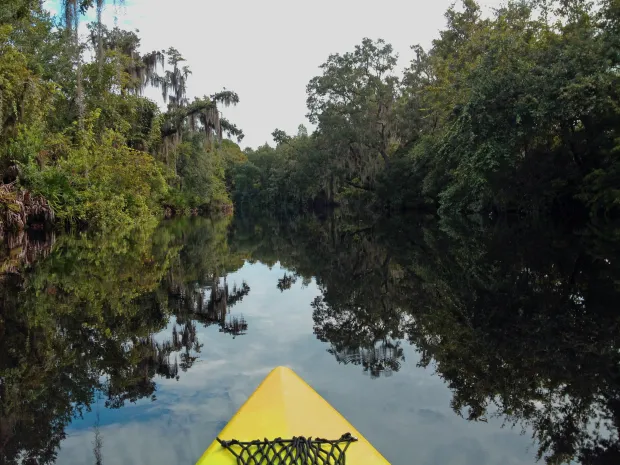 The South Florida Water Management District calls Shingle Creek a major water source for Lake Toho and has spent decades acquiring land around it because of its hydrologic importance. (Marjie Lambert/Miami Herald/TNS)
Environmental Protection Division Administrator Tim Hull estimated that elevating 300 feet of each of the two roughly 1,500-foot access roads could reduce direct wetland impacts by just under 2 acres. Attorney Dan O’Keefe, representing the applicants, told commissioners the two spans would add roughly $7 million to the project’s cost.
Elevating part of Tuscana’s access roads would reduce the amount of wetland filled and give water a wider path beneath them, though it would not eliminate the project’s remaining wetland impacts.
By this point, the commission’s debate had divided into two kinds of risk: the environmental and public cost of building in a wetland system, and the financial cost of refusing.
The potential financial exposure soon became central to the discussion.
The property owners’ appraiser valued about 150 developable acres at $800,000 an acre with the Tuscana approvals and $20,000 an acre without them, producing a claimed loss of roughly $115 million. Assistant County Attorney Lee Bernbaum cautioned that Orange County would hire its own appraiser if litigation followed and could reach a different valuation. But he also warned commissioners not to assume the county’s number would fall to a negligible amount. If the owners prevailed on a Bert Harris property-rights claim or an inverse-condemnation claim, the county could also face their attorneys’ fees, litigation costs and prejudgment interest.
Orange County would have no insurance coverage for that liability. County Administrator Byron Brooks told commissioners that such a judgment would have to be paid from the general fund or other available revenues and could wipe out the county’s reserve for fiscal 2027.
That comparison weighed heavily on the commissioners who ultimately changed course.
Mayra Uribe said the same dollars support housing, social services, environmental programs and other county obligations. She raised scenarios in which a loss, accumulated interest and legal expenses could climb far beyond the owners’ initial appraisal, although county attorneys did not put a likely figure on the final exposure.
Mike Crabb said he wished the property were being proposed for something far less intensive, but he was unwilling to place taxpayers at risk for a potential judgment he believed would be substantial.
Mike Scott approached the question more cautiously. He acknowledged the county’s responsibility to protect homes and waterways and recalled the severe flooding suffered by Orlo Vista residents, then asked lawyers and administrators where the money would come from if Orange County fought and lost. The answer brought the debate back to the same place: county funds.
Semrad was unshaken.
“Let’s go to court. Let’s go,” she urged her colleagues.
In the end, Demings and commissioners Uribe, Crabb and Scott backed the modified plan. Commissioners Wilson, Maribel Gomez Cordero and Semrad opposed it. The vote gives the developers a land-use plan and conservation-area impact permit subject to the new conditions, but detailed engineering, drainage calculations and other development reviews remain ahead.
That vote did not quite finish the board’s legal work.
Tuscana’s owners had pursued two separate property-rights tracks after the 2025 denial. The vote on Pantaleon’s recommendation resolved the first. Florida’s separate Bert J. Harris Jr. Private Property Rights Protection Act required Orange County to formally answer the owners’ pre-suit claim with a written settlement offer and a statement describing what uses the county would allow on the property.
So commissioners voted 4-3 a second time, directing the County Attorney’s Office to make that offer on the same terms they had just approved for Tuscana. It was not a second approval of the development. It was the legally required response to the parallel property-rights claim.
County attorneys said that if the owners accept the modified terms, the settlement should resolve the Bert Harris claim without a lawsuit.
Have a tip about Central Florida development? Contact me at SKinbar@GrowthSpotter.com or (407) 420-5246. Follow GrowthSpotter on Facebook and LinkedIn.