
JACKSONVILLE, Fla. – Concerns about safety at Jacksonville parks have grown after two shootings at Clanzel T. Brown Park in Northwest Jacksonville in recent months.
Charles Johnson, 33, was shot and killed during an argument with another basketball player earlier this month, and 22-year-old Jayden King is charged with murder in the case.
In July, a 12-year-old was shot in the leg after an argument between two groups at the same park.
The incidents have raised questions about what park visitors should look for and what responsibility a city has to maintain public parks.
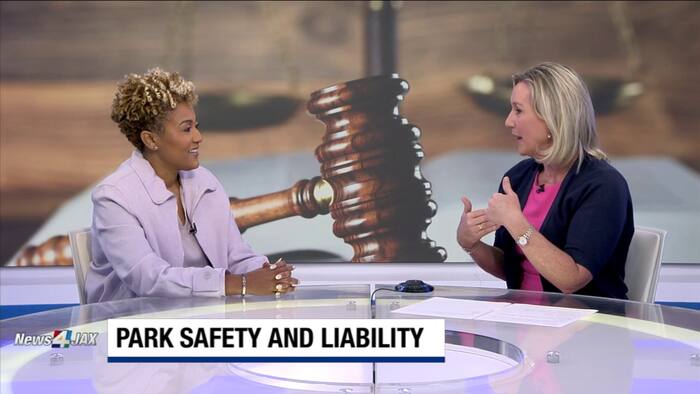
Local attorney Millicent Daniels discussed safety and liability during our latest “Justice 4 All” segment on The Morning Show.
What park visitors should look for
Daniels said residents should pay attention to the condition of a park and activity taking place there, much as they would assess the condition of a home or neighborhood.
“If you see things like people who are hanging out at the park outside of normal business hours, graffiti or trash that’s everywhere,” Daniels said, visitors should take note.
She also pointed to broken playground equipment and parking lots or other areas with inadequate lighting as warning signs.
“Things like that are very, very good indicators that that park may not necessarily be the most safe for you and for your family,” Daniels said.
Daniels also said visitors may want to avoid a park until safety concerns are addressed if recent incidents have been reported there.
City’s responsibility to maintain parks
Public parks are public property, and Daniels said cities have a legal duty to maintain them in a reasonably safe condition.
That responsibility can include inspecting playgrounds, repairing damaged equipment, addressing fencing problems and maintaining bleachers and bathroom facilities.
Daniels said cities also should monitor parks for people who are loitering or engaging in criminal activity, and repair cracked or unpaved walking paths.
“The city has a legal duty to make sure that parks are maintained in a reasonably safe condition,” Daniels said.
Daniels said a city could face civil liability if it had actual notice of a dangerous condition — meaning the problem was reported or otherwise known — or constructive notice, meaning the danger existed long enough that the city reasonably should have discovered and fixed it.
Why reporting hazards matters
Daniels encouraged park visitors to report safety concerns rather than assume someone else already has done so.
“If you see a danger, report it,” she said. “That way the city can be put on notice that they need to go ahead and fix it.”
Reports can also create a record of the problem. If a hazard remains after the city has had enough time to address it, Daniels said the reports could help establish a history of complaints.
“Report any incidents if you see people hanging around and it appears that they’re doing criminal activity,” Daniels said. “Report it to law enforcement.”
She said reports and ignored complaints could become evidence if someone later files a lawsuit against the city.
A previous Jacksonville case
Daniels cited the death of a toddler at a Jacksonville public park several years ago as an example of how an unsafe condition can lead to legal action.
She said the child drowned after falling into an uncovered septic tank.
“That was really a good example where the city failed to meet the mark, and it resulted in a child’s death,” Daniels said.
How to report a concern
Residents who see a safety problem at a city park can call 630-CITY to report it. Those reports are assigned a ticket, creating a record that the city was notified.
Visitors should also call law enforcement when they see suspected criminal activity or face an immediate threat. In an emergency, call 911.
Copyright 2026 by WJXT News4JAX – All rights reserved.