
ST. PETERSBURG, Fla. — It has been two years since Hurricane Helene, and researchers say the storm taught them valuable lessons.
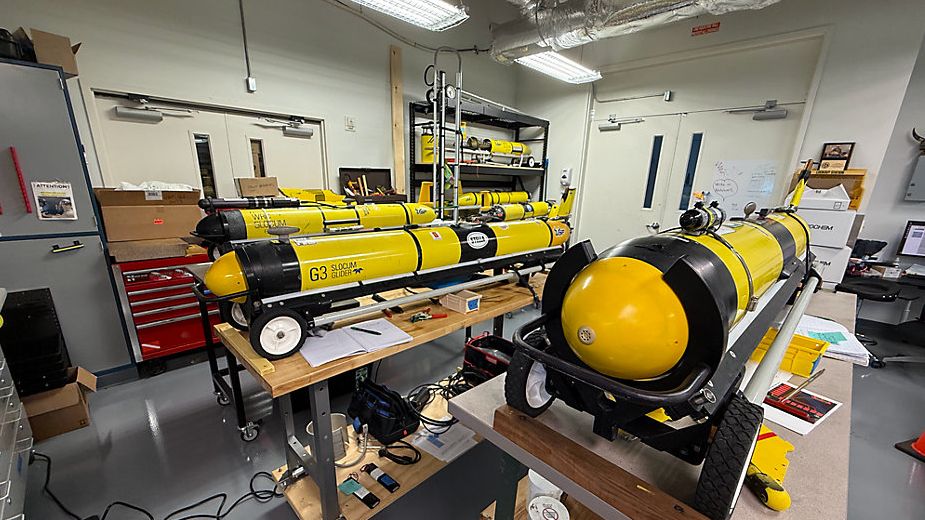
The University of South Florida College of Marine Science’s underwater robot helped scientists forecast Helene’s intensification.
The glider, called Jai Alai, was already in the water when the storm came through. USF said it was the only research vessel in the storm’s path.
Chad Lembke, USF research assistant professor and the Ocean Technology Group’s project lead, explained Jai Alai was out for red tide research.
In 2023, the College of Marine Science received grants from the National Oceanic and Atmospheric Administration (NOAA) to gather ocean data on red tide, fisheries and hurricanes.
“When Hurricane Helene came on, we were perfectly positioned way offshore, and Hurricane Helene went right over this glider, and then Hurricane Milton came by as well,” said Lembke.
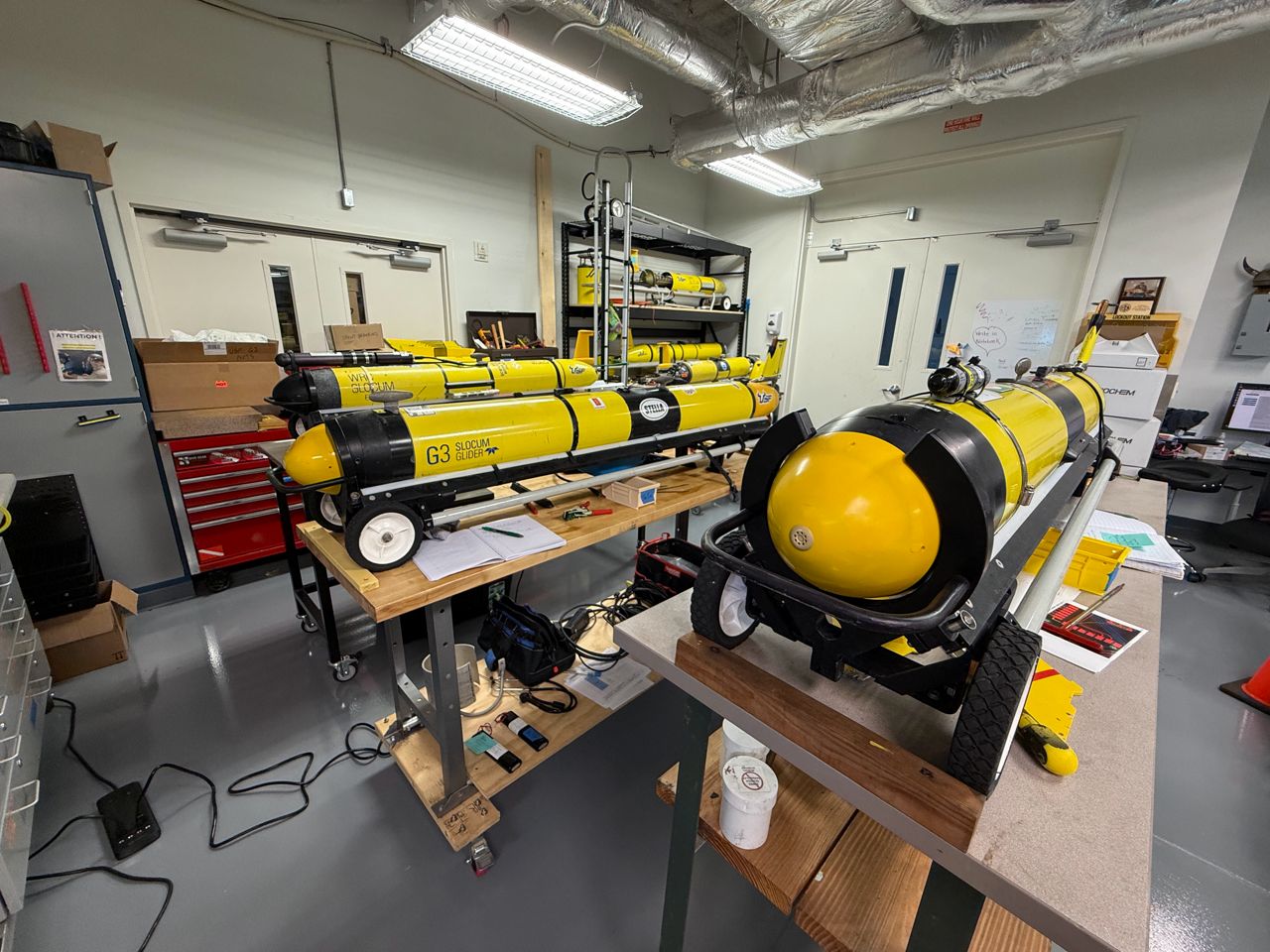
Now, Jai Alai is branded with several red hurricane stickers.
“We’re football fans and so, you know, stickers on helmets are very cool,” Lembke said with a chuckle.
It’s a reminder of what Jai Alai went through.
“We do a wonderful job of ascertaining the heat in the ocean at the surface from satellites. But in order to understand how deep that goes, is that just one meter deep or does it go down 30 meters or 100 meters? That’s an indication of how big your fuel tank is for the hurricane when it comes,” Lembke said.
The underwater robot is about six feet long, using buoyancy to travel hundreds of miles and diving as deep as 3,000 feet, all while continuously sending back data on ocean conditions.
The gliders are out and about all year long. That’s why the units are usually in the water for the entire hurricane season.
For Hurricane Helene, it was at the right place at the right time.
As the glider moved through the storm, it recorded the water temperature dropping several degrees, showing the hurricane getting stronger, as it pulled heat from the ocean.
“That’s one of the reasons that Helene grew from a (category) 2 to a 4, as it passed through the region off of Tampa Bay, it got stronger because the water was warm. It was warmer than usual, and then it took a fair bit of the heat as it went by,” Lembke said.
Lembke learned because of that, it didn’t leave much heat behind for Hurricane Milton.
That data was sent off to NOAA and the National Weather Service for possible intensification predictions.
“That data was incorporated and used for those predictions, and that’s really the goal of what we’re trying to do, is to get these things out in in advance,” Lembke said.
These gliders don’t do this work alone.
Jason Law, USF College of Marine Science physical oceanographer and mooring technician, said, “What we always say is you need lots of tools in the toolbox to understand these complicated things, right? So they complement each other.”
Law works with buoys to understand circulation on the West Florida’s shelf.
“It’s critical to understand what the water temperature is, not just the surface, but also, you know, what the water column temperature,” Law said.
These researchers continued to work hard, despite a structure fire at the Marine Science Lab earlier this year.
That’s why more stickers are being added to their collection.
“We just got some stickers coming today for this unit (glider) and that unit (glider) was in the fire, so we’re gonna get fire stickers on those, but that’s just for our personal fun,” Lembke said.
The stickers carry a message of resilience and the strength to weather any storm.