
Arctic air is making its way to Central Florida in the overnight hours of Monday.While the polar plunge is underway, WESH 2 Meteorologist Marquise Meda talks about the “four Ps,” otherwise known as people, pets, pipes and plants, and how those affected by the weather can prepare. >> WESH 2 Meteorologist Marquise Meda shares his best tips to help preparePeopleTemperatures will drop into the 30s early Tuesday morning, so you want to make sure that if you’re stepping outside, you are bundled up in layers.Always make sure you are prepared, but don’t forget to check on your friends and family members, especially older adults and children who might not know how these temperatures will affect their bodies.PetsIf it’s too cold outside for people, it is certainly too cold outside for pets. Even if you’re putting your outdoor pets in their own sweaters, you want to ensure they still come inside for some warm shelter. It’s also important to make sure that they have access to water that won’t freeze over in their bowl.PipesThe pipes in garages are the most susceptible to freezing over or even bursting as temperatures drop.The best way to avoid this is to make sure they are properly insulated. Oftentimes, rubber or thick foam will work as the best insulation. In emergency situations, a dry towel can work just as well. But it’s important to make sure the towel stays dry and it won’t collect any moisture. The moisture could freeze over, possibly leading to the pipes bursting.PlantsAnytime temperatures drop below 40 degrees, tropical warm-weather plants like hibiscus or birds of paradise are at risk of wilting or even discoloring.When temperatures get to between 28 and 32 degrees, a light frost will occur. This can kill potted plants.As temperatures continue to drop between 24 and 28 degrees, plants experience a hard freeze, and things like garden vegetables and even palm trees can start to see severe damage. Anything below 24 degrees is referred to as a widespread severe freeze. Temperatures as low as these can kill all kinds of plants. It’s important to be prepared, especially as the wind chill and feels-like temperatures reach the low 20s.
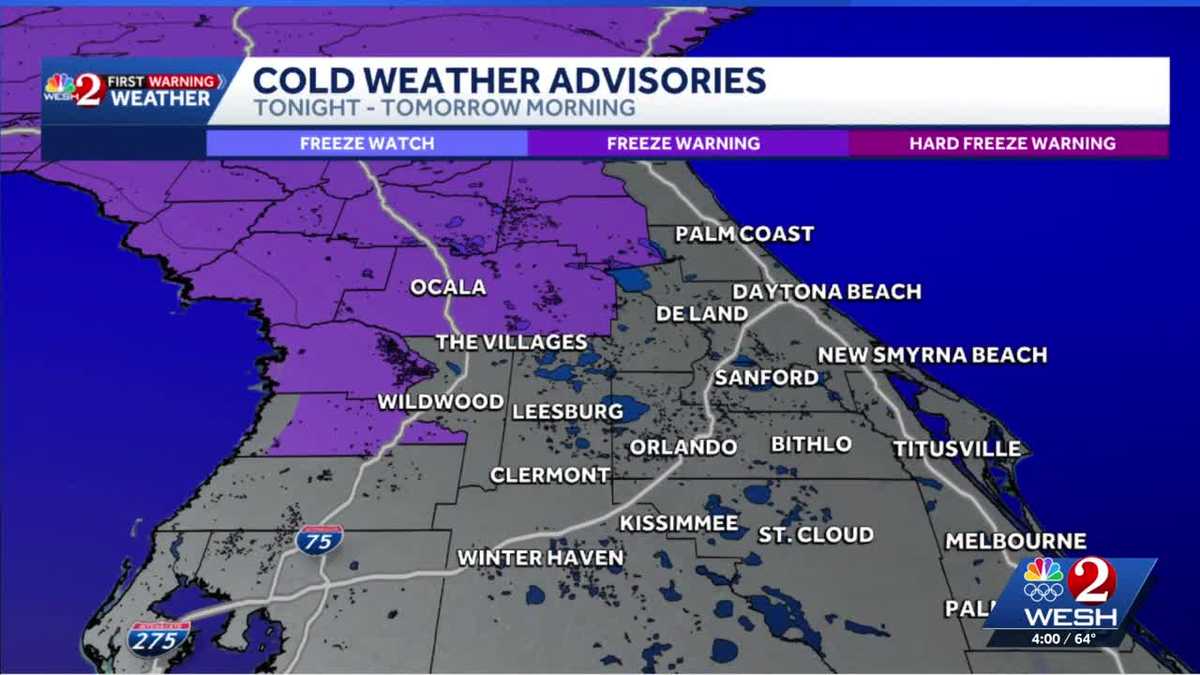
Arctic air is making its way to Central Florida in the overnight hours of Monday.
While the polar plunge is underway, WESH 2 Meteorologist Marquise Meda talks about the “four Ps,” otherwise known as people, pets, pipes and plants, and how those affected by the weather can prepare.
This content is imported from Twitter.
You may be able to find the same content in another format, or you may be able to find more information, at their web site.
COLD WEATHER ADVISORY: Has been issued for all of Central #florida from 2AM-9AM Tuesday as wind chill values will be in the 25-35 range! Remember to bring those pets in and dress those little ones warmly tomorrow morning. #weshwx pic.twitter.com/Y7nteeDz5X
— Tony Mainolfi (@TMainolfiWESH) November 10, 2025
>> WESH 2 Meteorologist Marquise Meda shares his best tips to help prepare
People
Temperatures will drop into the 30s early Tuesday morning, so you want to make sure that if you’re stepping outside, you are bundled up in layers.
Always make sure you are prepared, but don’t forget to check on your friends and family members, especially older adults and children who might not know how these temperatures will affect their bodies.
Pets
If it’s too cold outside for people, it is certainly too cold outside for pets.
Even if you’re putting your outdoor pets in their own sweaters, you want to ensure they still come inside for some warm shelter.
It’s also important to make sure that they have access to water that won’t freeze over in their bowl.
Pipes
The pipes in garages are the most susceptible to freezing over or even bursting as temperatures drop.
The best way to avoid this is to make sure they are properly insulated. Oftentimes, rubber or thick foam will work as the best insulation.
In emergency situations, a dry towel can work just as well. But it’s important to make sure the towel stays dry and it won’t collect any moisture. The moisture could freeze over, possibly leading to the pipes bursting.
Plants
Anytime temperatures drop below 40 degrees, tropical warm-weather plants like hibiscus or birds of paradise are at risk of wilting or even discoloring.
When temperatures get to between 28 and 32 degrees, a light frost will occur. This can kill potted plants.
As temperatures continue to drop between 24 and 28 degrees, plants experience a hard freeze, and things like garden vegetables and even palm trees can start to see severe damage.
Anything below 24 degrees is referred to as a widespread severe freeze. Temperatures as low as these can kill all kinds of plants. It’s important to be prepared, especially as the wind chill and feels-like temperatures reach the low 20s.