
ST. PETERSBURG, Fla. — Scientists with the Florida Fish and Wildlife Conservation Commission Research Institute are studying how seagrass reproduces, survives, and grows. Their research is shaping restoration efforts in Tampa Bay and across Florida.
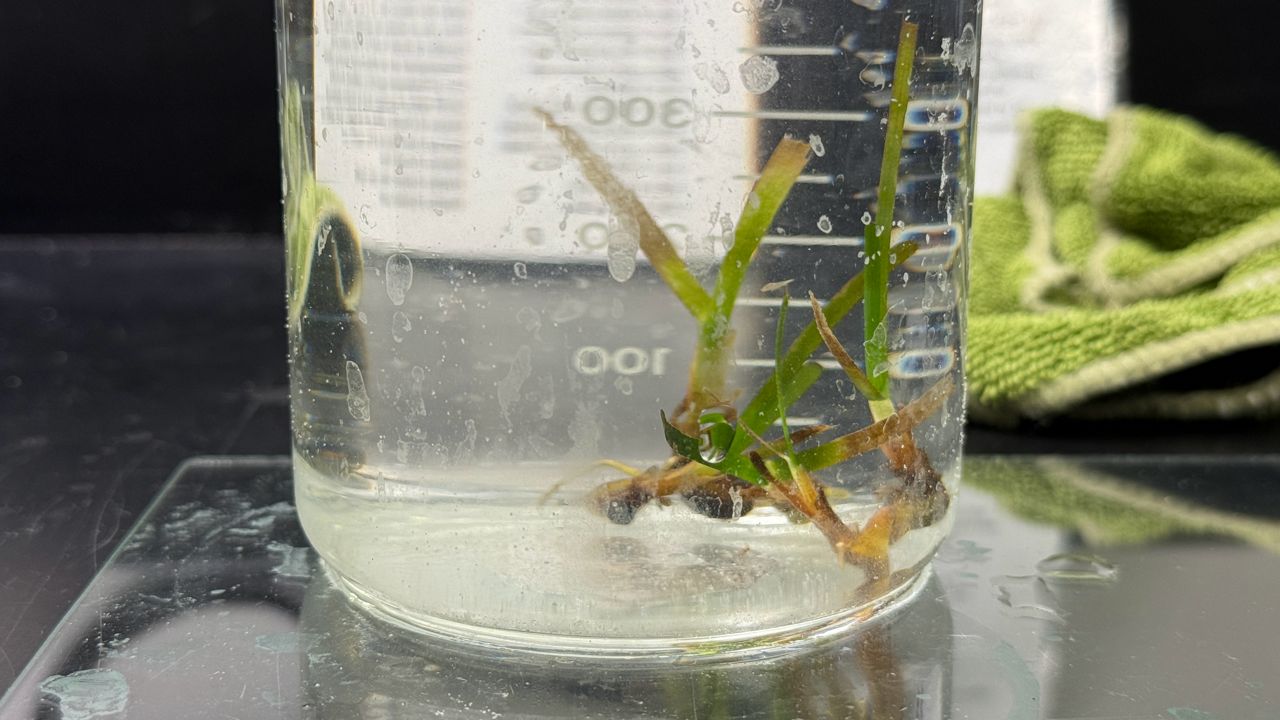
Inside the institute’s seagrass ecology lab, tanks are filled with samples collected during field trips around the state. Researchers are compiling data on the three main types of seagrass, including turtle grass, a species found throughout Tampa Bay.
“It has long, strap-like blades. I like to call it the linguine of seagrass,” said Allison Patranella, a research associate with the FWC Research Institute. “So in Tampa Bay, we have loads of turtle grass. And there also have a lot of turtle grass reproduction.”
Reproduction and planting are central to the lab’s work. Researchers are studying what conditions seagrass can recover from while still growing successfully.
Diana Daniels, a research assistant with the FWC Research Institute, said understanding seedlings and fruit helps the lab inform other organizations about what to look for when choosing seedlings to plant.
“When you have happy seagrass, you have happy everything,” Daniels said.
The lab also tests how seedlings respond to harsh conditions. Researchers put seedlings into ovens to study how long they can survive on a sunny beach.
Those tests have helped shape new growing and restoration techniques. Since 2022, about 2,000 nursery-grown turtle grass plants have been placed in Florida waters using techniques informed by the lab’s work.
Patranella said boaters also can help protect seagrass beds.
“Next time you’re out on a boat, if you’re near a seagrass bed, please go slow and trim up your motor so you’re not scarring the bed,” Patranella said.
Members of the lab said the season for the seedlings recently ended. It typically runs from around mid-July until September.