
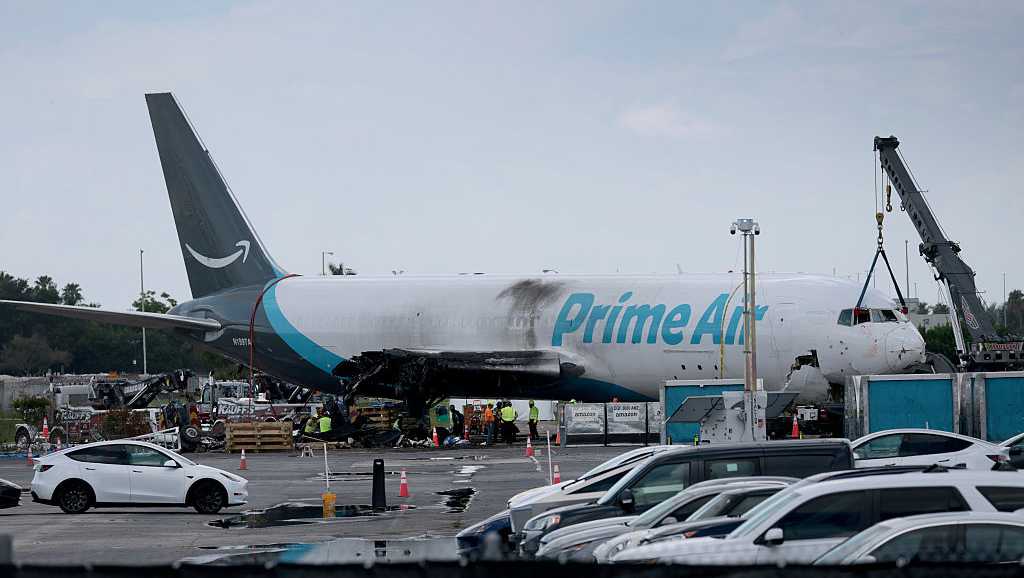
NTSB preliminary report reveals details of fatal Amazon-contracted cargo jet crash at Miami airport

The National Transportation Safety Board has released its preliminary report on the Amazon-contracted cargo jet crash at Miami International Airport, providing new details about the fatal accident.
The report states that the Boeing jet overshot a runway on Sept. 6, killing five people in a van on the tarmac.
The NTSB said the jet’s thrust reversers, which help slow the aircraft, did not deploy, though it remains unclear why they were not activated.
The agency also released an image from the cockpit, which officials said shows the speed brakes were stowed, meaning closed, when the pilot attempted to land. Speed brakes, which are panels on the wings that reduce lift and drag, were inexplicably retracted.
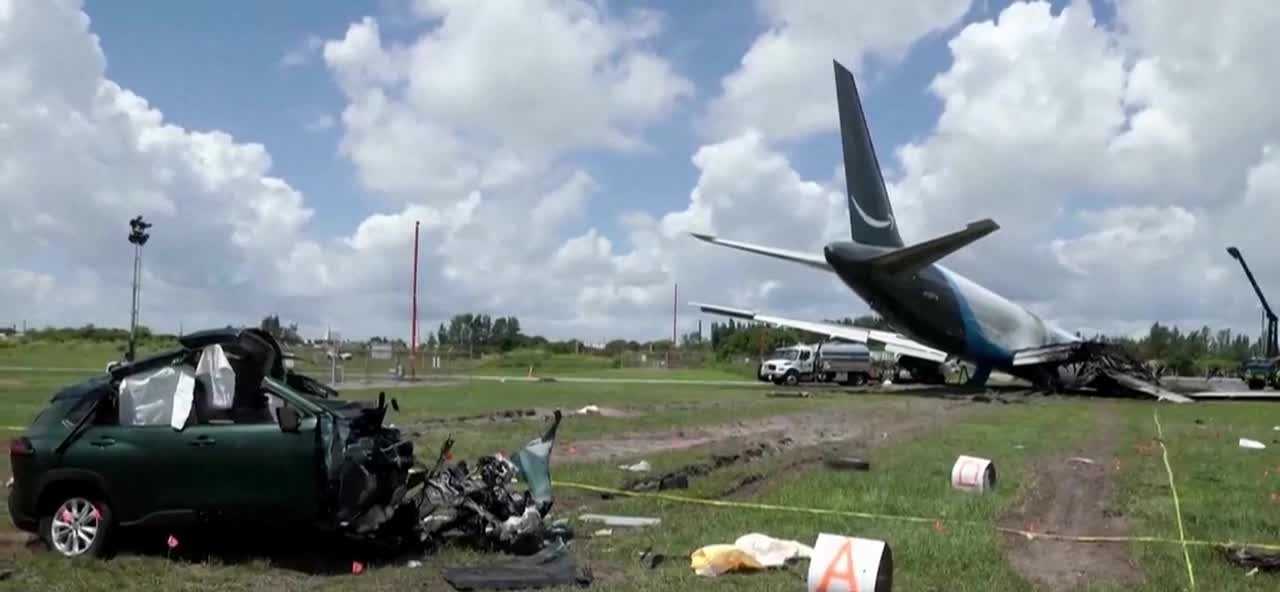
National Transportation Safety Board
The NTSB’s preliminary report on the September 6 cargo jet crash at Miami International Airport highlights key findings about the aircraft’s systems and actions before the accident that killed five people.
Federal crash investigators noted that a wheel brake was deployed and then released.
Voice data recorders revealed that one of the pilots called for a go-around— such as touching down and immediately take off again—15 seconds before the recording ends and impact.
The NTSB said the plane was traveling about 130 miles per hour when it went off the end of the runway.
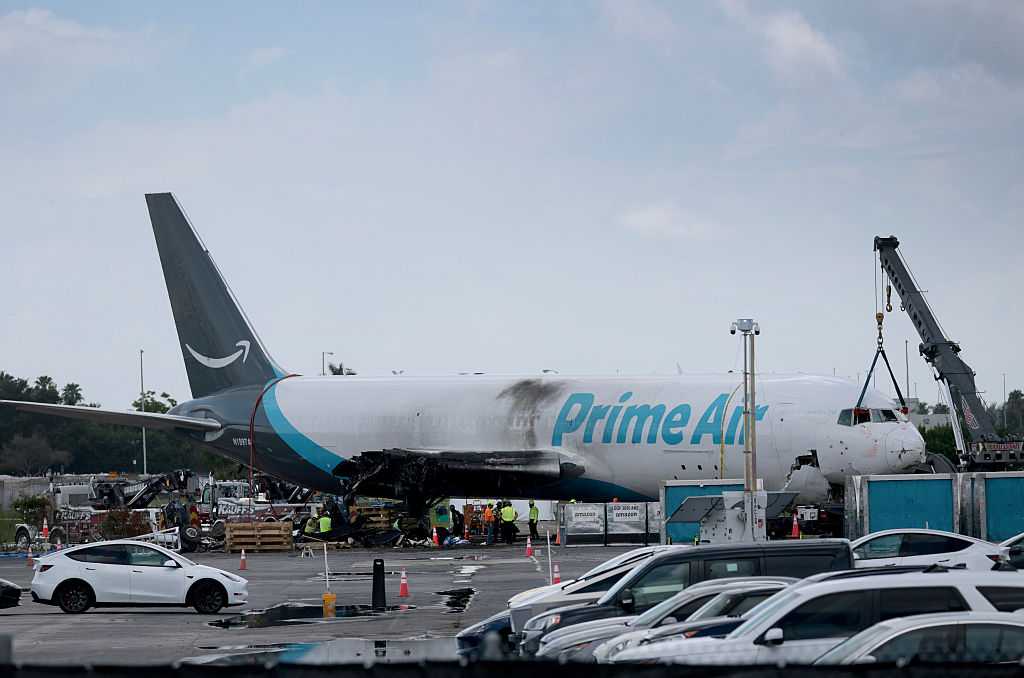
Getty ImagesJoe Raedle
MIAMI, FLORIDA – SEPTEMBER 14: Workers prepare to move the Amazon cargo plane that crashed at Miami International Airport on September 14, 2026 in Miami, Florida. Amazon announced it has decided to suspend its operations with 21 Air after the carrier’s plane overshot the runway in Miami, killing five people on September 6th. (Photo by Joe Raedle/Getty Images)
The report is preliminary, meaning no cause for the fatal accident has been determined. A final report could take months or even years to complete.
21 Air, the company operating the jet, released a statement saying, in part, “We are reviewing the information in the NTSB preliminary report closely, alongside our own internal safety and operational protocols, and we will take all appropriate action to improve our safety based on the facts as they are established.”