
Thursday was an important deadline for the sake of Floridians’ pocketbooks: The consumer protection law Gov. Ron DeSantis signed earlier this year required corporate utilities to submit plans for how they would handle data centers by Oct. 1.
Specifically, the plans would outline how the utilities would protect residents from data centers increasing their electric bills. Duke Energy filed its plan in April, while Tampa Electric Co. submit one Wednesday.
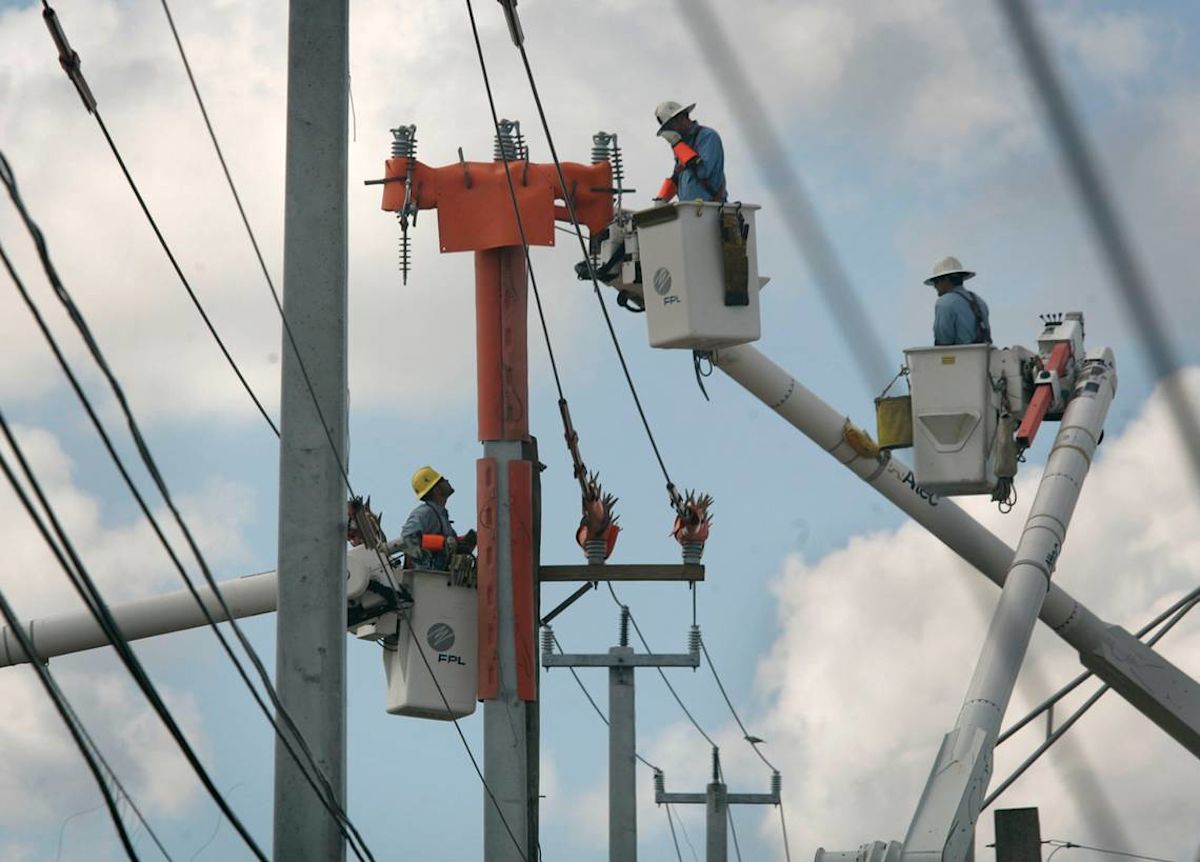
At 5 p.m. Thursday, Florida Power & Light, the state’s largest utility, submitted paperwork to state regulators saying it believes its preexisting data center rules are sufficient.
Those rules were crafted in 2025, before the consumer protection law existed. They were created as part of a case surrounding Florida Power & Light’s latest request to hike its customers’ base rates on their power bills.
That case ended after groups largely representing big-business interests, including an anonymous association of data center companies, reached a deal with Florida Power & Light that regulators ultimately approved. The deal granted Florida Power & Light among the highest rates of shareholder profit in the nation and also loosened some of the utility’s data center requirements.
For example, the utility initially proposed that data centers pay a minimum bill representing 90% of their expected energy costs — so if a data center’s actual energy consumption fell short, residents wouldn’t be on the hook for all the infrastructure improvements made by the utility based on the original projections. Through the course of deal negotiations, though, that minimum bill lowered to 70%, angering consumer advocates.
Florida Power & Light chief executive Scott Bores said Thursday that the existing rules make sure data centers “pay their own way.”
“FPL operates with a singular focus — doing the right thing for our customers,” Bores said in a news release. “Before any large data centers arrived in Florida, we worked to establish … one of the nation’s strongest customer-protection frameworks.”
Bradley Marshall, a lawyer for affordability advocacy group Florida Rising who sparred with Florida Power & Light during the 2025 rate case, said the backroom deal-making from that case left the rules riddled with gaps that leave Floridians vulnerable.
Florida Power & Light’s plan does not meet the standards of the new state law, he said. “We didn’t think it was protective enough of consumers then, and don’t think it’s protective enough of consumers now.”
One failing, Marshall said, is the way Florida Power & Light handles a category of infrastructure costs called “incremental generation,” which data centers would add to the grid and likely pass down to other customers. While the utility would charge data centers for some of these costs, it would only cover a limited amount of battery storage, Marshall said, leaving out power plant renovations or other projects that residents could have to fund.
In the company news release, Bores highlighted the fact that state regulators on the Florida Public Service Commission unanimously approved the larger rate hike deal that contained the data center rules.
However, under the new data center law, the commission must still approve them again.
• • •
The Tampa Bay Times launched the Environment Hub in 2025 to focus on some of Florida’s most urgent and enduring challenges. You can contribute through our journalism fund by clicking here.