
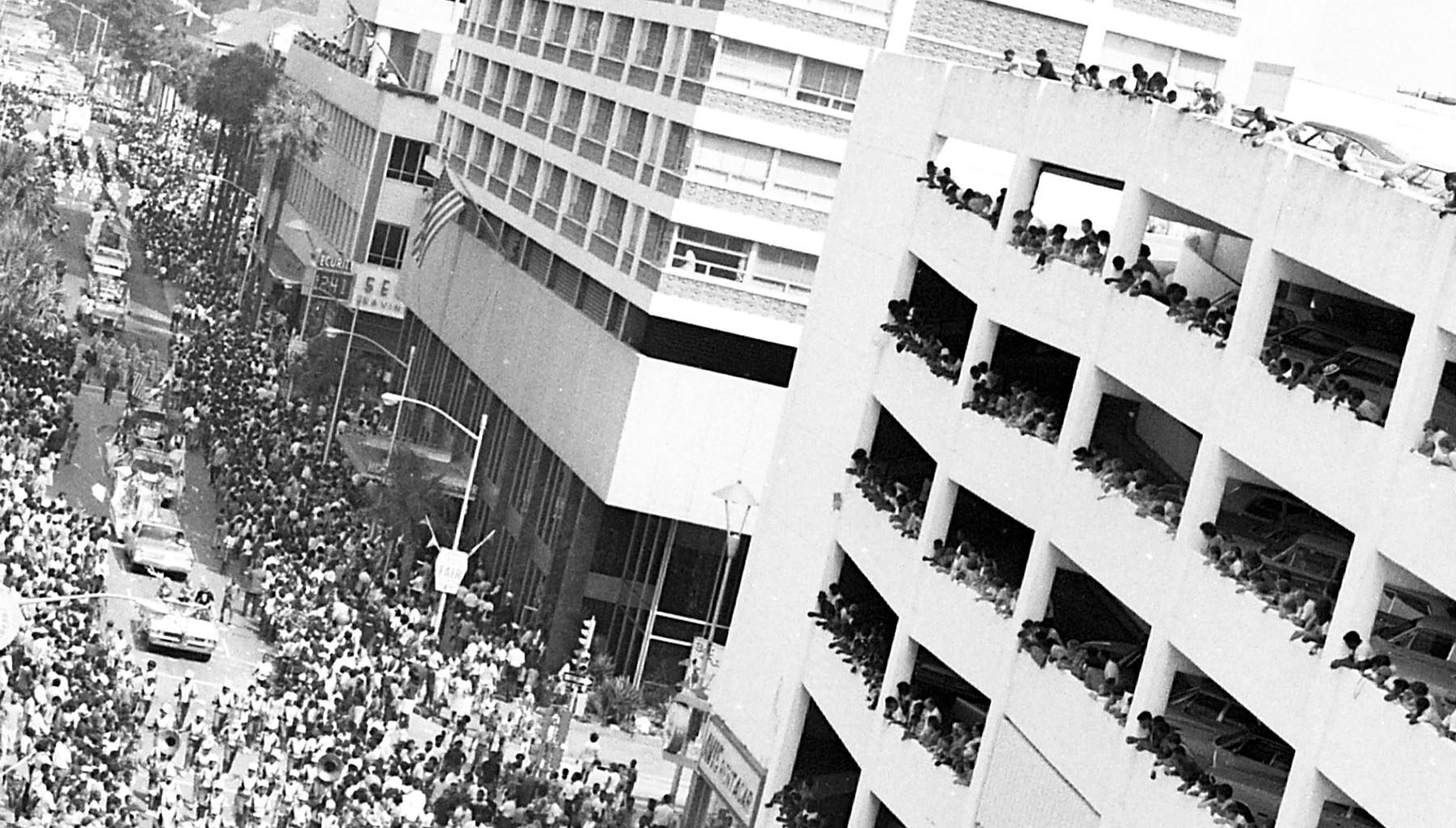
‘The urge to merge’
Fifty-eight years ago, on October 1, 1968, the enactment of the roughly 2-to-1 approval of the city-county consolidation referendum was celebrated with a grand parade watched by more than 200,000 spectators.
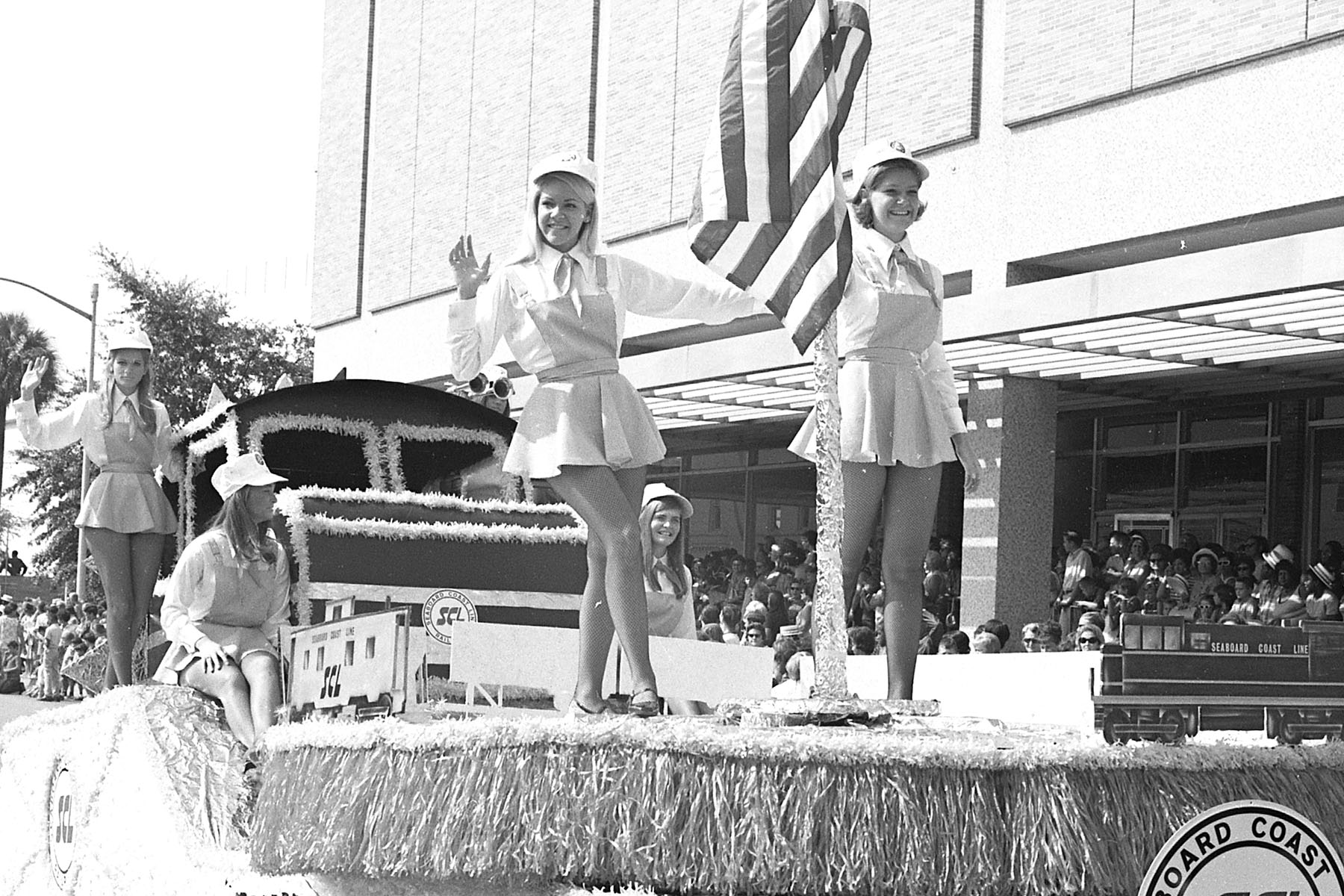 The Seaboard Coastline Railroad float.
According to a 2018 “Florida Times-Union” article by reporter Charlie Patton, city-county consolidation’s supporters (the “white hats”) were opposed by “so-called black hats.” The “urge to merge,” according to Patton’s article, had been bandied about in the century since the Civil War ended in 1865. Sporadic efforts resulted in unincorporated neighborhoods – such as LaVilla, Fairfield, Springfield, Brooklyn, Riverside and East Jacksonville – becoming part of Jacksonville, but the greater goal was to eliminate duplication and save money by merging city and county offices and agencies.
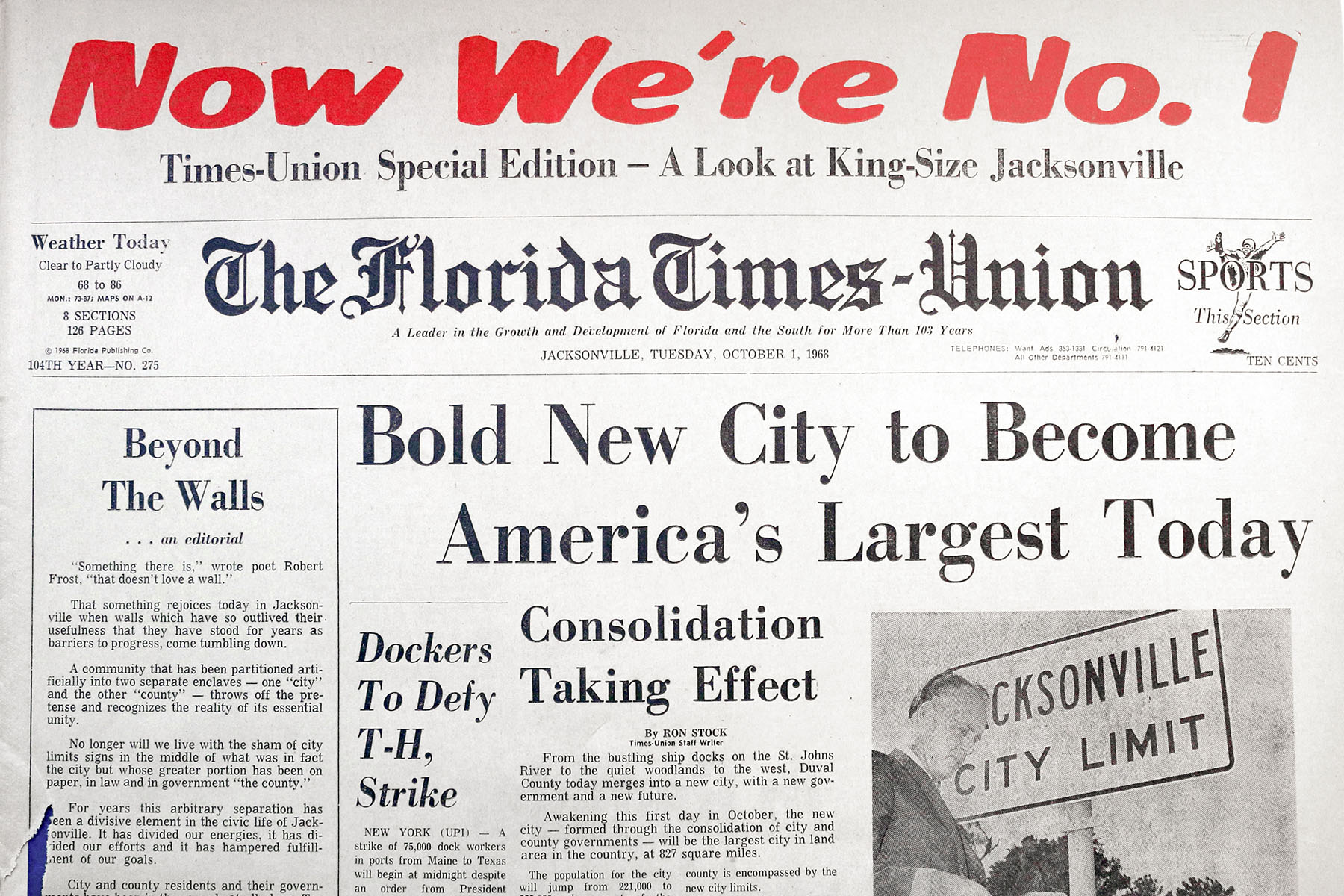 Front page of the Florida Times-Union newspaper on October 1, 1968.
In his book “Jacksonville: The Consolidation Story, From Civil Rights to the Jaguars,” the late UNF history professor James B. Crooks noted that “Jacksonville probably had the most unwieldy structural form of government of any city in the United States.”
Eight years ago, citizens of Jacksonville celebrated the 50th anniversary of the city-county consolidation of government on a much smaller scale with an exhibit in the City Hall rotunda. The “Jacksonville Daily Record” ran an opinion editorial by Alan Bliss, then executive director of the Jacksonville Historical Society, which curated the exhibit.
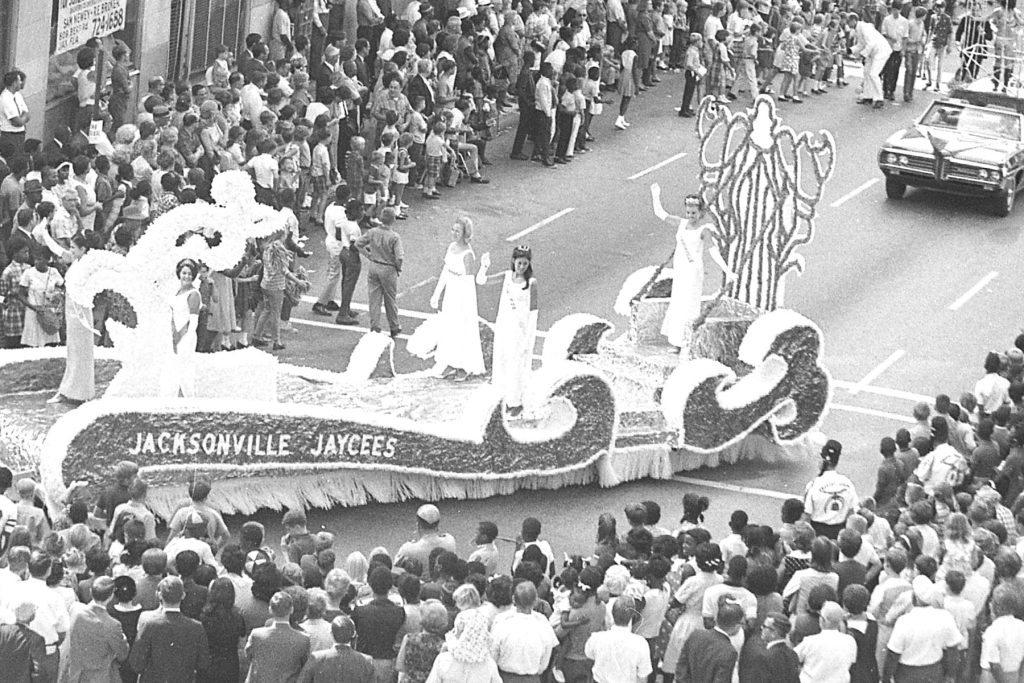 The Jacksonville Jaycees float with five young women gloved, gowned and crowned.
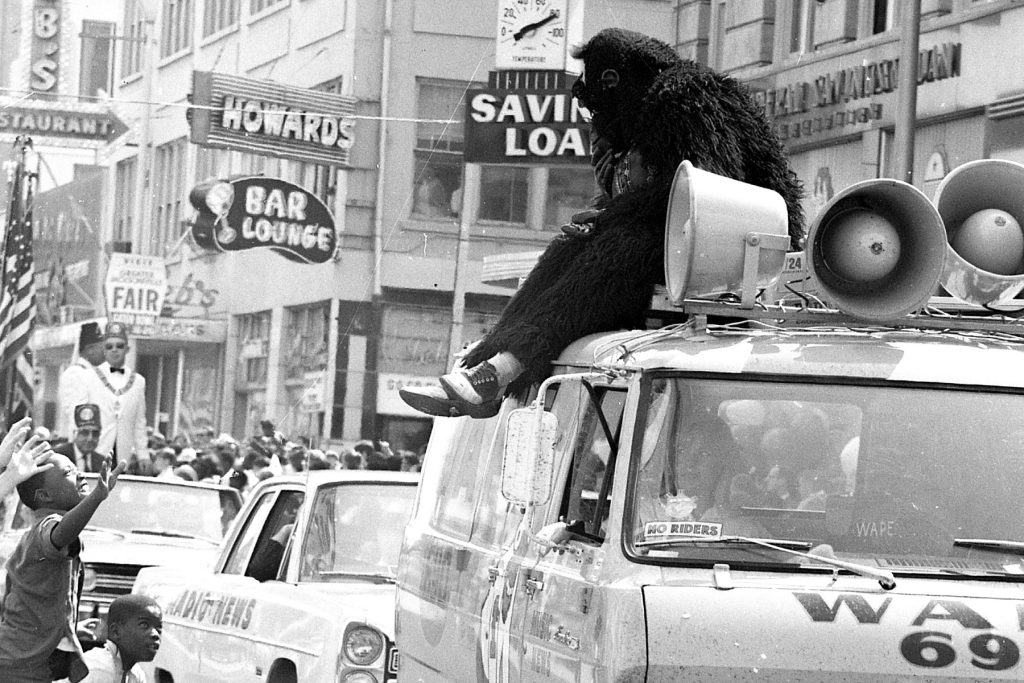 Children wave to the Big Ape, mascot for WAPE 690 AM radio station.
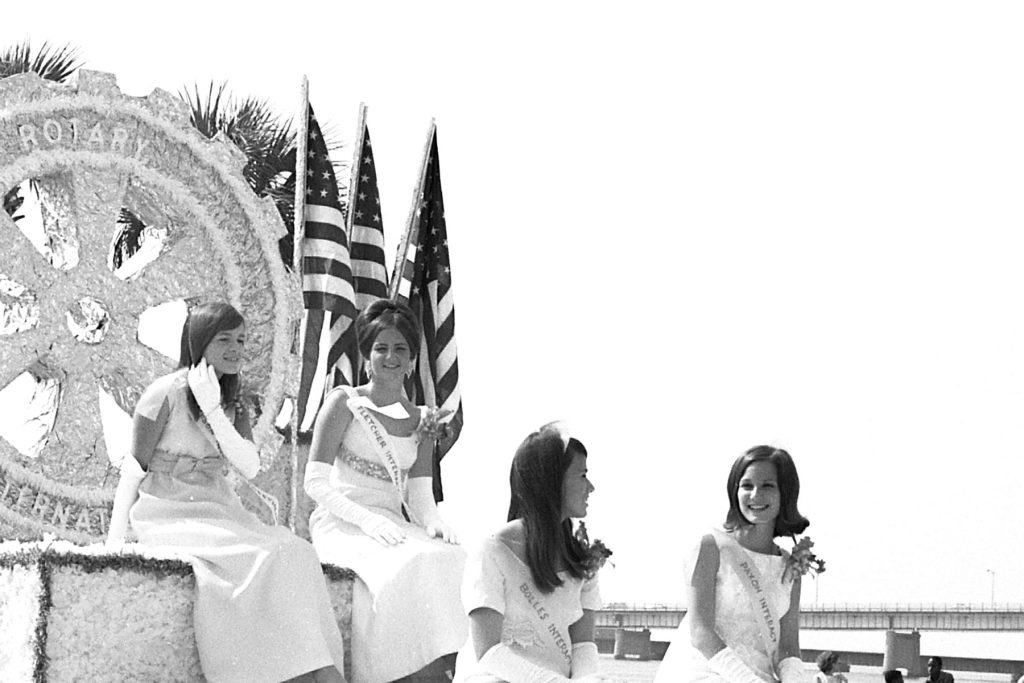 Four young women graced the Greater Jacksonville Rotary Club float.
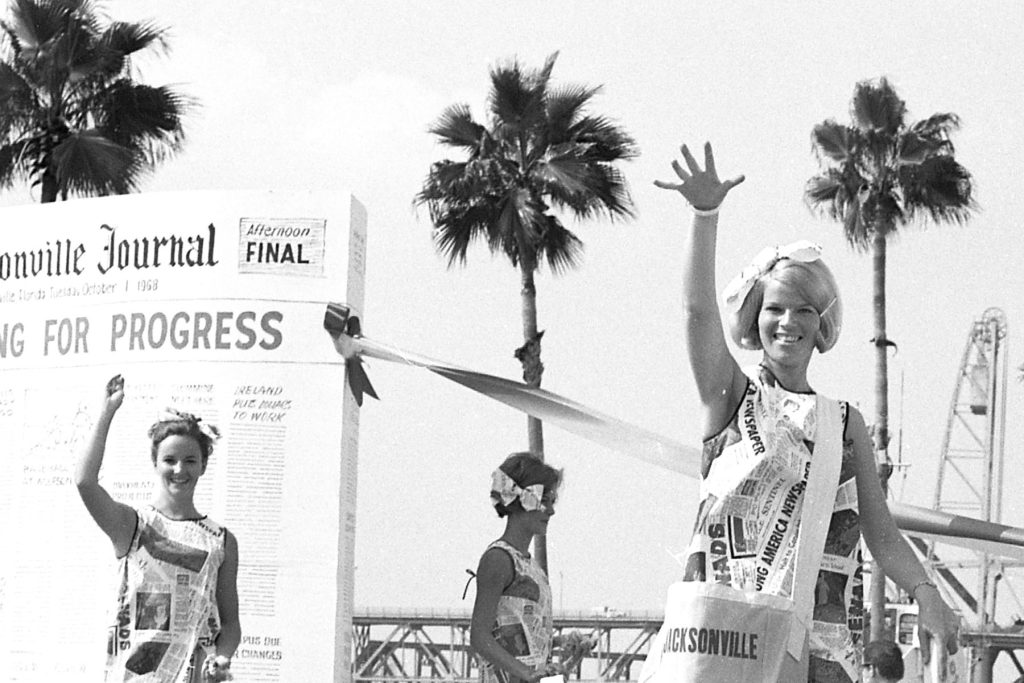 Newspaper girls on the Jacksonville Journal float wave to the crowd.
“The benefits to Jacksonville’s brand spread across Northeast Florida and beyond,” Bliss wrote. “Some believe that without consolidation there would have been no NFL franchise.”
Contributed by The Jacksonville History Center.
Photos: Jacksonville History Center/Florida Times-Union Photo Collection.