
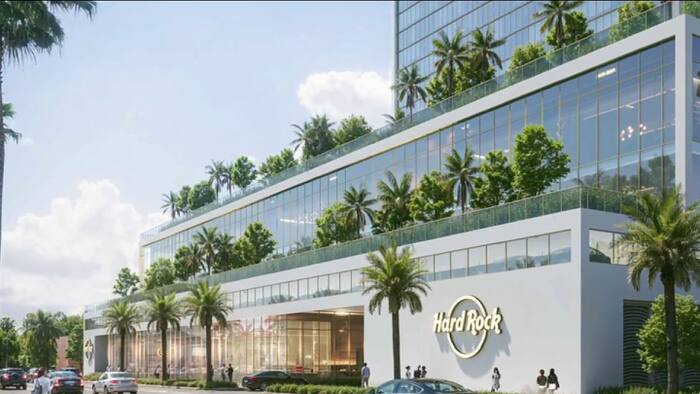
JACKSONVILLE, Fla. – After nearly two decades of stalled development on a prominent piece of Jacksonville’s riverfront, the developer behind a proposed Hard Rock Hotel says he wants construction to begin in a matter of months.
But before a 30-story tower can rise from the long-vacant site at 500 E. Bay St., several major pieces still have to come together — including city approvals, the project’s final price and how much public assistance developers could ultimately seek.
Developer Michael Munz, founder and CEO of Florida Innovation Capital, told News4JAX his team is targeting the first quarter of 2027 to break ground.
That timeline comes as the project, known in city documents as Project Revival, is still early in the approval process.
Thursday’s presentation before the Downtown Development Review Board was a workshop, not an approval meeting. It marked the first public look at a design Munz said his team has spent nearly two years developing.
The proposal calls for a 30-story mixed-use Hard Rock development with 350 hotel rooms and 152 branded residences. Plans also include restaurants and cafes, retail, live entertainment, meeting and event space, wellness amenities, a fourth-floor pool deck and another pool and clubroom at the top of the building.
Renderings also show a circular nightclub extending from the 18th floor, a design feature developers said is intended to play off Hard Rock’s connection to music.
Despite the Hard Rock name, developers said the Jacksonville project would not include a casino. It also would not be one of the brand’s guitar-shaped hotels.
What has to happen before construction begins?
With developers hoping to break ground early next year, News4JAX reporter Briana Brownlee and photojournalist Jesse Hanson dug into what still has to happen before crews could actually begin construction.
“Next is for us to take the feedback we got today, and to make some of the tweaks and changes, and then come back for full review of the Downtown Design Review Board, and have that approved, and then we go to the DIA, and then from the DIA we go to the City Council,” Munz said.
Dates for those future meetings have not been set.
The DDRB made recommendations during Thursday’s workshop but took no formal action. Developers would next need to return with a formal application for conceptual design approval.
And design approval is only part of the equation.
How much could the city be asked to contribute?
One of the biggest financial questions surrounding Project Revival has yet to be answered: How much help could developers ultimately seek from the city?
“There’s not been an identified number of what the public assistance is at this point,” Munz said. “We’ll be working with the administration and then the DIA and eventually City Council.”
Previous plans for Project Revival have included tens of millions of dollars in potential city incentives.
Financial models submitted by the developer to the city in 2025 included two potential Recapture Enhanced Value, or REV, grants.
One model included a 25-year REV grant totaling approximately $69.26 million. A later model included a 20-year grant totaling approximately $40.13 million.
Under a REV agreement, the developer would pay property taxes on the completed project, and the city would rebate an agreed-upon portion of the new property-tax revenue generated by the development over a set period of time.
City officials said at the time that neither model represented a city commitment.
Then in February, Downtown Investment Authority CEO Colin Tarbert identified Project Revival among a group of Downtown developments that could potentially seek completion grants over the next several years.
For Project Revival, DIA estimated a potential completion grant ranging from $37.5 million to $75 million based on developer models.
A completion grant is a different incentive from a REV grant, and the DIA figures were estimates — not an approved grant or finalized request.
No final incentive package for Project Revival is currently on the table.
Munz said the development team first needs to finish the design before it can determine what the project will cost and what its financial package could ultimately look like.
“Once you have a design, then you can go to the next step, which is pricing,” Munz said. “So our next step is going to be going back and working on what is the actual financial package and number going to be.”
Other public investment discussions
The discussion comes as Jacksonville weighs public investment in a growing list of major Downtown developments.
In February, DIA identified about 10 projects that could potentially generate nearly $225 million in completion-grant requests over three to five years. DIA officials said they did not expect every project on the list to ultimately receive a grant.
Munz said he believes public and private investment often have to work together to spur Downtown redevelopment.
“We’ve seen other downtowns,” Munz said. “We’ve seen it does take a certain amount of public investment with the private investment in order to work together to make it all come and be something very special.”
Ultimately, Munz said decisions about the city’s level of investment would rest with elected city leaders.
“That’s really up to the City Council,” Munz said. “I think the City Council and the mayor have to work together to decide what does the investment need to be in order to make Jacksonville the downtown that we know it can be.”
Another major hospitality project planned nearby
Project Revival could also eventually have a major new neighbor.
A proposed Culinary Institute of America Southeast campus is planned as part of a separate hotel and conference center development at 330 E. Bay St., a short distance from the proposed Hard Rock site.
Jacksonville City Council previously authorized city officials to negotiate up to $35 million in incentives tied to the CIA project. A final agreement is still being negotiated.
Munz said he sees opportunities for the projects to complement each other, including through hospitality and the potential workforce.
“The more the merrier,” Munz said. “I imagine that we will be hiring a lot of their students who come out of the Culinary Institute.”
He added that he expects the two developments to be complementary in the hotel market and said he is “super excited” about potentially having the Culinary Institute about half a block away.
The CIA development and Hard Rock proposal are both still moving through government processes, and neither is under construction.
For now, developers are working toward formal design review and determining the project’s price and financial package, while maintaining their goal of breaking ground in the first quarter of 2027.
Copyright 2026 by WJXT News4JAX – All rights reserved.