
Amendment 3 study: Florida renters will see hikes
 ORLANDO, Fla. —
A new study on the potential effects of passing Amendment 3 predicts the brunt of the property tax cuts for homeowners will be shouldered by renters across Florida.
While those who own non-homestead property will get a small break, according to the study, with lower caps on assessments, it would not be enough to counteract predicted increases in city and county property tax rates.
More than 5 million Florida properties qualify for a homestead exemption, according to the Florida Department of Revenue. It cuts their property tax bills. A “yes” vote on Amendment 3 will cut them even more.
The Florida Realtors have so far invested $18 million and are the primary sponsor of the “Vote Yes On 3” campaign, pushing back on concerns that public safety and key government services that people depend on will be shortchanged by a reduction in property tax revenues.
Margy Grant, CEO of the Florida Realtors and chair of “Vote Yes On 3,” tells WESH 2 News, “It’s very clear that core service, that fire and safety, are to be preserved, and it specifically directs the municipalities to make sure that remaining property tax revenue after the reduction is specifically designated to go toward those services to make sure they are not impacted.”
But one out of every three people in Florida — about 7.8 million — live in rental housing, either in large complexes or single-family homes.
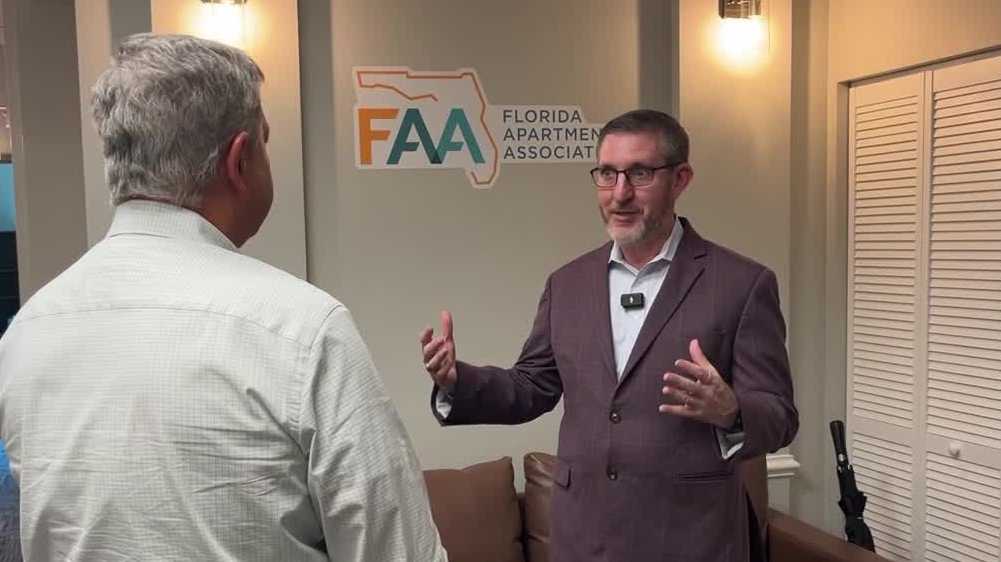
“The concern is that it doesn’t shield a (rental) property from an increase in taxes,” said Chip Tatum, president of the Florida Apartment Association (FAA), speaking with WESH 2 News about the study commissioned by FAA and the Florida Housing Coalition.
The study describes a dramatic “shift” in property tax burden to apartments and rental properties, with Tatum adding, “Inevitably, just like with any business, the cost increase has to pass downstream so it could be a considerable impact on renters as well.”
If Amendment 3 passes, the annual cap on increased assessments of non-homestead property will go down, from 10% to 5%. But the study predicts local governments will simply adopt revenue-neutral rate increases on apartments and rental homes roughly 14% to make up for the money they’re not getting on properties with homestead exemptions.
WESH 2 News reviewed the study information for ten Central Florida counties. Across the region, the projected annual increase in property taxes is $508 for an apartment unit, and $1,103 for a single-family home.
The highest increases are projected for Flagler County, at roughly $1,600 each regardless of the housing type ($1,598 for apartment units, $1,608 for single-family homes), and Putnam County would have the lowest hikes: $58 a year for an apartment and $285 for a single-family home.
The study author, tax policy expert Jared Walczak, concluded, “If Amendment 3 passes, renters — a class that includes the majority of young Floridians — will pay more in taxes (indirectly), receive fewer services, or both.”
More than 1.7 million Florida renters are spending a third of their income on housing.
Tatum added, “And the last thing that we want to do is compromise our stock of affordable housing when it is already stressed. The concern would definitely be that something like this (Amendment 3) could compromise that.”
With mail ballots going out this week, voters are already beginning to decide.