
ORLANDO, Fla. — Residents of an Orlando neighborhood have been slogging through flooding on their streets and in their yards for years, and now the Environmental Protection Agency is sending federal funds to help solve the problem.
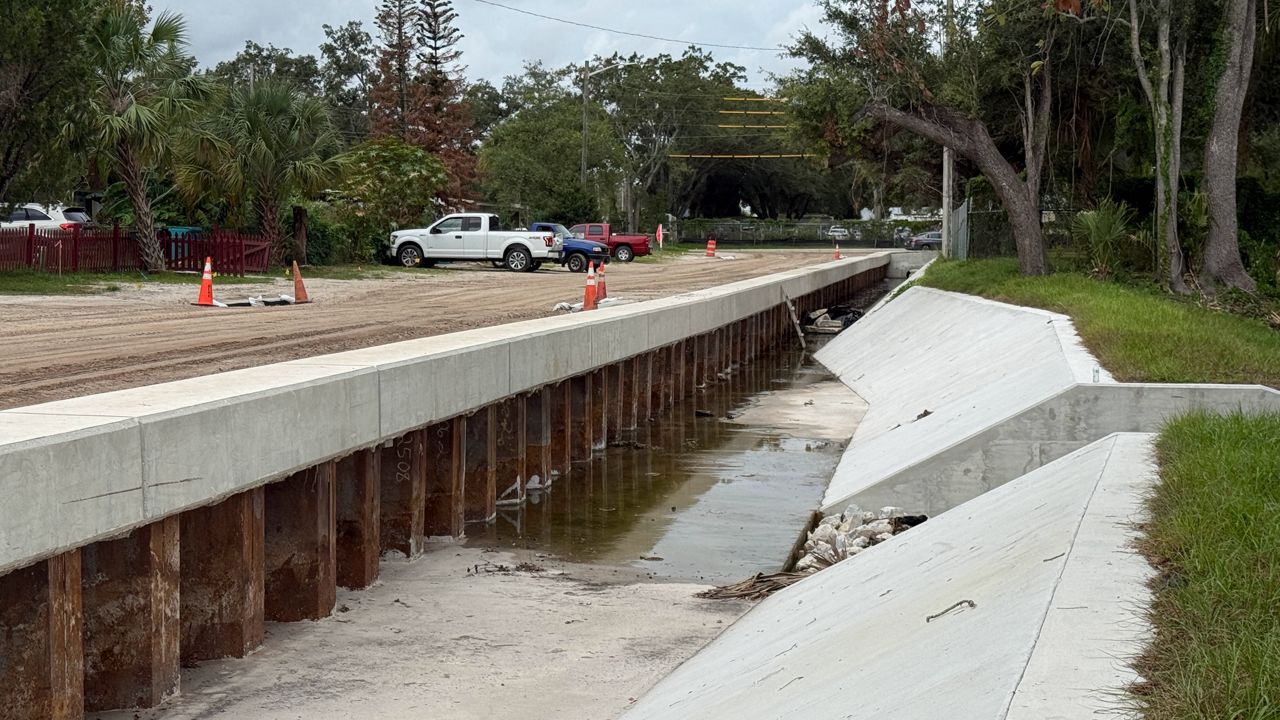
Heavy equipment is on the move, working to fix a big drainage problem at Haralson Estates in Orlando. Ed Capitan has lived in the neighborhood for six years and has seen heavy rains transform the community’s dirt roads into a slick mess. He also remembers how Hurricane Ian flooded his house in 2022.
“It came up about 3 feet, stained the walls. We had to remove portions of the walls and get quite a lot replaced there,” he said.
Crews have been working since summer 2025, installing massive culverts, storm drains, pipes and sidewalks so water will run off instead of into yards. They also dug down into Lake Notasulga to lower its water levels during Phase 1 of the project.
Corey Knight, public works director for the city of Orlando, said installing the needed infrastructure has been the priority during Phase 1.
“Those can be complicated projects,” Knight said. “You have to put a lot of engineering calculations into how big the pipe needs to be, where the flow of the water needs to go.”
District 5 Commissioner Shan Rose said the drainage problems have affected 130 houses in the community for many years.
In addition to the nearly $1 million from the EPA to design Phase 2 of the project, the U.S. Department of Housing and Urban Development is giving $8.7 million in federal disaster relief funds to help pay for its construction. Orange County is administering those HUD funds, Rose said.
“During Hurricane Ian, it was really, really bad in this area, and so that’s their assistance in helping us realize that we are a municipality,” Rose said. “These are all of our residents together, and we’re really grateful.”
Capitan said he is looking forward to the flooding fix so his property values can rise as waters don’t.
“This is exactly what I think tax dollars should be for. Roads, sidewalks and drainage is exactly what the city needs,” he said.
Crews are moving dirt and forcing water to go down to help elevate residents’ quality of life. With the EPA’s help, the design work for Phase 2 of the project is expected to start in early 2027, with a final phase expected by spring 2028.