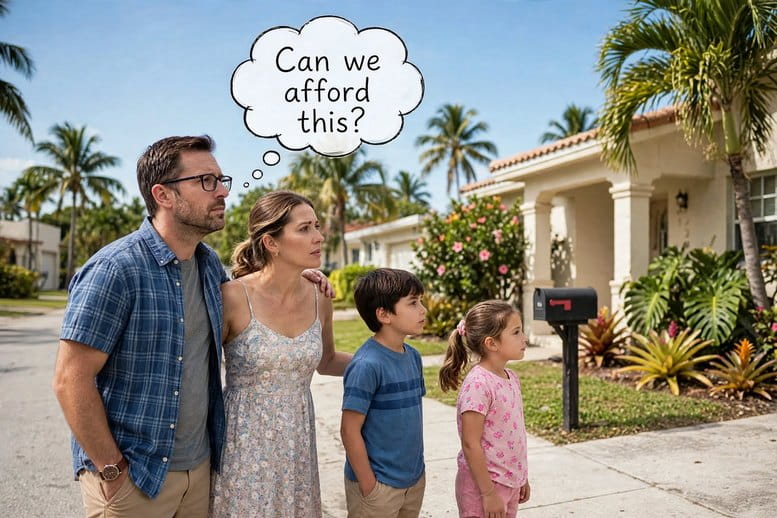
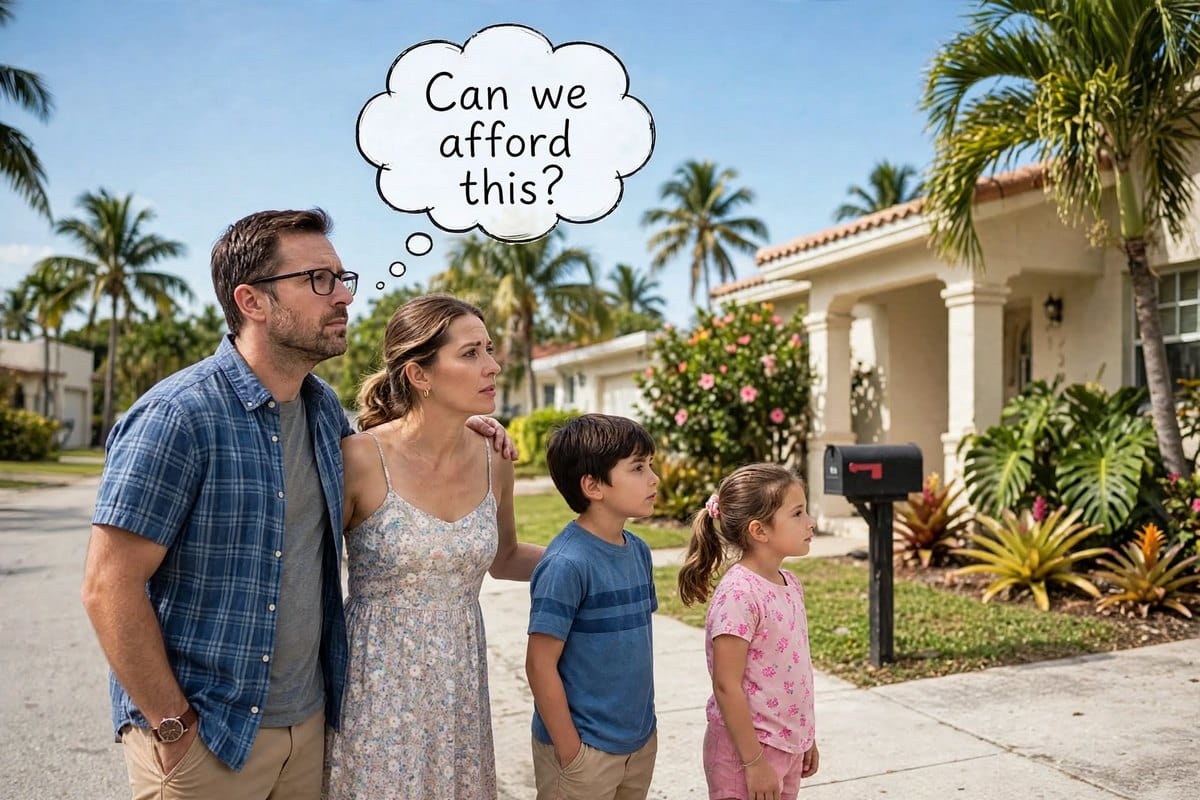
 (Created by DB Graphics with AI)
Newsweek recently painted a picture on something Miami-Dade families already feel every month: the American Dream of owning a home here is slipping away.
According to Miami Realtors, single-family home inventory in the county fell 23 percent in a single year. The median single-family home now sells for $685,000, up nearly 300 percent since 2011.
Census Bureau data show Miami-Dade County lost more than 10,000 residents in the past year alone, and researchers at the Shimberg Center for Housing Studies at the University of Florida found that outmigration pushed nearly 73,000 people out on net in 2025.
As Symeria Hudson of United Way Miami put it, “The erosion of affordability is already changing the identity of our city.”
I read that and thought about the buyers I work with every day: teachers, nurses, first responders, hospitality workers. People who keep this city running, but who, under current market conditions, cannot afford to buy a home in the community they serve. The market is not correcting itself. Instead, we are seeing in slow motion the loss of the workforce on which Miami depends.
At Bluenest, we do not think that loss is inevitable, and we are building to prove it.
Across our pipeline, we have delivered roughly 1,000 homes, have 600 more planned for completion next year, and have another 3,400 planned or under construction, making us the largest non-institutional homebuilder in South Miami-Dade County. Nearly 75 percdnt of the homes we sold this past year were workforce housing, purchased through a 1 percent down payment program designed to get qualified buyers past the single biggest obstacle standing between them and a closing table.
The math is straightforward, even if the market rarely is. Rate sensitivity, not desire, is what keeps workforce buyers on the sidelines. The demand is there. It is a matter of whether people can qualify, and qualifying comes down to the monthly payment. That is why we are absorbing incentives worth roughly 6 percent of each home’s price, including rate buydowns to approximately 4.99 percent, so a nurse or a teacher’s monthly payment reflects what they actually earn, not what the broader mortgage market currently demands.
Our newest project makes the point directly. Redland Reserve, a 582-unit development on 90 acres along Krome Avenue, was originally proposed with a market-rate mix. We changed course and capped pricing at workforce levels, up to $494,000, tied to Miami-Dade’s $89,800 area median income. That is a deliberate bet that there is more long-term value, for the community and for us, in building homes that people who work here actually can buy.
Newsweek’s reporting is right that Miami’s housing market is divided into two: a luxury tier that keeps climbing, and a middle-income buyer who keeps getting squeezed out. But that divide is not fixed by inventory alone. Builders have to underwrite the risk that buyers cannot underwrite themselves, whether that means absorbing rate buydowns, capping prices below what a site could otherwise command, or redesigning a project’s entire buyer profile after the fact, as we did with Redland Reserve.
Miami does not lose its identity all at once. It loses one displaced teacher, one relocated nurse, and one family that gives up and moves to another state at a time. We started Bluenest because we believe that it is a solvable problem, not an inevitable one. Solving it means building homes at prices tied to what this community’s workforce actually earns, and it means doing that at scale, not as a single showcase project.
South Florida’s identity was built by the people who keep it running every day. If we want them to stay, the housing market has to make room for them. That is the work we intend to keep doing.
Salim Chraibi is CEO of Bluenest Development, a homebuilder focused on workforce-priced housing in Miami-Dade.
ABOUT US:
For more Miami community news, look no further than Miami Community Newspapers. This Miami online group of newspapers covers a variety of topics about the local community and beyond. Miami’s Community Newspapers offers daily news, online resources, podcasts and other multimedia content to keep readers informed. With topics ranging from local news to community events, Miami’s Community Newspapers is the ideal source for staying up to date with the latest news and happenings in the area.
This family-owned media company publishes more than a dozen neighborhood publications, magazines, special sections on their websites, newsletters, as well as distributing them in print throughout Miami Dade County from Aventura, Sunny Isles Beach, Miami Beach, Coral Gables, Brickell, Coconut Grove, Pinecrest, South Miami, Kendall, Palmetto Bay, Cutler Bay and Homestead. Each online publication and print editions provide comprehensive coverage of local news, events, business updates, lifestyle features, and local initiatives within its respective community.
Additionally, the newspaper has exclusive Miami community podcasts, providing listeners with an in-depth look into Miami’s culture. Whether you’re looking for local Miami news, or podcasts, Miami’s Community Newspapers has you covered. For more information, be sure to check out: https://communitynewspapers.com.
If you have any questions, feel free to email Michael@communitynewspapers.com or Grant@communitynewspapers.com.
Connect To Your Customers & Grow Your Business