
Miami is getting ready to welcome a machine that, at first glance, could look like something straight out of a science-fiction movie.
But it’s not designed to travel to space or replace the computer you have at home.
It’s a quantum computer.
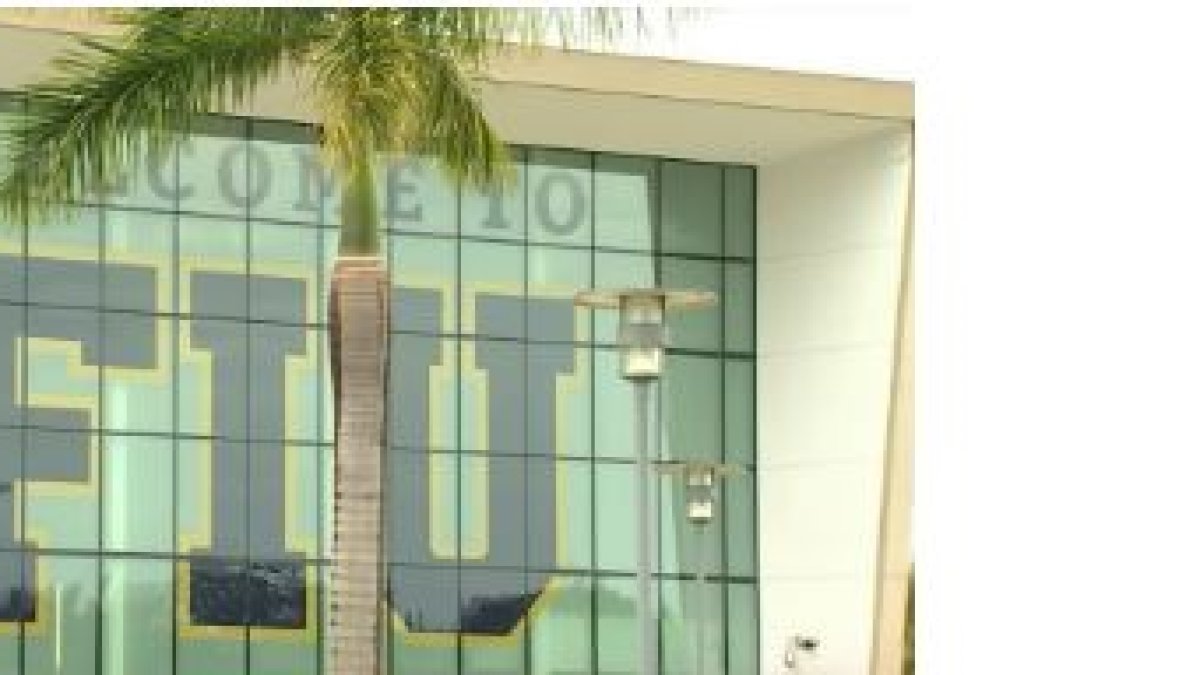
Florida International University (FIU) will install an IonQ Superion 256 on its campus, a machine with 256 physical qubits based on a technology known as trapped ions.
The installation is expected by late 2027, once the specialized infrastructure FIU is building to house it is completed.
FIU will be the first university in Florida to physically install a trapped-ion quantum system of this kind on its campus.
And that matters far beyond the university.
Because this machine could become a new tool for exploring some of the toughest problems in science and technology.
But what does a quantum computer actually do?
The simplest way to understand it is this:
A traditional computer uses bits. Each bit represents a 0 or a 1. A quantum computer uses qubits, which take advantage of quantum physics to perform certain kinds of calculations in a different way.
That doesn’t mean it’s a normal computer that simply runs “faster.”
In fact, a quantum computer isn’t going to replace your phone, your laptop, or the servers we use every day.
It’s built for very specific problems.
These are problems where there are massive numbers of possibilities that must be analyzed—like studying how molecules interact, designing certain materials, or finding efficient solutions for systems with a huge number of variables.
The National Institute of Standards and Technology (NIST) lists potential applications of this technology including molecular simulation, drug design, materials, and complex optimization problems.
And that’s where things get truly interesting.
A machine that could help discover new medicines
Imagine a scientist wants to know how one molecule might behave when interacting with another. That kind of question comes up constantly in medical and pharmaceutical research.
The problem is that molecules follow the same quantum laws scientists are trying to simulate.
Traditional computers can do it, but certain simulations can become extremely complicated.
A quantum computer could become a new tool for studying those interactions.
That doesn’t mean FIU will create a medicine at the push of a button.
It means researchers could use this technology to study molecules and materials in a way that—with enough progress—could speed up certain areas of research.
It can also help manage energy more efficiently
This is where the connection to Florida gets especially interesting.
A modern power grid is a huge puzzle.
There are plants that generate electricity, homes and businesses that consume it, storage systems, renewable sources, and thousands of elements that must be coordinated.
On top of that, demand is constantly changing.
Finding the most efficient way to organize all those variables can become an extremely complex mathematical problem.
FIU notes that the system can be used for research related to managing power grids, as well as materials, artificial intelligence, and logistics.
In other words, the computer won’t generate electricity. But it could help researchers study how to run increasingly complex energy systems.
From energy to logistics
Now think about a company with hundreds of trucks, thousands of packages, and multiple routes.
What’s the most efficient combination?
What if there’s traffic?
What if a warehouse goes offline?
What if demand changes?
These are called optimization problems.
Quantum computing is being studied specifically for some problems like these.
NIST mentions, for example, problems related to finding efficient routes and optimizing complex systems.
This could be of interest to sectors such as transportation, aviation, ports, supply chains, and commerce.
And for a region like South Florida—with an economy deeply tied to transportation, tourism, international trade, and logistics—this area of research has a particularly compelling dimension.
And there’s another issue that affects everyone: internet security
Here, the story stops being only scientific. It’s also a security story.
A large share of the information we send over the internet is protected through encryption systems.
A sufficiently advanced quantum computer could, in the future, threaten some of the cryptographic methods used today.
That could affect everything from communications to financial information and personal data.
But it needs to be put in context.
The computer coming to FIU doesn’t mean bank accounts or messages from millions of people can be decrypted tomorrow.
Experts still face major technical challenges in building quantum machines capable of doing that kind of work at scale.
So why does it matter to have a machine like this in Miami?
This may be the most important part of the whole story.
It’s one thing for a student or researcher to connect over the internet to a quantum computer located hundreds or thousands of miles away. It’s very different to have a machine at this level physically inside your own university.
FIU will have direct access to the system, along with its students, professors, researchers, and partner centers. The university also plans to develop academic programs, certificates, and new training pathways related to quantum computing.
That means this project isn’t just about buying a machine. It’s about building knowledge around it.
A chance to train the scientists of the future
Quantum technology is still in its early stages. And that’s exactly why there’s an international race to train people who know how to build it, program it, and use it.
FIU aims to become a research and training hub in this area for Florida and the region.
The university has said the partnership will help prepare specialized workers for a growing quantum industry.
That could have effects that go far beyond the lab.
Students who learn today to work with these machines could end up tomorrow at tech companies, pharmaceutical firms, energy companies, cybersecurity firms, financial institutions, or research centers.
And some of those companies may want to be close to the talent being trained.
Miami joins a bigger technology race
FIU’s move isn’t happening in isolation, either.
Universities and research centers in the United States and other countries are developing quantum computing programs.
FIU points to the University of Chicago and the University of Cambridge as examples of universities with access to similar technologies.
The key difference in Miami’s case is that the machine will be physically installed on campus.
That makes South Florida a place where students and researchers can work directly with advanced quantum hardware.
And it could help connect the region to a tech industry that is still figuring out what its most important commercial applications will be.
Does that mean that in 2027 we’ll have a machine that solves all our problems?
No.
And it’s important to say that.
Quantum computing still faces huge challenges.
NIST describes today’s machines as still limited and prone to errors. Many of the most ambitious applications will require additional advances in hardware, software, and error correction.
That’s why no one should interpret the arrival of this computer as the moment traditional computers stop being useful. It will be the opposite.
For a long time, the two types of computing will likely work together.
Traditional computers will keep handling most of the tasks we do every day.
The quantum computer will be used for specific problems where its unique features can offer an advantage.
So what’s really coming to Miami?
A magic machine isn’t coming. A new scientific tool is coming.
A tool that could be used to study molecules, medicines, materials, batteries, energy systems, logistics, artificial intelligence, and cybersecurity.
But perhaps most importantly, it will arrive along with students, researchers, professors, and companies who will learn how to use it.
FIU expects to receive the computer in late 2027, after completing the necessary facilities on its campus.
This story was translated from Spanish with the help of a generative artificial intelligence tool. An NBC6 digital editor reviewed the translation.