
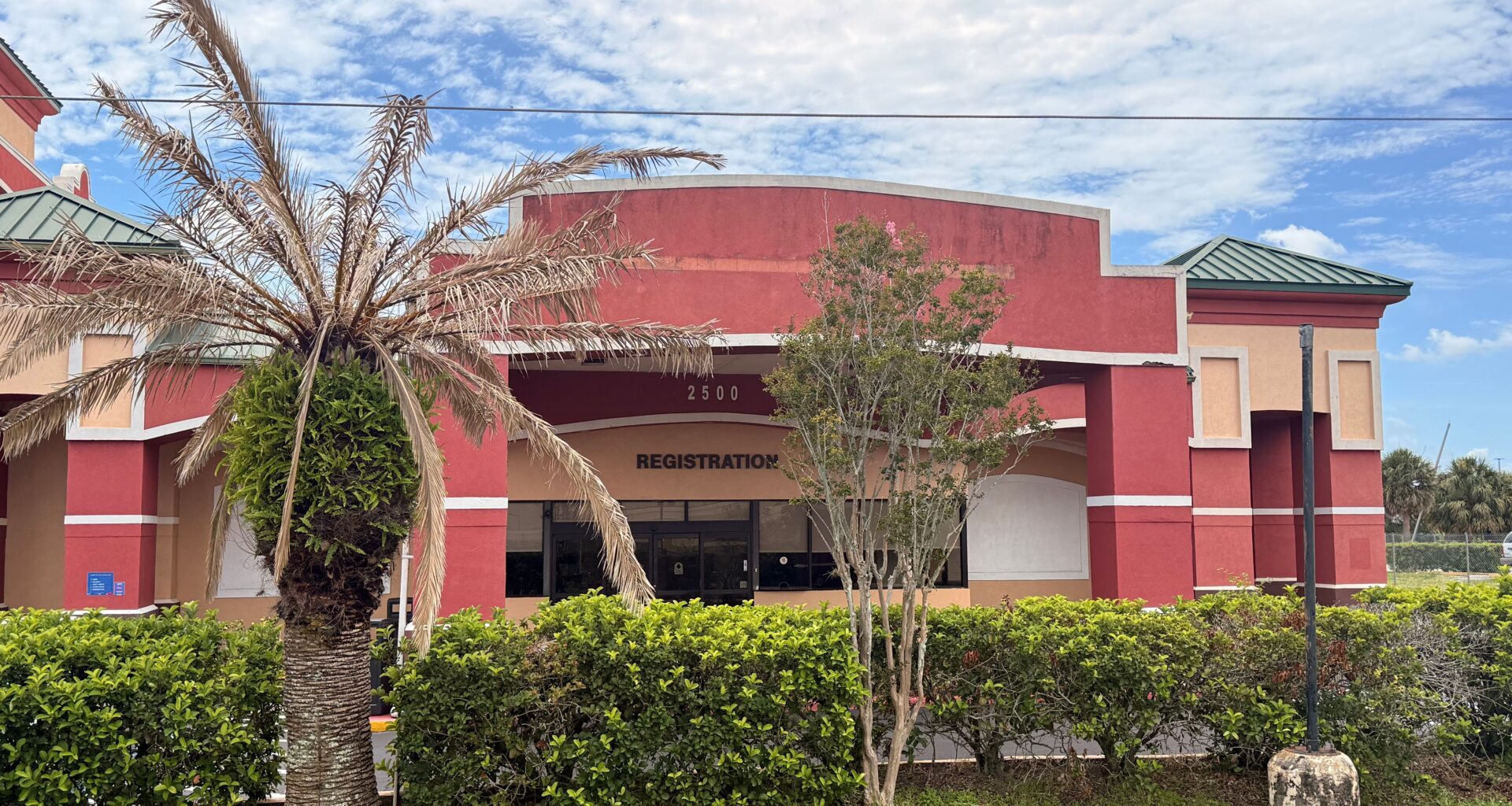
A recently renovated 200-room hotel next door to the Orange County jail could become much-needed low-income housing and a limited capacity homeless shelter if a county plan comes to fruition.
The project is already facing some pushback from neighbors, but some who had been ready to oppose a shelter said Monday they were pleasantly surprised.
The county’s first-of-its-kind proposal would turn the majority of the hotel rooms into one-bedroom apartments for a group facing a particularly difficult search for homes: households at or below 50% of the area median income.
To qualify for one of the apartments, a household’s income would need to be $40,250 or less for one person and $46,000 or less for two people. Rent would be determined by how much they earn.
The county commission voted in June to buy the Baymont by Wyndham Orlando North Millenia, a four-story hotel beside the Orange County Corrections Department campus, for $13 million. At a community meeting at the Holden Heights Community Center on Monday, county officials unveiled their plan for the property for the first time.
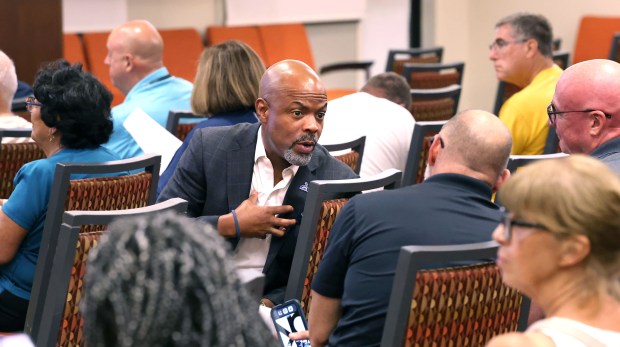 City of Orlando District 6 Commissioner Bakari Burns listens to concerns from residents during a meeting at the Holden Heights Community Center to discuss Orange County’s proposed development of a 200-room hotel into transitional housing for the homeless near the Orange County Jail, Monday, October 5, 2026. (Joe Burbank/Orlando Sentinel)
The county estimates that the region is shy about 92,000 affordable housing units, putting low-income renters in a difficult spot.
“It’s really hard to survive in an economy such as the current one,” said Isabelle Klier-Graham, manager at the Orange County Mental Health and Homelessness Division. “The people that are ending up homeless are not by choice, not because they have drug addiction or mental illness, but because they simply cannot afford the place where they live.”
In addition to the affordable apartments, there will also be units available for seniors and people with disabilities that need additional support. Case managers will be available to connect those individuals to services that make it possible for them to live on their own.
About a dozen of the apartments will also be used as emergency, short-term housing for the homeless. Case managers will work with those individuals to help transition them into more permanent housing.
The county will contract with a property management company that will provide “24/7 oversite, maintenance, safely procedures and clear resident expectations,” Klier-Graham said.
There will also be security on the property around the clock.
There are similar mixed-use housing communities in Central Florida sponsored by nonprofits like Pathlight Home and Hope Partnership. But this would be the first time the county has funded such an initiative.
The sale on the 3.82-acre hospitality parcel, located at 2500 33rd St., is expected to be finalized later this month. The property previously known as the Developer Inn was remodeled in 2024 and rebranded in 2025.
Orange County Commissioners had approved the expenditure on June 4 with no discussion. Mayor Jerry Demings hinted about the county’s plans at the time.
“People transitioning from homelessness to self-sufficiency, they need a place to stay sometimes,” Demings told an Orlando Sentinel reporter after the commission approved the purchase.
About two dozen people showed up at Monday’s meeting, including some from Lakeshore Landings, a 55-plus mobile home community near the property. They came ready to voice their opposition to a homeless shelter and some were pleasantly pleased by the county’s plan.
“Of course everything’s subject to change, but if it’s going to be what they say, we’re happy about it,” said Marsha Westenskow, 80, a Lakeshore Landings resident.
She and two of her neighbors, all of whom live off their social security retirement, said their neighborhood has become unsafe and increasing unaffordable. So they understand the need for the property and like the fact that it will include security.
“With the cost of everything going up, up, up, social security doesn’t cover much,” said Shae Dasilva, 80. She said she may consider applying to live in the new property. “They just seem to have it well-planned.”
But not all residents were happy. Louise Mills, a 72-year-old Lakeshore resident, said she feels unsafe in her neighborhood and worries the county’s plan for the property will only further degrade the area.
“We’ve seen a few of these hotels converted into this type of thing,” Mills said. “They either get burned down or they get absolutely trashed.”
Central Florida is short about 750 shelter beds for a homeless population that is about 2,000 people strong. Orange County and Orlando officials have had difficulty bringing new shelter beds to the area as each time they zeroed in on a possible location, they’ve been met with strong opposition from residents worried that a shelter would bring crime to their neighborhoods.
That happened on sites along West Washington Street near Camping World Stadium, as well as in Orlando’s SoDo district.
The county also is currently moving forward with a plan to open a 150-bed shelter on a plot of land it owns at the corner of Colonial Drive and Goldenrod Road.
Michael Scott, Orange County commissioner, District 6, stood behind the podium on Monday and tried to dispel some of the stigma. He shared that, before he became a commissioner, his family reached out to 211 to get help in paying their bills after falling behind.
“In the four years I’ve been commissioner, there’s not been one week when someone hasn’t called me with a housing crisis,” Scott said. “I’ve had families sleeping in cars, folks who were working two jobs, they lose the second job and they have no place to stay…these are families that are doing the best that they can to make it.”