
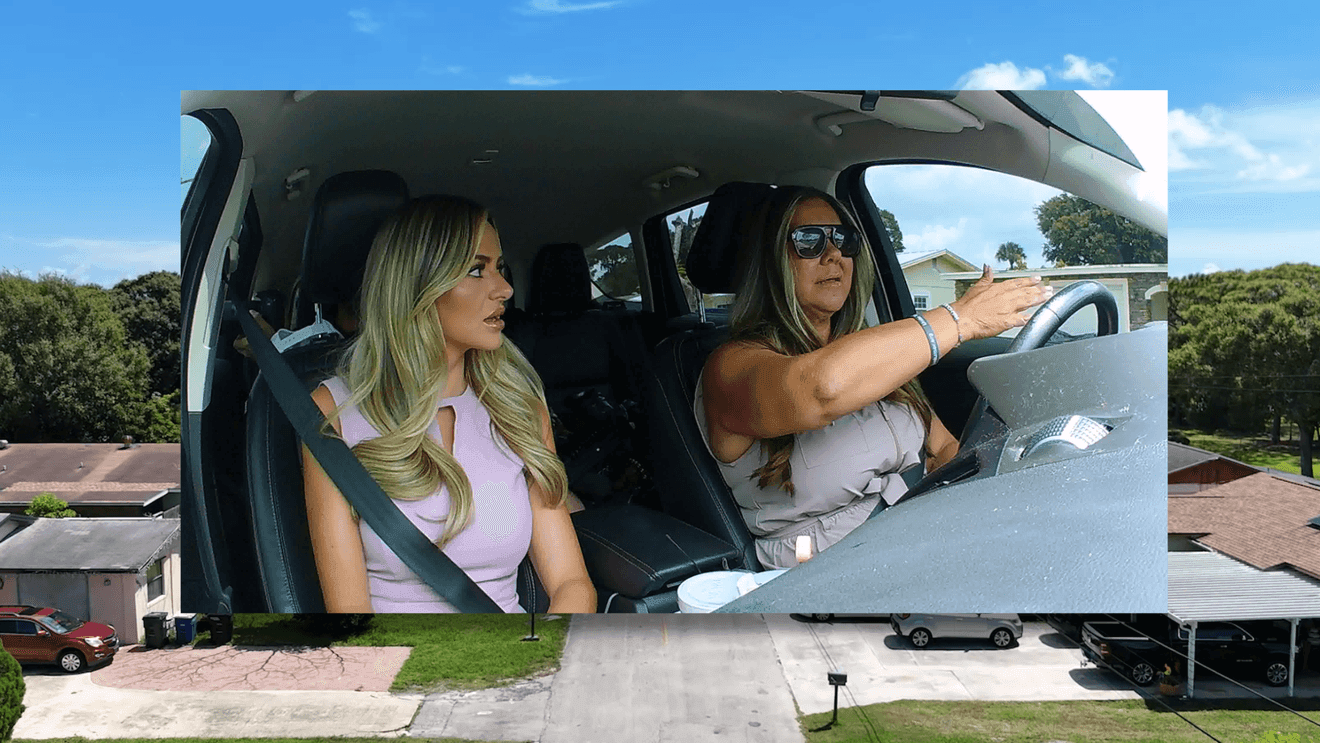
ST. LUCIE COUNTY, Fla. (CBS12) — Matt Elliott wants to know whether his brain cancer could be connected to other diagnoses on the Treasure Coast. He also knows he may not live long enough to get an answer.
“It might take them years to even figure out what the hell’s going on around here,” Elliott said. “I can’t expect myself to be around at the end of it.”
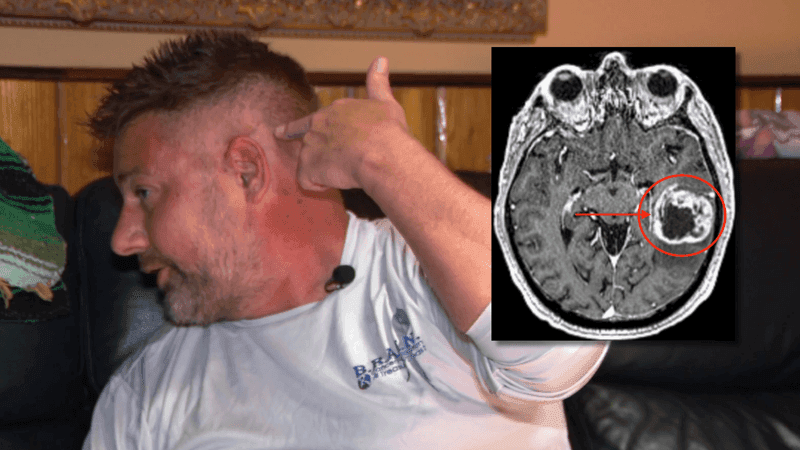
Matt Elliott was diagnosed this year with glioblastoma, an aggressive, fast-growing grade 4 brain cancer. The former bar manager described struggling to speak after surgery and initially believing his diagnosis was an isolated case. Meeting other local patients changed that. (WPEC)
Families in St. Lucie County have raised similar questions for years, pointing to diagnoses just houses apart — and, in some cases, among unrelated residents of the same home decades apart.
In June, I-Team reporter Katie Bente revisited families’ search for answers. In this second part of her investigation, Bente went street by street with a widow tracking the diagnoses and pressing health officials for updated findings.
A few houses apart
For Stephanie Ankiel, one stop on the drive through Fort Pierce brings the questions back to her own family. She pointed to her late husband’s childhood home, then another home a few houses away where she said a resident was diagnosed in 2025 with the same type of brain tumor.
“This is the house my late husband grew up in,” Ankiel said. “He was diagnosed with the same exact thing as that gentleman in 2025.”
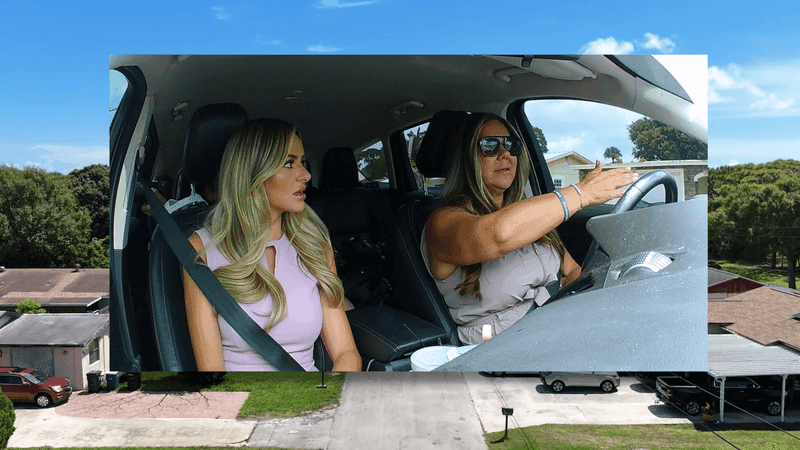
For Stephanie Ankiel, one stop on the drive through Fort Pierce brings the questions back to her own family. She pointed to her late husband’s childhood home, then another home a few houses away where she said a resident was diagnosed in 2025 with the same type of brain tumor. (WPEC)
Both men were initially diagnosed with oligodendroglioma, a different type of brain tumor from glioblastoma. Ankiel said her husband Mark Cunningham’s cancer later progressed to glioblastoma. He died in 2019 at 35.
A few streets away, she identified another home where she said two unrelated residents developed glioblastoma decades apart.
“This is the house where we’ve had two glioblastoma cases, 20 years apart, no family relation,” she said.
Elsewhere along the route, Ankiel pointed to neighboring homes where she said a woman and an 18-year-old had been diagnosed with brain cancer. The I-Team is withholding exact addresses to protect families’ privacy.
PART 1: Brain cancer diagnoses leave St. Lucie County families searching for answers, again
Ankiel helps patients through the Brain Cancer Foundation of the Treasure Coast, including a child who is just 3. She has spent years mapping where patients lived and looking for possible connections.
Three additional brain cancer cases were confirmed in August alone in the areas families are tracking. Those diagnoses and the proximity of patients’ homes do not establish a cancer cluster or a common cause. But Ankiel wants officials to examine the range of brain cancers represented on her map, beyond glioblastoma alone.
“Regardless if it’s Glio at this point, we have too much brain cancer in this area. Period,” she said.
CDC guidance allows consideration of different cancer types when evidence suggests shared causes or exposures. No such connection has been established among the cases families are tracking.
What the state studied — and what is new
The Florida Department of Health’s 2019 review examined glioblastoma diagnoses from 1998 through 2017 in ZIP codes 34952, 34982 and 34983. It found no statistically significant increase and did not designate a cancer cluster.
That review did not include later diagnoses and focused on glioblastoma rather than the range of brain tumors represented on Ankiel’s map. Her husband’s initial diagnosis is one reason she wants officials to examine that broader picture.
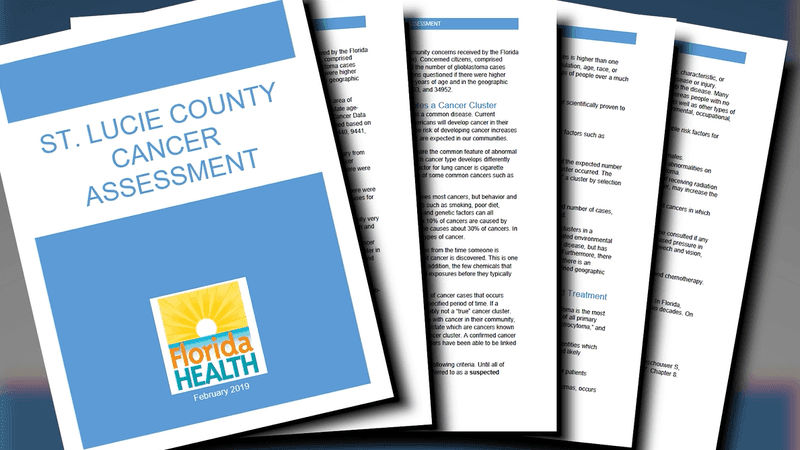
The Florida Department of Health’s 2019 review examined glioblastoma diagnoses from 1998 through 2017 in ZIP codes 34952, 34982 and 34983. It found no statistically significant increase and did not designate a cancer cluster. (WPEC)
The I-Team asked whether the department had analyzed cases diagnosed since 2017 and what would trigger new environmental testing. St. Lucie County Health Officer Clint Sperber said officials have been reviewing cancer registry data and environmental influences.
“Our latest analysis, which includes data through 2023, shows no indication of higher rates in St. Lucie County or in the specific zip codes people have asked about,” Sperber wrote. “St. Lucie’s rates are in line with nearby counties and with the state as a whole.”
The updated report was not available when he responded. Sperber said officials were finishing a summary to release online.
His response did not explain how the analysis handled tumors initially classified as another type and later diagnosed as glioblastoma, or whether other brain cancers were examined separately. It also did not specify what would trigger additional environmental testing.
No environmental factor questioned by families has been established as a cause of these cancers.
A call for another look
Rep. Brian Mast said he has again asked the Centers for Disease Control and Prevention to examine the concerns and provide the data behind its conclusions.
“You need to give us the receipts,” Mast said. “Give us the data of where these took place, how many of them took place.”
The CDC said state and local health departments lead examinations of unusual cancer patterns. It confirmed that it assisted Florida’s investigation in 2018, but did not specifically address whether it had received Mast’s latest request or would open a new review.
In a statement to the I-Team, a CDC spokesperson said:
CDC is prepared to provide additional assistance upon the Florida Department of Health’s request.Making the most of the time left
Elliott was diagnosed this year with glioblastoma, an aggressive, fast-growing grade 4 brain cancer. The former bar manager described struggling to speak after surgery and initially believing his diagnosis was an isolated case. Meeting other local patients changed that.
“I thought I was the only one,” he said. “I’m not the only one.”
He has decided not to continue treatment, choosing to spend his remaining time with friends and family, going to the beach and swimming. While he wants investigators to find answers, he is focused on the life he still has.
“I’m not going to be that person that lives to be 65, 70, 80 years old,” Elliott said. “But I get to hang out with my friends. I get to go to the beach. I get to go take a swim, have some fun.”