
JACKSONVILLE, Fla. – Jacksonville leaders are discussing how a hyperscale data center could affect the city’s power, water and residents, as JEA says it has received 50 inquiries about data centers.
JEA does not currently have the capacity to serve a hyperscale facility, which typically requires at least 50 megawatts of power. The utility operates six data centers, but none are considered hyperscale.
RELATED: What to know about data centers in Florida: Power, water, local control and the new law
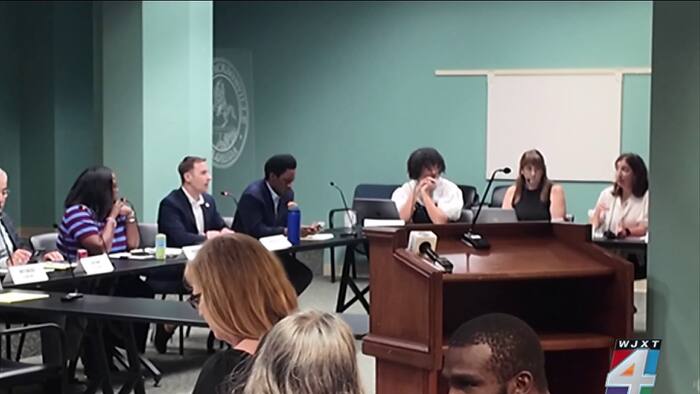
City Council members, JEA officials and city planners answered residents’ questions Wednesday about what a large facility could mean for Jacksonville.
“At this point, I would just say I’m in the middle. I’m like everyone, just what does it actually mean?” resident John Nooney said.
Jordan Pope, JEA’s interim chief administrator, said the utility is not prepared to serve a hyperscale data center today. At a minimum, he said, JEA would need to build a new substation to serve a large-scale facility.
If a hyperscale data center sought to locate in Jacksonville, city planners said it would likely be treated as a light industrial use and go through the Planned Unit Development process.
Some City Council members said they want to consider additional safeguards. One Planning Board member said the potential increase in electricity demand is something the city would need to weigh. Councilman Jimmy Peluso suggested exploring a lower threshold than 50 megawatts, possibly 25 or 30.
Residents raised concerns about water use, pollution, noise and whether existing JEA customers could end up paying for infrastructure improvements.
One resident questioned how the city would prevent added pollution if data centers generated their own electricity. Another asked whether customers already facing rate increases for infrastructure repairs could also be responsible for data center costs.
State legislation requires large electricity users to pay the full cost of new infrastructure needed to serve them, rather than shifting those costs to existing customers.
Peluso also proposed a possible moratorium while the city researches the issue and considers whether new rules are needed. He suggested creating a working group with City Council, the Planning Department and JEA to develop a policy.
The goal, leaders said, is to bring together the council, the administration, JEA and community stakeholders to understand the potential opportunities and challenges before a major project is proposed.
Copyright 2026 by WJXT News4JAX – All rights reserved.