
USF graduate Abby Friel began taking dance when she was around three years old, and
she was teaching it by the time she was 16. She had always been interested in the
body and how it moves, so when she began looking for just the right college major,
she found the perfect place in the USF College of Education’s Exercise Science and
Kinesiology program.
“I was surprised when I found this major,” Friel said. “I thought exercise was just
something people did for fun.”
USF students like Friel who are seeking a degree in Exercise Science and Kinesiology
are preparing to become fitness leaders, whether it be in exercise science, strength
training, health promotion or rehabilitation. Most are also planning to continue their
studies to prepare for careers as physical therapists, physician assistants, chiropractors
or occupational therapists.
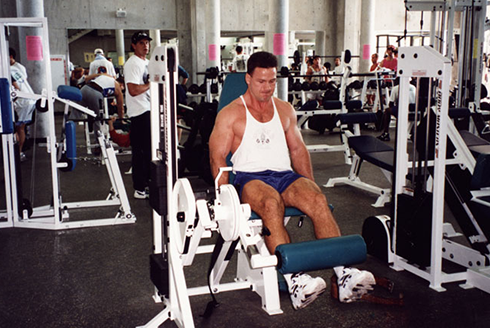
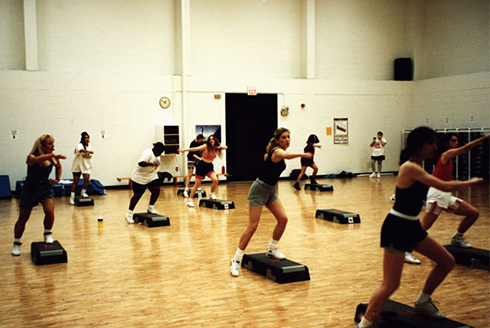
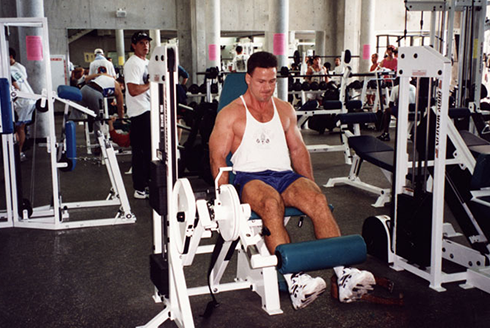
The program has grown and changed in the 30 years since it was established in 1996.
Founding faculty members include Professor Candi Ashley, who came to USF in 1996 after
graduating with a doctoral degree in exercise science in 1995, as well as Emeriti
Professor Lou Bowers, who had been teaching in the department since 1967, and was
at that time the department chair. Along with Diane Hall, Chuck Smith and Bob Beasley,
they began the wellness leadership and physical education program, which became Exercise
Science in 2006, and kinesiology was added in 2024.
“We noticed that our graduates were getting jobs in training and wellness,” Bowers
said of the program’s impetus. “We believed in it enough and were willing to sacrifice
time and money to make it work and plan something innovative, exciting and interesting,
not only to students but also to faculty members.”
“We’re proud of the growth, we’re proud of our graduates, and we’re proud of the relationship
that we have with our students,” Ashley said.
According to Ashley, the change from wellness leadership was because the trend was
moving towards exercise science.
“We had to move away from physical education, because that prepares teachers, and
that’s not what we do,” Ashley said. “Our curriculum became more science-based.”
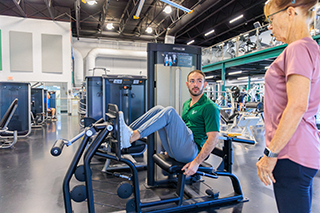
As new tools became available, the program added them to their labs and gyms, offering
students the experience of learning new ways to measure body mass index and metabolic
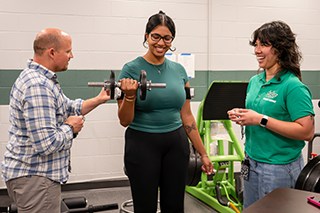
rates. Students are also provided many hands-on learning opportunities like the Integrated
Fitness Program, where students can work one-on-one with USF faculty and staff members
as personal trainers, or a course called Physical Activity in Diverse Populations,
where students go into the community and work with older adults in their fitness journeys.
Friel, who graduated in the program in 2026, says she learned critical skills from
the hands-on nature of the program, especially regarding her ability to work with
the public.
“We offered health assessments to the public on Fridays, and that experience really
helped prepare me for the job I do now,” said Friel, who works as a corporate wellness
specialist for PowerDesign in St. Petersburg, where she does employee health assessments
and teaches fitness classes. “They do a great job of making sure students have the
tools to be comfortable assessing people’s health, as well as talking to them about
it.”
All students are required to complete an internship during their last semester, and
students have landed time with dozens of organizations. One student interned at the
White House, while others found theirs at MacDill Air Force Base, and others with
local minor league sports teams or at one of a large variety of sites that offer practice
in corporate fitness, occupational and physical therapy clinics, cardiac rehab, and
personal training studios.
Amanda Walford, a junior from Wesley Chapel, says she found her calling after coming
to USF.
“I had a coach who inspired me to want to coach others, so I thought I would be an
athletic trainer, but when I transferred to USF, I switched to this program because
it broadened my scope of career opportunities, and here I found chiropractic medicine.”
Walford says that through the program, she has been visiting several sites to explore
internship opportunities for her upcoming final semester in the spring of 2027. She
wants to go to chiropractic school after graduating, so she plans to land her internship
with a chiropractic clinic and has already begun shadowing some different doctors.
“Seeing different views of the same profession is a great opportunity,” Walford said.
“In my classes, I’ve learned about different therapies that are used along with traditional
adjustments, like acupuncture and redlight therapies, so I’m looking for a chiropractic
office that has an open view of what a chiropractor can do.”
The program prides itself on keeping class sizes small, in spite of the impressive
number of students who join year after year. Friel said this was a huge plus for her.
“It was a little daunting for me to leave home and move 12 hours away to come to USF,
but mine was such a small cohort, and we all soon knew each other,” Friel said. “Our
professors really tried to get to know us personally, too, and they were always available
to us.”
Walford, an officer in the Exercise Science and Kinesiology Club, says their group
seeks to develop that sense of belonging.
“I really think this program does a great job of making a community,” she said. “We
try to get everyone to be close and form connections. I applaud the professors, too,
because they encourage us to feel appreciated and safe.”
Students have opportunities to attend conferences and are also prepared to earn several
certifications through the program, including from the National Association of Sports
Medicine Corrective Exercise Certification, the American College of Sports Medicine,
as well as a number of personal training certifications.
The program continues its growth today by working on becoming accredited by the National
Strength and Conditioning Association, which will allow students to earn a prestigious
certification.
“The Certified Strength and Conditioning Specialist is one of the highest strength
and conditioning certifications you can have,” Ashley said. “Starting in 2028, they
will require accreditation from universities to allow their students to earn their
certification. We’re working to get accreditation so that our students can sit for
that exam.”
Ashley says that, though they will always be looking for ways to make the program
better, she feels good about the work that has been done so far.
“We’re proud of the growth, we’re proud of our graduates, and we’re proud of the relationship
that we have with our students,” she said.
Bowers, who is now distinguished professor emeriti, shares that pride.
“In the beginning, we were just feeling our way,” he said. “But when the first students
arrived, the program took off right away and got a good perception in the community.
It’s good to see it succeed and do so well.”
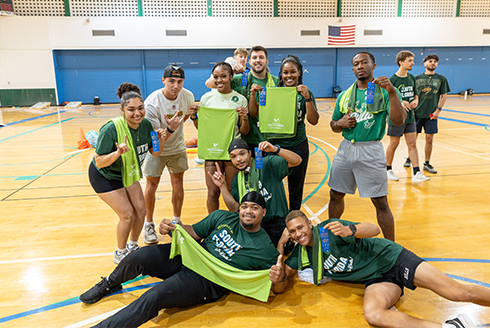
First place winners
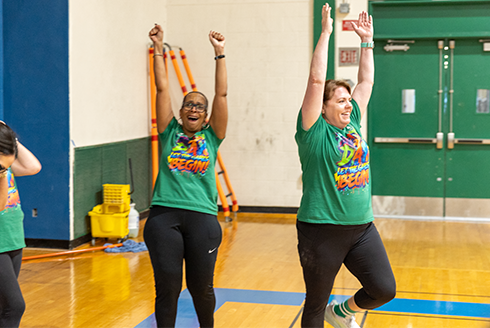
Dean Schneider and Department Chair Cobb-Roberts
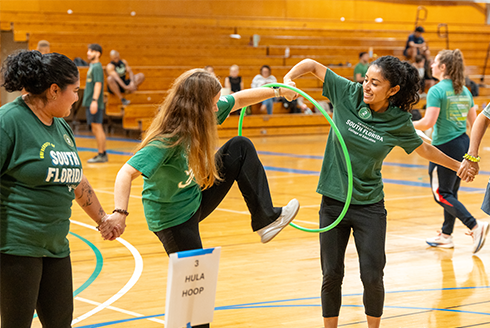
Hula Hoop
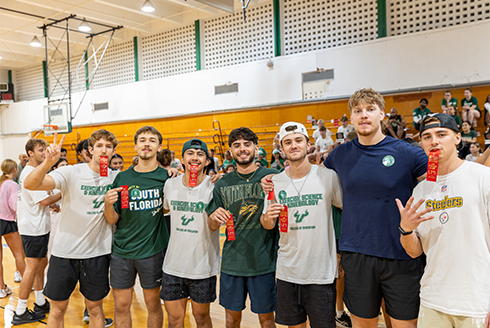
Second place winners
To celebrate the 30th anniversay, the college hosted its first-ever Field Day, where
students, faculty, staff and alumni competed in a series of activities.