
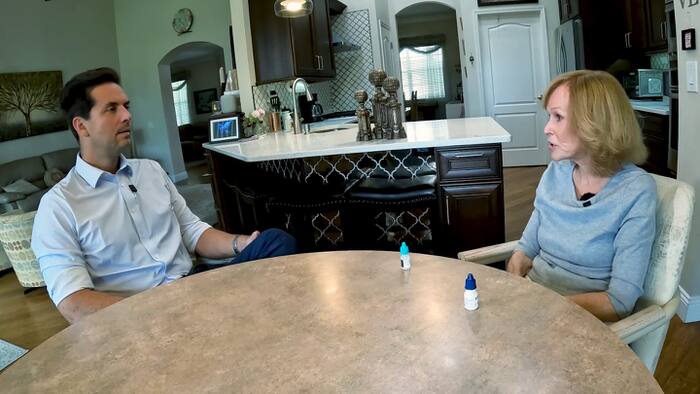
ORLANDO, Fla. – Margo Chenault holds up a tiny bottle of eye drops and shakes her head.
“As of now, this little bottle is $500,” she said. “And my insurance doesn’t cover it.”
Chenault takes a few drops of Vyzulta, a glaucoma medication, every day. By ordering it from a pharmacy in Canada, she saves about 80% off the American price. That option may soon disappear.
Starting Oct. 22, a new U.S. Customs and Border Protection rule changes how international mail packages, including prescription drugs, enter the country. Canadian pharmacies and patient advocates say the change will effectively end Americans’ ability to receive personal prescriptions by mail from abroad.
“If I can’t get this medication and there’s nothing that will replace it, I’m going to lose my vision,” Chenault said. “I have no choice.”
CBP issued the rule in June, ending a decades-old exemption that let low-value mail packages, including prescription drugs, cross the border without a broker, a bond to cover unpaid duties, or a filed entry. The agency’s stated goals are protecting tariff revenue and preventing the trafficking of fentanyl and counterfeit goods.
Ken Hunter, executive director of the Campaign for Personal Prescription Importation, says CBP will block personal prescriptions whether or not the drug is sold in the U.S. “Anybody that gets their medicine shipped from another country is going to be cut off come Oct. 22nd,” Hunter said.
Hunter estimates more than 4 million Americans order medications from other countries every year. Many, he says, are seniors in places like Florida taking daily, lifelong drugs for heart disease, stroke prevention, diabetes and glaucoma.
He gave the blood thinner Eliquis as an example. A three-month supply of 5-milligram tablets averages about $565 at several online Canadian pharmacies, he said, compared with about $1,017 through Amazon and $1,029 through GoodRx in the U.S. That’s a savings of nearly half, and Hunter said it’s on the lower end. Some patients, he said, would face costs of $4,000 a month or more if forced to buy domestically.
“I’ve gotten probably a couple thousand emails, and I get dozens of calls a day from consumers saying, ‘What am I going to do? I cannot afford this. Am I just going to die?’” Hunter said.
He warned that patients who stop taking drugs like Eliquis face higher risks of stroke and heart attack, and that Medicare and Medicaid could end up paying far more for the resulting care. “It’s going to come down to: Do I protect my health, or do I keep a roof over my head?” he said.
The change comes after years of political support for Canadian drug imports, including in Florida.
In 2019, the Florida Legislature passed a bill requiring the state’s Agency for Health Care Administration to establish a Canadian prescription drug program, and in August 2022, Florida sued the FDA and HHS for delaying approval. The FDA approved the program in January 2024, but the first shipments still have not arrived.
Hunter said his group is asking the Trump administration to pause the rule, and asking Congress for legislation that would protect personal importation. He said about 70 House members have signed a letter urging the White House to pause and study the change, and that several Republican members sent a similar letter. “It’s really becoming a bipartisan measure,” he said.
Patients worried about losing access should talk with their doctor about alternatives or generics, ask their pharmacy about the status of pending orders, and check whether the drug’s manufacturer offers a patient assistance program.
Copyright 2026 by WKMG ClickOrlando – All rights reserved.