
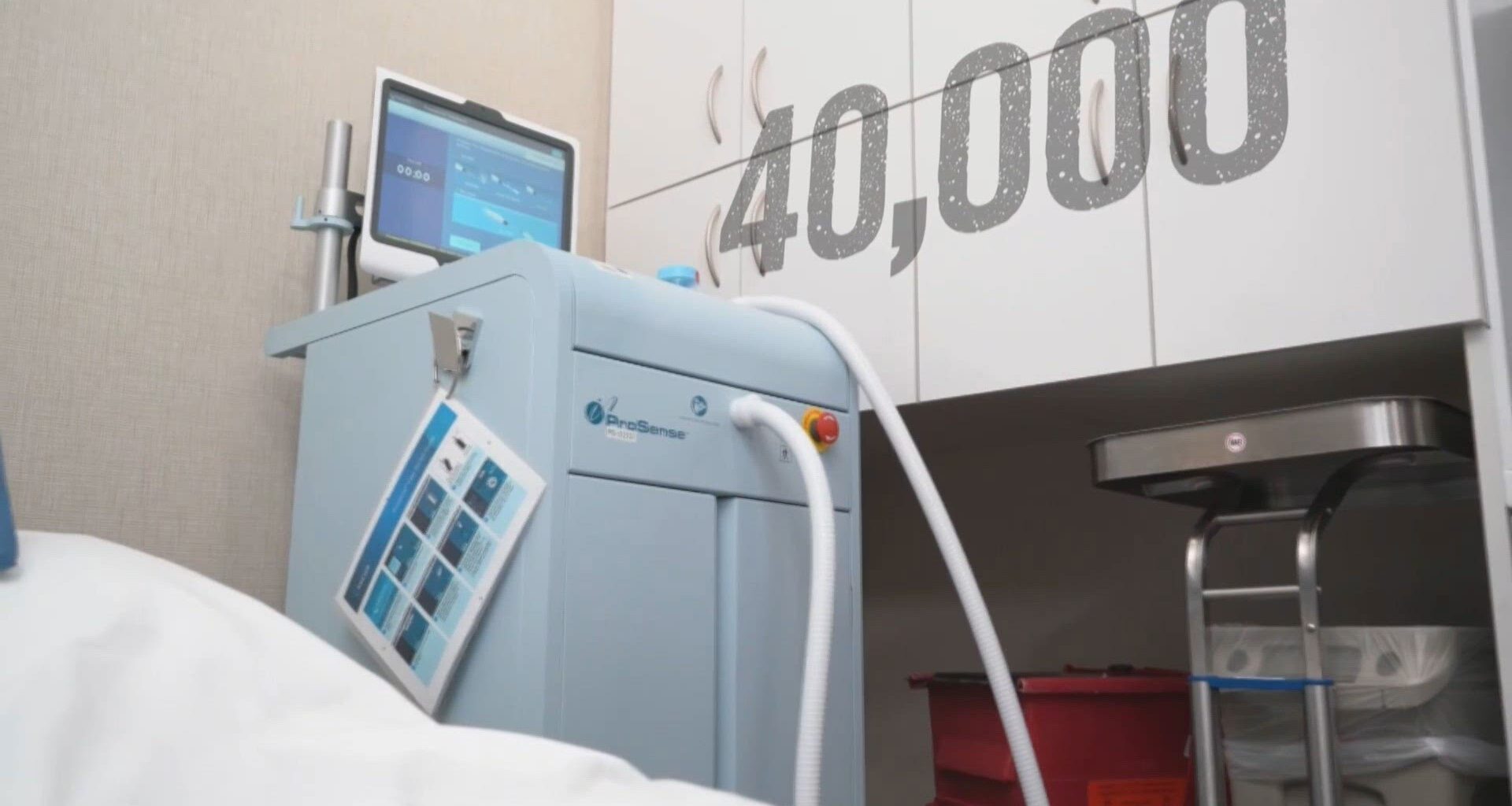
Mayo Clinic Jacksonville is using cryoablation, a procedure that freezes small breast cancer tumors, in select patients. Here’s how it works.
JACKSONVILLE, Fla. — Can ice kill breast cancer? Mayo Clinic believes it can. Mayo Clinic Jacksonville is now using a procedure called cryoablation to treat breast cancer in nine patients.
After being diagnosed with breast cancer, First Coast News anchor Jeannie Blaylock promised to share what she learned along the way. This new treatment was something she had never heard of before, and it is now available in Jacksonville.

This story continues below.
Gail was among the first patients at Mayo Clinic Jacksonville to undergo cryoablation. She wanted to avoid surgery, including a lumpectomy or mastectomy.
“I didn’t want to have a piece of my breast removed if I didn’t have to,” Gail said.
How does freezing breast cancer work?
Mayo Clinic breast imaging radiologist Dr. Santo Maimone says cryoablation could help 40,000 women nationwide each year.
Gail’s breast cancer was a small, irregular mass about the size of a peppercorn. She was diagnosed about six months before undergoing the procedure.
During cryoablation, the patient receives a local anesthetic. Doctors insert a probe into the breast and guide it to the tumor. Liquid nitrogen creates an ice ball that freezes the cancer.
Doctors then thaw the tumor and refreeze it.
Gail was awake and able to watch the procedure as it happened.
“I wasn’t nervous at all,” she said.
The procedure takes about 20 to 30 minutes, according to the Mayo radiologist. Gail said she did not even need Tylenol afterward.
She did undergo five days of radiation following cryoablation. Treatment plans vary from patient to patient.
How successful is cryoablation?
Mayo’s radiologist, Dr. Maimone, says five-year results are showing that the rate of cancer returning in the same breast is about the same as with standard lumpectomy treatment.

The procedure offers a potential alternative for certain patients who want to avoid surgery, but it is not appropriate for every breast cancer diagnosis.
Who qualifies for breast cancer cryoablation?
Mayo Clinic Jacksonville recommends that patients meet specific criteria to be considered for the procedure.
The breast cancer must be:
Small — 1.5 centimeters or less, slightly smaller than a dime.Low grade.Hormone receptor-positive.HER2-negative.
The treatment is currently aimed at patients age 70 and older, although Mayo says exceptions may be possible.
The reported out-of-pocket cost is $4,500. That can vary. Some insurance plans may cover the procedure.
Patients should talk with their breast cancer care team to determine whether cryoablation is an appropriate option for their diagnosis.
What is breast tumor cryoablation? Statement from Mayo
According to the cryoablation medical team at Mayo Clinic Jacksonville:
“Ultrasound-guided breast tumor cryoablation is a minimally invasive procedure that uses extreme cold to destroy cancer cells. The term ‘cryo’ means to freeze, while ‘ablate’ means to destroy. Cryoablation can be used to treat certain tumors in the breast as well as tumors in other parts of the body.
“During the procedure, a radiologist or surgeon inserts a thin needle-like device called a cryoprobe through a small incision in the skin. Using ultrasound imaging, the physician guides the cryoprobe directly to the tumor. The probe then freezes the tumor, destroying the cancer cells.
“Ultrasound is used throughout the procedure to guide placement of the cryoprobe and monitor the freezing and thawing process, helping protect the surrounding normal tissue.
“Breast cryoablation is an outpatient procedure that can often be completed in less than an hour. Patients typically go home the same day and may return to their usual daily activities after 24 hours, as they feel able.”
Additional Q & A with Mayo:
1) Does everyone need radiation after this, as Gail chose? Is there ever chemo needed afterwards?
No, radiation is not always needed; it is a patient-, tumor-, and physician-specific decision. For the specific breast tumors currently indicated for cryoablation treatment, adjuvant endocrine therapy is recommended. For these specific tumors/patients, chemotherapy is not typically administered.
2) What exactly has the FDA approved?
In October 2025, the FDA granted De Novo marketing authorization for the ProSense (IceCure) cryoprobe system for minimally invasive cryoablation of low-risk, early-stage breast cancer in women ≥70 years old, in combination with adjuvant endocrine therapy.This typically means women with the following characteristics:Age 70 years and olderSmall tumor, 1.5 cm or smaller. Low grade. Invasive ductal carcinoma.Hormone receptor positive (ER+, PR+), HER2-negative.Breast cryoablation is also FDA-approved for treatment of benign fibroadenomas (for many years).
For in-depth research on this procedure, here’s a study Mayo is suggesting people want to read.