
ORANGE COUNTY, Fla. – Every day, the U.S. loses about 2,000 acres of farm and ranchland, mostly due to encroaching urban development.
But a growing trend has homeowners taking back some of that land through something called micro-farming.
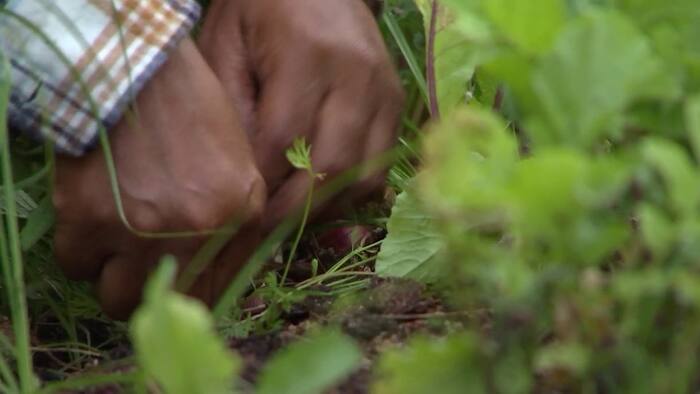
Just after 6 a.m. in Pine Hills, Sharea Harris is already on her hands and knees, pulling radishes from the soil. Her 5-year-old daughter, Jane, isn’t far behind. What started as a pandemic project has grown into something much bigger a small but thriving urban farm, a budding children’s education program and a glimpse into a broader movement quietly spreading across Central Florida backyards.
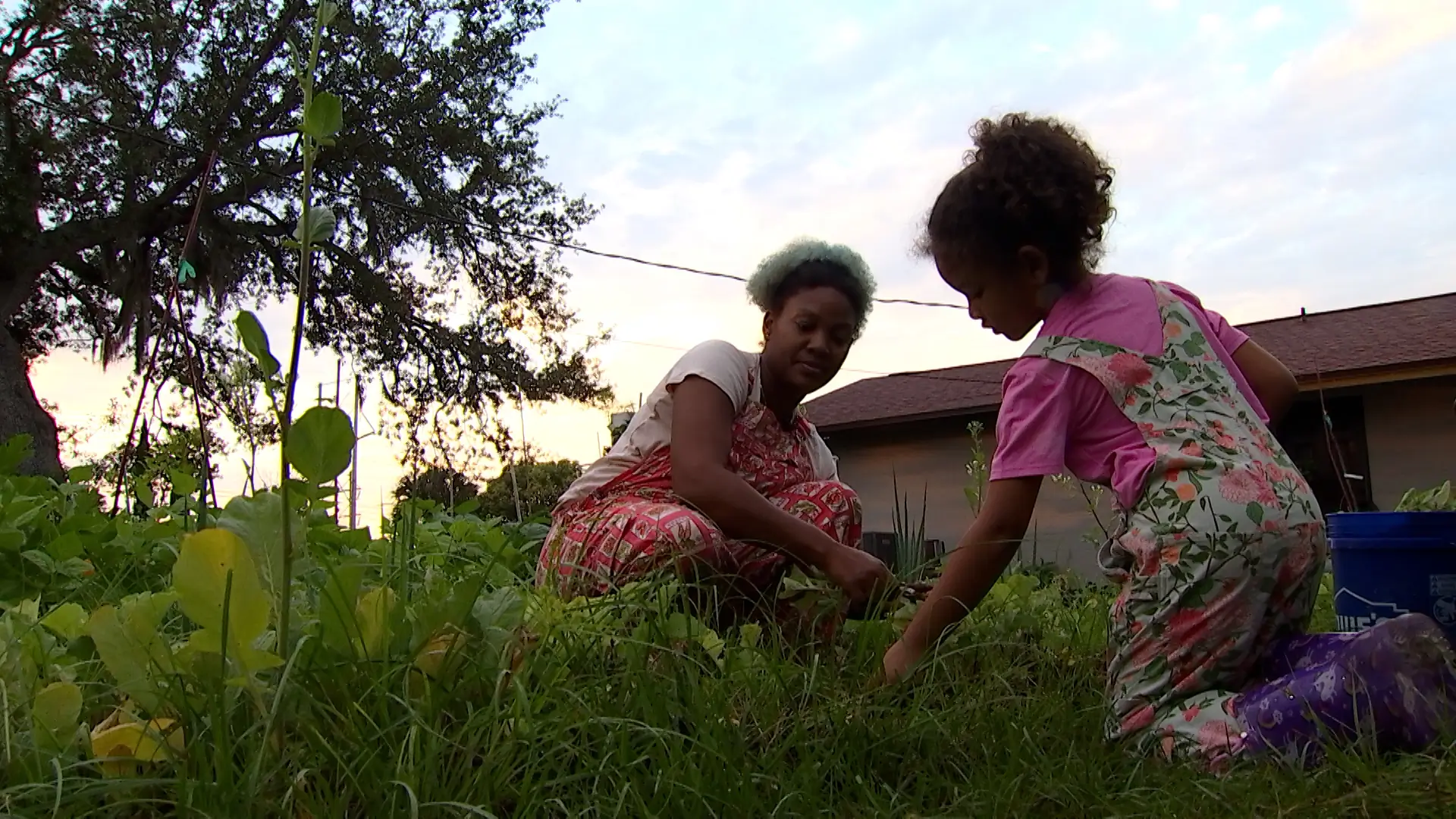 Sharea Harris and her daughter pick vegetables in her backyard micro-farm. (WKMG-TV)
“I just love that,” Harris said, describing the joy she finds in watching her daughter engage with the garden. “Just that spark that we all once had as kids, that everything was exciting and new and fun and adventurous — I feel the same way when I’m out here.”
Harris began gardening in 2020, when she and her family moved to their Pine Hills home. With two young kids and a pandemic-era mandate to stay home, she decided to put her backyard to work.
“We started really small with one of those garden beds over there, and it’s just grown over time,” she said.
What began with a single bed of collard greens, purchased from a big-box store, quickly evolved after Harris discovered the starts she was buying weren’t thriving.
“I go to Home Depot, Lowe’s, Walmart, all those other box stores, and I’m like, spend tons of money on buying these starts. And they weren’t doing that great,” she said. “Farmers don’t go to the big box stores and buy their starts. They grow from seed.”
That realization launched a deep dive into seed varieties, grow zones and climate-appropriate planting. Knowledge she said changed everything.
“All seeds aren’t for all areas,” Harris explained.
Harris isn’t alone. Experts at the University of Florida say the trend she’s a part of has been quietly building for years and has accelerated significantly since the pandemic.
“We are absolutely seeing a trend in urban agriculture, from backyards to commercial operations in the Central Florida area,” said Hannah Eason, regional specialized agent of commercial horticulture for UF/IFAS Extension.
“It’s been happening really since the emergence of a slow food movement well over a decade ago. But then the pandemic back in 2020 really spurred a renewed interest and even a necessity to supplement our local food supply.”
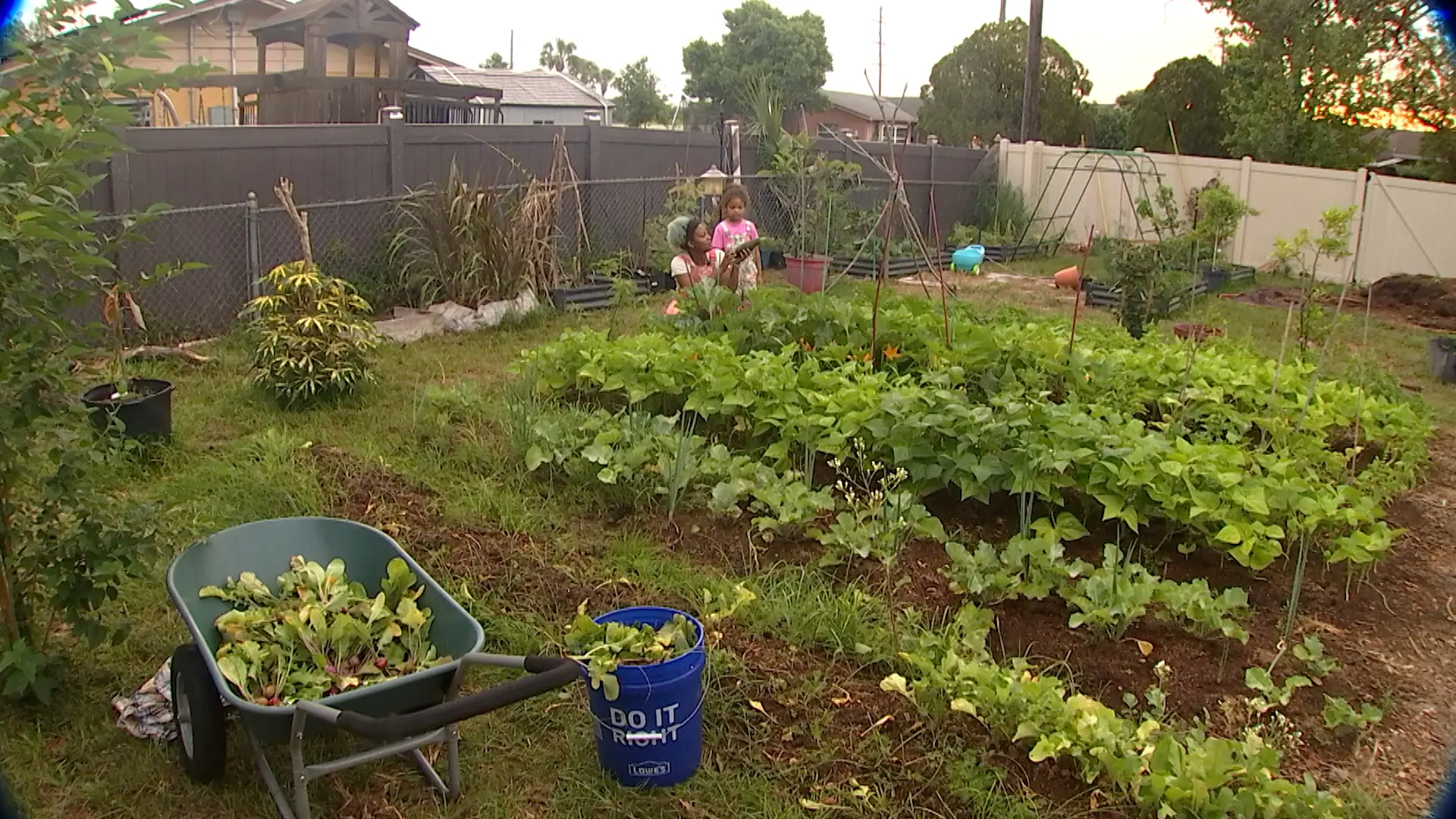 Much of Sharea Harris’s backyard is devoted to gardening. (WKMG-TV)
Eason said the movement has expanded beyond individual backyards, with local organizations like Fleet Farming helping push edible gardens into front yards — particularly in the Audubon Park community.
“Folks do want to know where their food is coming from,” Eason said, “whether they’re growing it themselves, or whether they know the farmer and trust the farmer’s values and practices. And having the harvest a little closer to home does result in peak freshness, peak flavor and usually capturing peak nutrition.”
Harris has taken her education seriously. She apprentices roughly two days a week at Ever Oak Farm, an organic operation off East Colonial Drive in Orlando.
“That’s how I was able to expand to this size in such a short amount of time,” she said. “We’re just learning how to naturally feed plants, just like grass. Dying grass feeds the soil instead of going and buying all these fertilizers and things that we don’t need, because the world’s been feeding itself and growing itself well before we got here.”
Eason echoed that philosophy from a scientific standpoint. She described organic gardening as a process that taps into the biological cycles of the garden — using compost with microbes to nurture the soil, and leaning on natural-origin inputs rather than synthetic ones.
“They’re really sticking to the more natural origin types of products that are usually more circular and working with the ecology of their backyard instead of working with more synthetic inputs,” Eason said.
For Central Floridians curious about starting their own garden, Eason says the timing couldn’t be better. Fall, she said, is actually the ideal season to begin.
“This fall season is the best time to start your vegetable garden here in Central Florida,” Eason said. “As things start to cool down just a touch, that’s when it’s a good time to go ahead and get those tomatoes, some carrots, start your leafy greens and lettuces.”
She added that new gardeners should consider their available time, space and resources before choosing what to grow.
“For some folks, they might be limited to a balcony and there are great options working with hydroponics and buckets,” she said. “Others have an entire backyard or front yard — that opens up a lot more different options.”
Harris has a similar piece of advice: start small and start with herbs.
“Start with an herb, something that you can cut and come again,” she said. “You just keep cutting from it and it just keeps growing. I would not start with tomatoes, because it’s not very easy to grow,” she said with a laugh that expressed her experience.
Harris recently turned her passion into something official. She Grows Collective became a registered business. The nursery sells plant starts, with proceeds going toward a children’s education program called Little Sprouts — a hands-on grow program for kids ages 3 to about 12.
“Most kids have no idea where their food comes from other than the grocery store, which is common,” Harris said. “But when you teach them the right way and where things come from and they can do it themselves, they are more eager.”
Harris said she currently teaches family and friends — many from her former homeschool community — and hopes to open classes to the broader public within the coming months, with groups of five to seven children at a time.
Her five-year goal is bigger still.
“Five-year goal is obviously acquire more land so that we can take this on a larger scale — so we can actually have like a gardening school, so it can be like obviously separate from the house,” she said. “We’ll have our house garden and then we’ll have a learning farm where families can come out.”
Both Harris and Eason point to something beyond produce that draws people to urban farming: the mental and emotional benefits of working the land.
“There’s actual science-based stress reduction benefits and cortisol reductions from folks actually working in the garden,” Eason said. “So in addition to harvesting a real yield that you can turn into a tasty meal, there’s actual stress reduction benefits.”
Studies suggest gardeners consume up to 10 to 20 percent more fresh produce than non-gardeners, according to Eason.
For Harris, it’s also changed how she thinks about food.
“It encourages us to expand and try new things,” she said. “Everything that we eat in the grocery store isn’t relative to the season that we are currently in. It’s teaching us to eat the seasons more.”
Eason said UF/IFAS Extension has taken notice, adding new faculty focused on urban and alternative agriculture research. She noted that produce consumed locally avoids the long-haul food supply chain — with some food traveling well over 1,000 miles to reach Florida shelves.
She also pointed to the rise of “agrihoods”, new residential developments designed with agriculture built in, as a sign the trend has moved beyond novelty.
“I think that helps us see that the trend is really more than just a trend and something that’s here to stay,” Eason said.
For Harris, the movement starts neighbor by neighbor.
“If every other person in the neighborhood was growing something, more like a monoculture, one person grew tomatoes, one person grew bell peppers — we could come together as a community and essentially a farmers market within our own neighborhood,” she said. “We have the space, and why not make it beautiful and edible?”
Resources for aspiring gardeners can be found through local UF/IFAS Extension offices, including the Florida Vegetable Gardening Guide online.
Copyright 2026 by WKMG ClickOrlando – All rights reserved.