
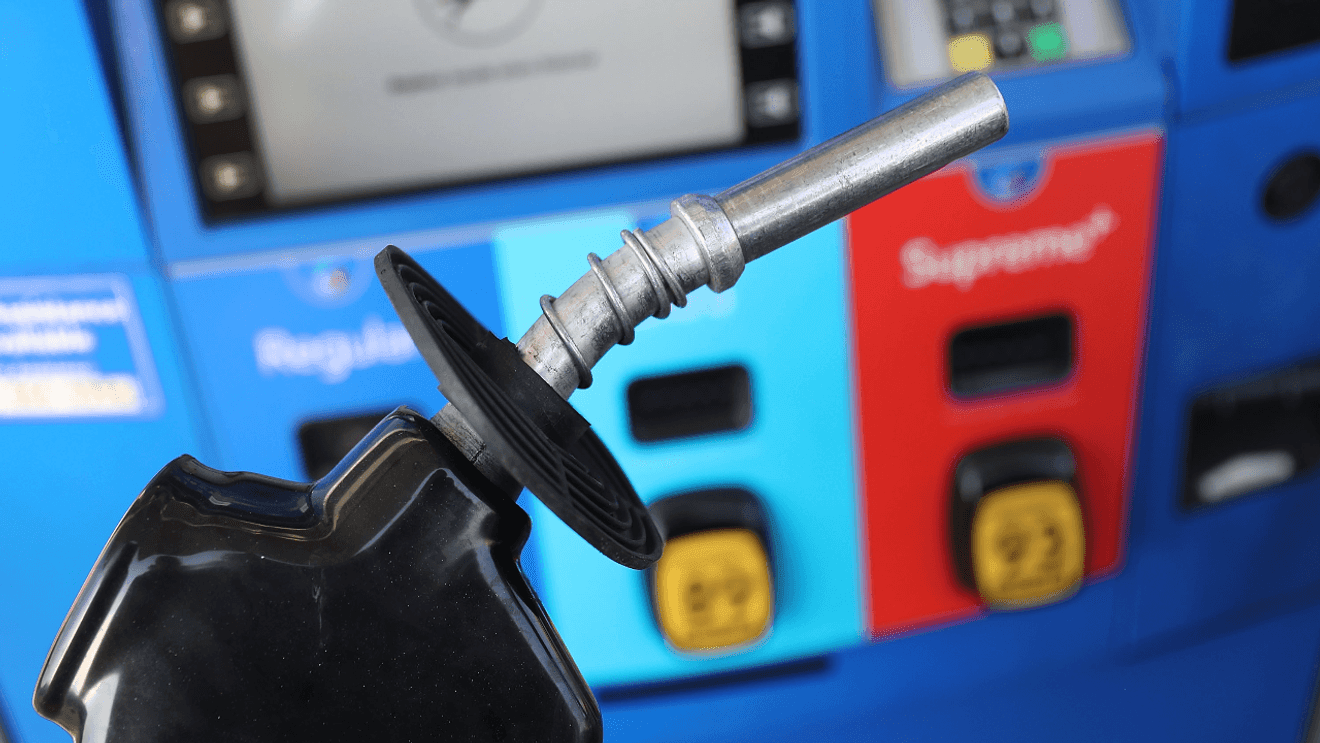
WEST PALM BEACH, Fla. (CBS12) — Hurricane Isaias had not yet made landfall Friday morning, but the powerful storm was already disrupting a major source of U.S. oil — creating the potential for another factor to affect fuel prices in South Florida.
The Marine Minerals Administration, the federal agency overseeing offshore energy operations, said nearly 63% of current daily oil production in the Gulf of America had been shut in as operators moved workers and equipment out of the storm’s path. That amounted to 1,282,879 barrels per day, according to the agency’s latest report. It also reported that 121 offshore platforms and five rigs had been evacuated.
The shutdown followed a sharp increase from Wednesday, when about 25% of Gulf oil production was offline. The Gulf region accounts for a significant share of U.S. oil production, and the ultimate impact on drivers will depend not only on how quickly offshore production resumes, but also on whether refineries, ports and fuel-distribution infrastructure sustain disruptions.
Isaias strengthened into a Category 3 hurricane Friday with sustained winds of 120 mph. The National Hurricane Center forecast landfall late Friday along the Alabama-Florida line, with dangerous storm surge, heavy rain, high winds and possible tornadoes across parts of the Panhandle, Alabama and Mississippi.
See also: Hurricane Isaias strengthens into major Category 3 storm near Florida Panhandle
South Florida drivers were already paying elevated prices before the storm. AAA’s latest available metro averages showed regular gasoline at about $4.33 a gallon in the West Palm Beach-Boca Raton area and about $4.19 in Port St. Lucie. Diesel averaged about $6.02 in the West Palm Beach-Boca Raton market and $5.93 in Port St. Lucie — roughly $2.39 and $2.31 higher, respectively, than a year earlier.
Statewide, AAA listed Florida’s average price for regular gas at $4.15 Friday and diesel at $5.90. That compares with $2.98 for regular and $3.63 for diesel one year earlier.
AAA said gas prices were already at record highs for this point in the fall, with crude oil trading above $90 a barrel. The organization said Isaias could become another factor affecting fuel prices if oil production or refineries in the region are damaged or forced offline.
For now, the offshore shutdown does not guarantee an immediate increase at local pumps. Retail prices typically reflect wholesale fuel costs, refinery operations, supply routes and market expectations — and can move after a storm depending on the extent and duration of disruptions.