
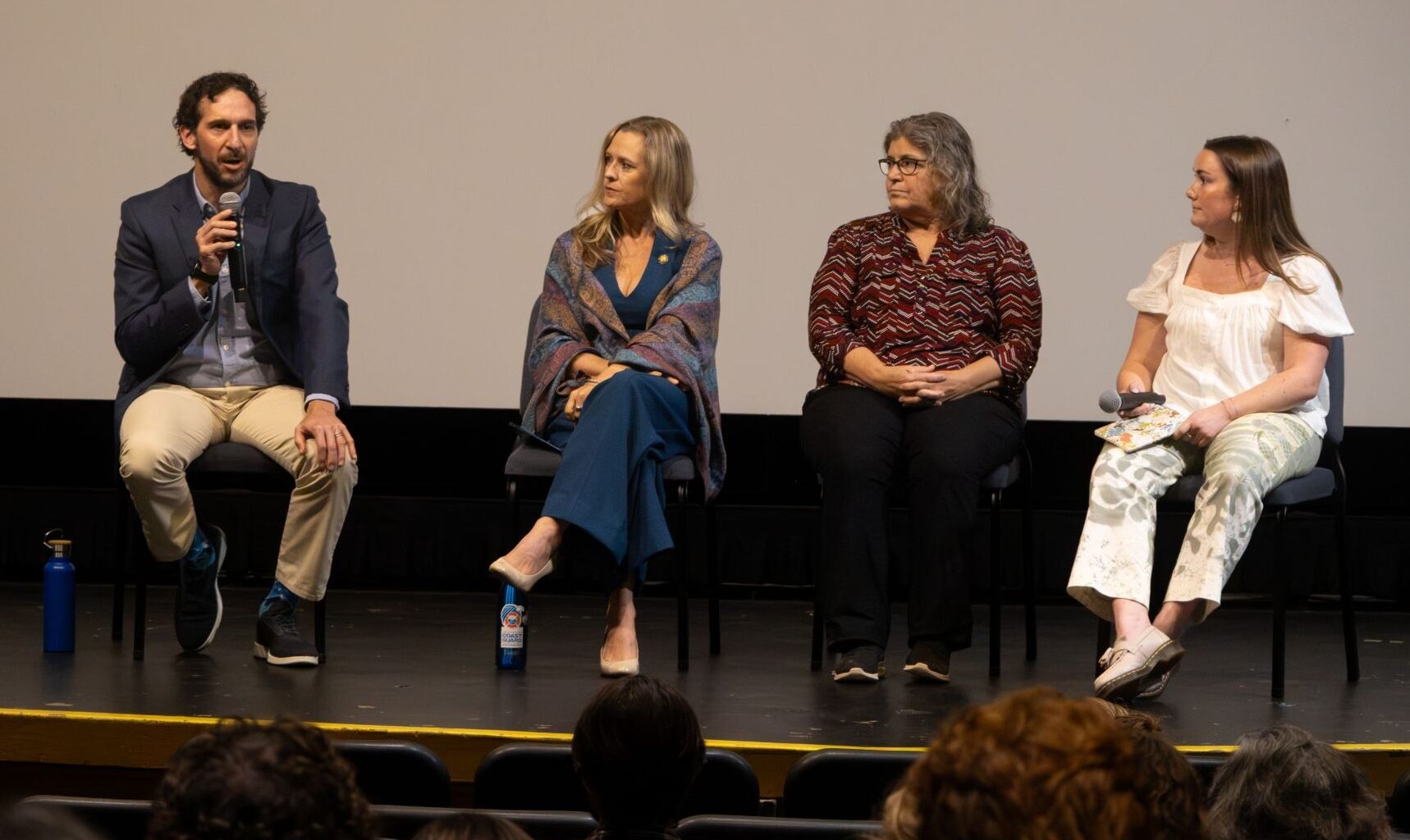
Cross suggests supporting local businesses that align with your values—and refusing to spend your money at businesses that don’t. For example, if a coffee shop won’t fill your reusable cup, you can stop going there, she says. On the other hand, you can spend your money at stores that make an effort to use reusable products.
“Your dollars are a way to influence policy,” Cross says.
McKenna, who majored in environmental studies and animal studies and minored in political science at Eckerd, has been in the environmental space for a decade. She grew up in Southern California and was long passionate about the ocean and whales. However, she attended an arts high school and dance was her focus. After breaking her foot twice in one year, she looked to other things she was passionate about that she could do for the rest of her life.
At Eckerd, McKenna helped launch Remora, an app designed to help you track your use and refusal of single-use plastics. This helps individuals reimagine their relationship with plastic use, as well as contribute to data that helps us understand which plastics are most easily refused, McKenna says.
Immediately after the event, Eden Smith, a senior anthropology major from Northfield, Vermont downloaded the Remora app.