
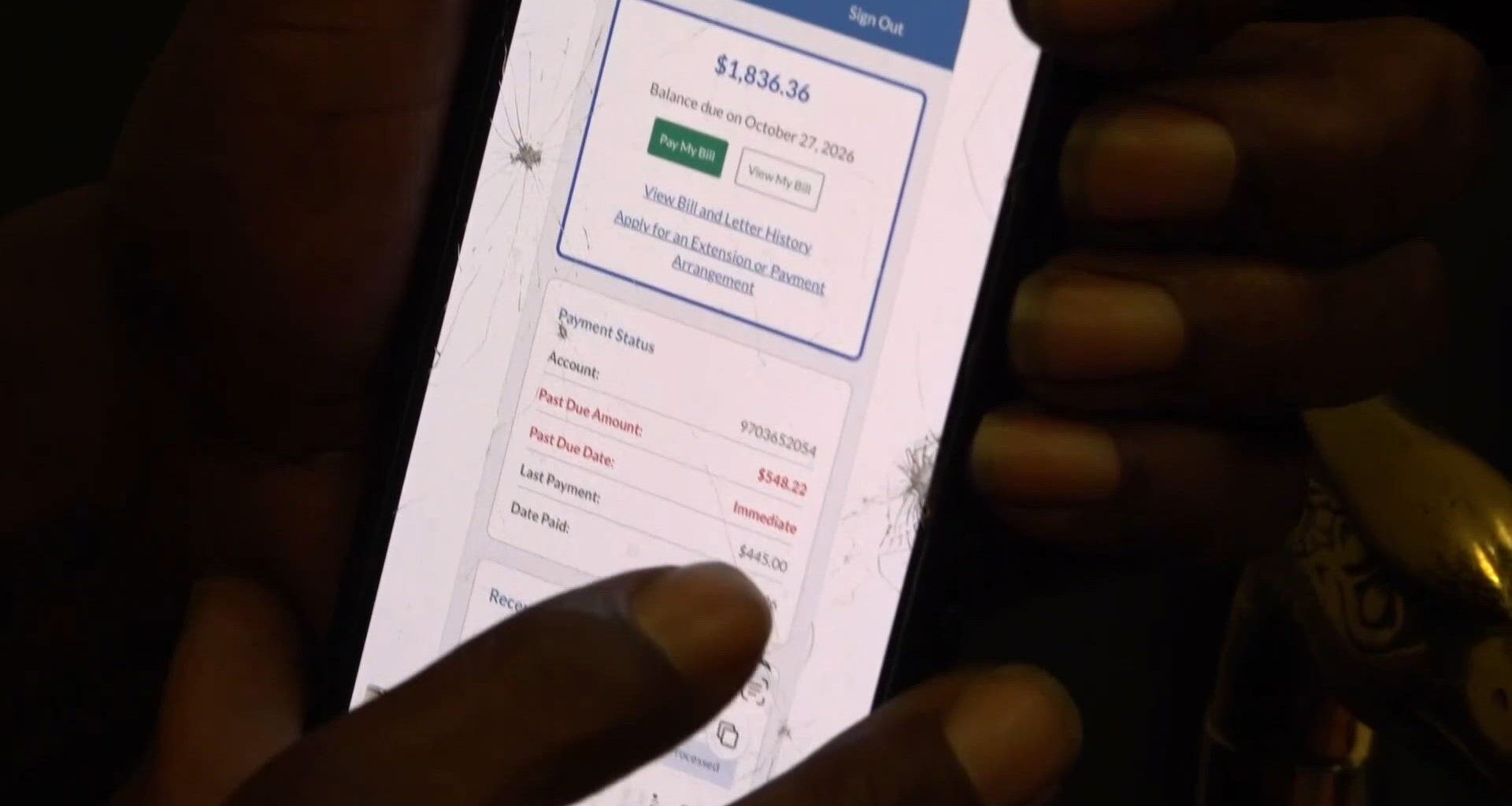
After struggling to get help, single father and disabled veteran Wilshan Tiller says he brought his high utility bill to City Hall for answers: “Who can pay that?”
JACKSONVILLE, Fla. — Some residents struggling with high JEA bills brought their frustration to City Hall Thursday, urging utility leaders and Jacksonville City Council members to address costs they say they cannot afford.
Council Member Jimmy Peluso proposed $2.3 million for a two-year effort: $2 million for utility assistance and another $300,000 for staffing and administrative support to help get that money to customers. The funding has not yet been considered by the full council.

This story continues below.
For Wilshan Tiller, a single father and disabled veteran who has lived in Jacksonville for 26 years, the discussion was personal. He showed First Coast News a JEA bill totaling about $1,800, including more than $500 past due.
“This is what they’re telling me I need now. Who can, who can pay that? Who can do that?” Tiller said.
Tiller said he could not get help through United Way. He also contacted the mayor, City Council members and JEA board members before bringing his concerns to Thursday’s meeting.
“I got three kids at home, okay. It’s hard,” he told officials.
His frustration reflects a broader concern. More than 1,000 people have messaged First Coast News reporter Sydney Dishon about their JEA bills, saying they do not just need help paying them, they want lower bills.
Council members seek more aid and faster access
Peluso and City Council Member Reggie Gaffney Jr. led Thursday’s meeting, which brought together residents, JEA representatives and organizations that help households pay utility bills.
The discussion focused on finding more money for assistance and making that help easier to access. Peluso said he wants to use city reserves and needs support from 13 members of the 19-member council to do so.
“Let’s just make sure that we have access to more funds and make sure that we have a more readily available system so that people aren’t waiting one month, two months, three months at a time before they get a phone call,” Peluso said.
But organizations providing that help said additional money for bills would not solve the problem by itself. They also need staff to answer calls, screen applicants and process assistance.
Coretta Hill, United Way’s Chief Operating Officer, told council members the 211 service receives an average of about 500 calls on Tuesdays, with seven people handling them. Wait times can average 30 to 45 minutes, she said.
Hill said United Way could not successfully manage the additional call volume associated with expanded funding without more resources. A Catholic Charities representative similarly said funding would be needed both for 211 and for case managers at organizations distributing assistance.
JEA points to rising costs and aging infrastructure
JEA’s latest rate increase took effect Oct. 1, but residents said they were already struggling with high bills.
JEA Chief Financial Officer Ted Phillips told council members the utility faces rising operating costs and expenses associated with replacing an aging natural gas power plant.
Phillips said a new plant costing about $1.5 billion will replace one that went into service in 1977 and has experienced reliability problems. JEA must make debt payments as it borrows money for construction, he said.
“We should have already replaced that plant,” Phillips said. “And I know the timing is not good, but when is the timing good?”
We asked after the meeting whether rates could decrease. JEA spokesperson Karen McAllister pointed to upcoming budget discussions.
“Well, our board will start considering our fiscal year 2028 budget next year, so those discussions will start in early 2027,” McAllister said.
McAllister said customers struggling to pay should contact JEA before they face disconnection notices. The utility can review bills, discuss ways to conserve and explore payment arrangements and assistance through local organizations, she said.
“Call us or come to JEA headquarters,” McAllister said. “Before it’s too late, before you’re getting notices about disconnection, and we can find ways to help you.”
You can contact JEA here.
What happens next
Council members plan to meet again next week to work out details before filing legislation. A date and time have not been set, and the proposed funding would still require council approval.
Tiller said he intends to keep pressing officials.
“As long as they keep saying that JEA is a community-based company, we’ll be right here until we get it right, until they start treating the community like they’re supposed to,” he said.