
President Donald Trump’s home state is looking like a battleground again with less than four weeks until Election Day.
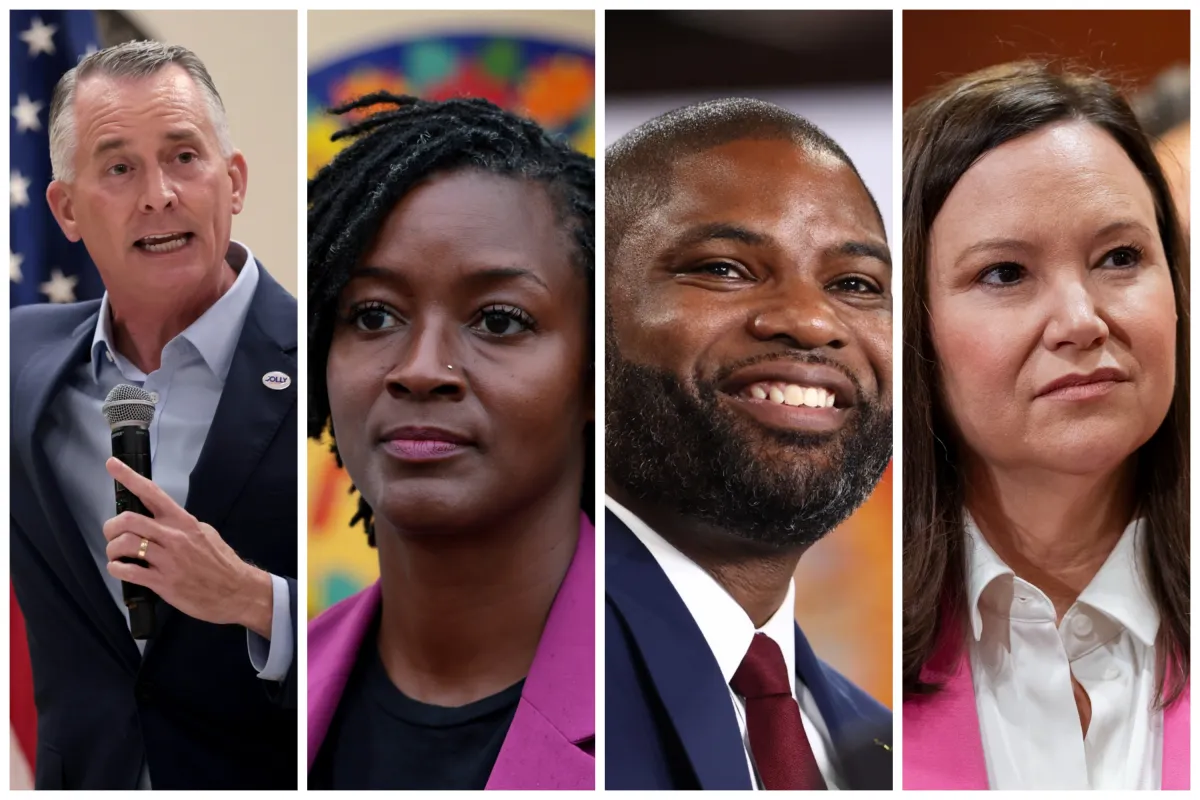
In Florida, which Trump carried by about 13 points in 2024 and Republicans have treated as safe for most of a decade, a St. Pete Polls survey found Republican Florida Representative Byron Donalds and Democrat David Jolly, a former Republican congressman, tied at 45 percent in the race for governor.
Donalds led by a tenth of a point before rounding. Seven percent were undecided, and 4 percent picked someone else.
Read More on Politics
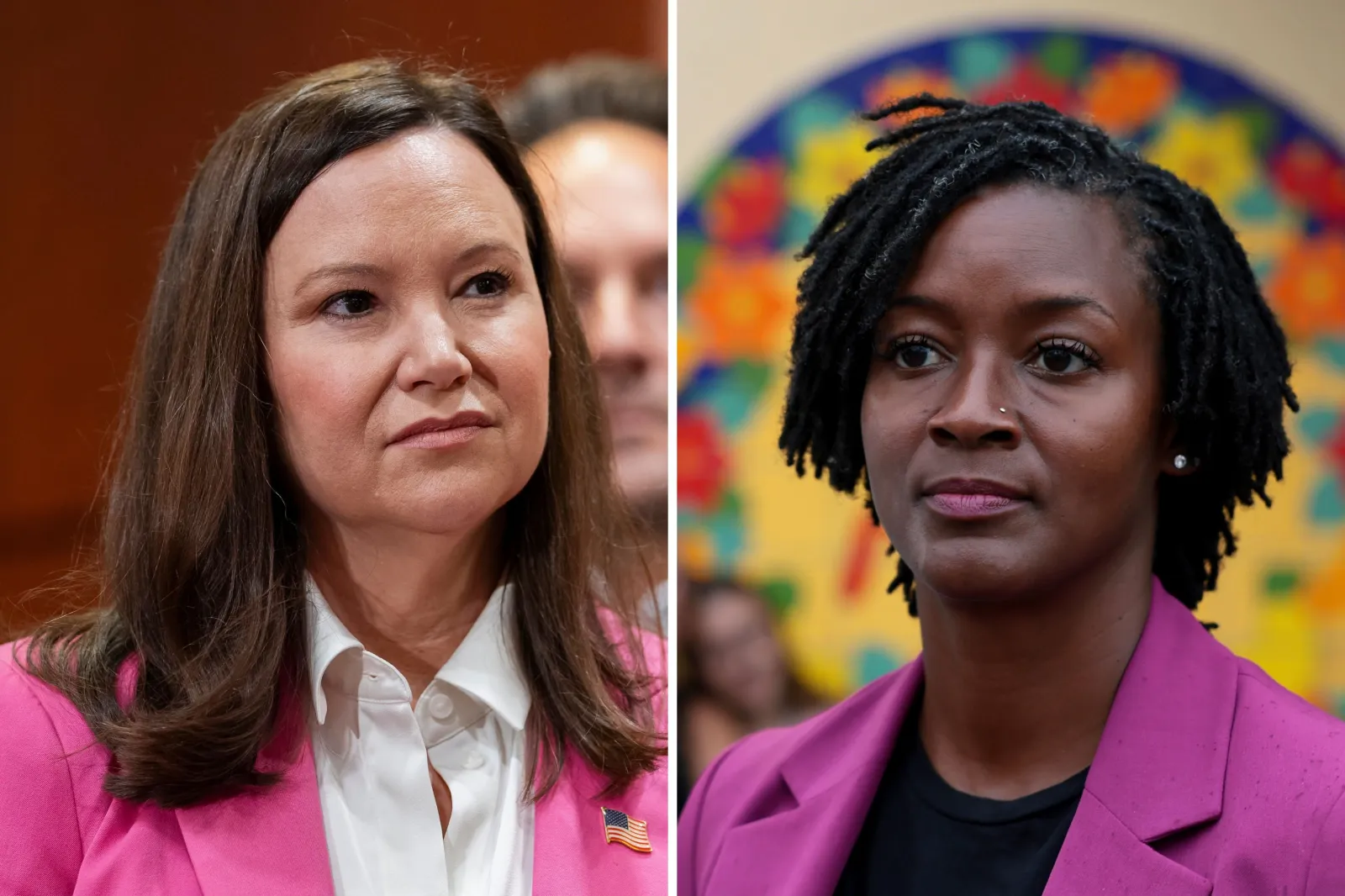
The same poll showed Republican U.S. Senator Ashley Moody ahead of Democratic state Representative Angie Nixon, 47 percent to 45 percent, within the poll’s margin of error of plus or minus 3.4 percentage points. Six percent were undecided.
Newsweek reached out to the Donalds, Jolly, Moody and Nixon campaigns for comment.
Responding to the survey, Donalds’ campaign expressed confidence that the congressman will prevail in November and portrayed Jolly as an unconvincing challenger.
“Byron Donalds will be the next Governor of Florida because he has the plan to lower costs, continue the great work of Governor DeSantis, and defend the Florida Dream,” Gates McGavick, the campaign’s communication director, said.
“David Jolly is a lobbyist with zero substance who will lose in November.”
Jolly Gains With Independents and Younger Voters
The governor’s race has barely moved in St. Pete Polls’ surveys, but the undecided pool is shrinking. Donalds and Jolly each gained about a point since the pollster’s mid-September survey, which had Donalds ahead 44 percent to 43 percent.
Most of Jolly’s edge comes from voters registered outside the two major parties, who favor him 49 percent to 33 percent. In September his margin with them was 12 points. A Mason-Dixon poll for NBC 6 and Telemundo put him ahead of independents, 47 percent to 28 percent.
Crossover voting tilts his way too, if only slightly: 15 percent of Republicans say they’ll back Jolly, against 9 percent of Democrats who’d go for Donalds. Both men keep about four in five of their own party’s voters.
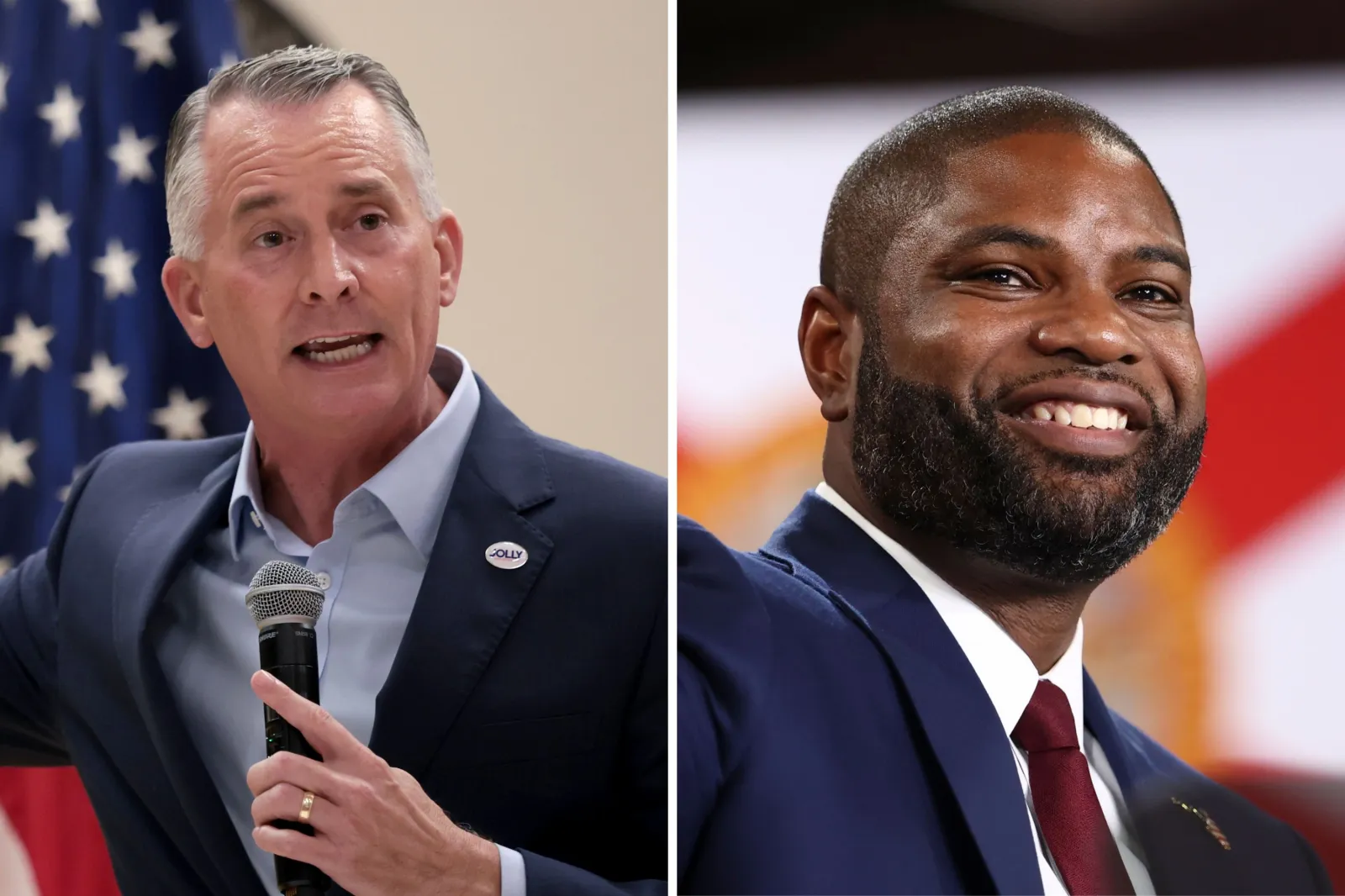
With younger voters, Jolly’s numbers are lopsided. He wins 62 percent of those under 30 to Donalds’ 17 percent and leads 54 percent to 35 percent among voters 30 to 49. Seniors break hard the other way, and they are the voters most likely to turn out in a midterm. Donalds carries those 70 and older 64 percent to 30 percent.
Hispanic voters, who swung hard toward Republicans in Florida in 2024, favor Jolly 54 percent to 38 percent here. Mason-Dixon had Donalds winning them 48 percent to 43 percent. Black voters back Jolly 65 percent to 14 percent, and white voters favor Donalds 53 percent to 37 percent.
Regionally, Jolly leads in the Tampa media market, his home base, 47 percent to 45 percent, as well as in Orlando and Miami. Donalds leads West Palm Beach, Jacksonville and his own Fort Myers market.
The survey of 836 likely voters was conducted October 5-7 and was weighted to match Florida’s active voter population, in which Republicans hold a 12-point registration edge over Democrats.
Other Polls Still Favor Donalds
The Mason-Dixon poll, conducted September 28 to October 1 among 625 likely voters, had Donalds ahead 48 percent to 41 percent. A Targoz Market Research survey for the James Madison Institute, a conservative think tank, put him up 52 percent to 42 percent among 849 likely voters.
A YouGov survey of 3,813 likely voters fielded September 28 to October 5 found Donalds ahead 47 percent to 45 percent. Change Research, a Democratic firm polling for Freedom Project USA, had Jolly leading 48 percent to 46 percent.
Donalds has not dropped below 44 percent in a public poll since the August 18 primary. Jolly has ranged between 39 percent and 48 percent.
Cook Political Report, Sabato’s Crystal Ball and Inside Elections all still rate the race “Lean Republican.” Decision Desk HQ is the outlier and calls it a toss-up.
Then there is the money gap. Donalds has raised more than $135 million between his campaign and his political committee through September 30, roughly eight times Jolly’s total. Trump and Florida Governor Ron DeSantis, who is term-limited, have both endorsed him, and Trump has promised two rallies with Donalds before Election Day.
Jolly served in Congress as a Republican from the Tampa Bay area before leaving the party during Trump’s first term. He is running an ad calling Donalds a liar on taxes, offshore drilling and socialism, and the two still haven’t agreed to debate.
Senate Race Stays Inside the Margin
Moody, whom DeSantis appointed in early 2025 to fill the seat Marco Rubio vacated to become secretary of state, is running to serve the final two years of Rubio’s term. Nixon, a state representative from Jacksonville, won the Democratic nomination on August 18 after defeating retired Army Lieutenant Colonel Alexander Vindman.
In the St. Pete Polls survey, Moody holds 82 percent of Republicans and Nixon 83 percent of Democrats. Independents favor Nixon 49 percent to 36 percent.
Nixon, who has been endorsed by independent Vermont Senator Bernie Sanders, leads among voters under 30, 66 percent to 24 percent, and among those 30 to 49. Moody leads seniors 66 percent to 30 percent. Once again, the poll shows men leaning Democratic and women leaning Republican, reversing the usual gender gap. In Mason-Dixon’s survey, men backed Moody 57 percent to 31 percent.
Elsewhere, Moody’s lead looks safer. Mason-Dixon had her ahead 50 percent to 40 percent, with independent Neil Gillespie at 2 percent. A September Quantus Insights poll had her up 50 percent to 43 percent.
Moody’s campaign has leaned on close polls in fundraising emails, including St. Pete Polls’ mid-September survey, which tied the race at 45 percent.
A Democrat has not won a U.S. Senate race in Florida since Bill Nelson in 2012.
Real Shift or Blue Mirage?
Democrats have reason to be skeptical of good Florida numbers. Polls in the state have underestimated Republicans for most of the past decade.
In 2018, Quinnipiac’s final poll had Democrat Andrew Gillum leading DeSantis by 7 points the day before the election. DeSantis won by less than half a point. Two years later, several major pollsters showed former President Joe Biden ahead in Florida by 4 to 6 points; Trump carried the state by more than 3.
The 2022 cycle was worse. Rubio led Democrat Val Demings by about 8 points on average in October polling, according to an analysis by election analyst Jim Ellis, then won by more than 16. DeSantis won reelection by 19 points, and Trump carried the state by about 13 points in 2024.
Meanwhile, Republicans have run up their lead on the voter rolls to more than 1.5 million active voters, 5.65 million to 4.1 million as of August 31. Democrats were still ahead in registration as recently as 2018.
“Florida has had an influx of new voters since COVID, making modeling of the voting universe difficult. They tend to trend GOP,” GOP strategist Alex Patton told Newsweek. “A lot of Democratic support comes from more unreliable voters, young, minorities. Both things make Florida a little more difficult to model.”
 Democrats Have Already Flipped Trump Territory
This year, though, Democrats have more than polls to point to.
In March, first-time candidate Emily Gregory flipped Florida House District 87, a Palm Beach County seat that includes Trump’s Mar-a-Lago estate. Trump carried the district by 11 points in 2024, and the previous Republican representative won it by 19. Trump and Donalds both backed Republican Jon Maples in the race.
The Democratic Legislative Campaign Committee has pointed to two special-election wins in Florida this year as evidence of momentum and has named 17 state legislative target races in the state.
Even a loss last year carried a warning for Republicans. In a 2025 special election for Florida’s 6th Congressional District, Democrat Josh Weil ran 16 points ahead of his party’s November 2024 performance, though Republican Randy Fine kept the seat.
The question for November is whether that energy carries into a midterm electorate, where older voters, the group most loyal to Donalds and Moody in nearly every poll, make up a larger share of the vote.
“With the president’s numbers being such a drag on the GOP, combined with inflationary pressure and the war…strange things could happen come November,” Patton said.
House Republicans Watch Their Own Seats
DeSantis signed a new congressional map in May meant to pad the GOP’s numbers. It reworked 21 of the state’s 28 districts and was drawn to favor Republicans in 24 of them, up from 20, and the Florida Supreme Court let it stand for this year.
The National Republican Congressional Committee is targeting four Democratic-held or open seats under the new lines, including Florida Representative Kathy Castor’s Tampa district and Representative Darren Soto’s Orlando-area seat.
Committee spokesperson Maureen O’Toole said in July that “Florida is ground zero for Republicans to grow our House majority in November.”
Before the map passed, some Florida Republicans in Congress cautioned that an aggressive redraw could thin out GOP margins and backfire in a bad year for the party.
In Miami, Florida Representative María Elvira Salazar faces Democrat Eliott Rodriguez, a former television news anchor, in the 27th District. The Democratic Congressional Campaign Committee has had her on its target list since the start of the cycle.
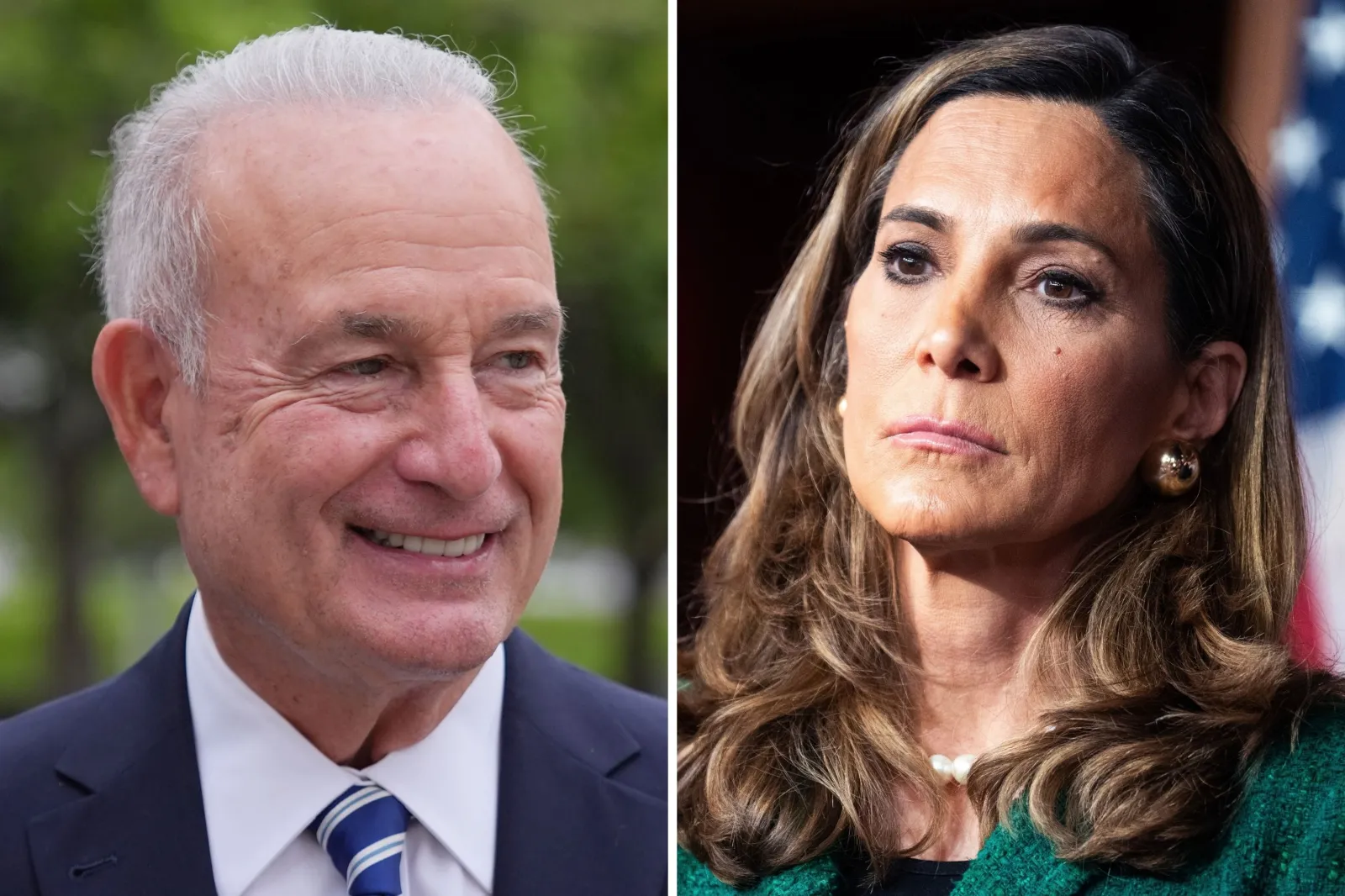
“The polling shows I can beat Maria Elvira Salazar, so I said, ‘Yeah, I’ll do it.’ Here I am, and it’s going well. I think we’re going to win,” Rodriguez told Newsweek in an October 1 interview.
Democrats are also targeting Florida Representative Anna Paulina Luna’s 13th District in the St. Petersburg area, and the 7th District north of Orlando. There, Representative Cory Mills lost the Republican primary in August to former television anchor Ryan Elijah amid a House Ethics Committee investigation. Elijah now faces Democrat Bale Dalton, and the Cook Political Report moved the seat from “Solid Republican” to “Likely Republican.”
After Gregory’s special-election win in March, House Minority Leader Hakeem Jeffries told Punchbowl News that Democrats saw “at least a half a dozen Florida Republicans” as vulnerable.
What Happens Next
Republicans still hold most of the structural cards. Their registration edge tops 1.5 million voters, and Donalds can outspend Jolly roughly 8-to-1 on the air. If Florida’s polling history repeats, their voters may also be undercounted again.
Trump has promised to hold two rallies with Donalds before Election Day. Donalds’ campaign released two ads this week featuring endorsements from Trump and DeSantis.
Neither the governor’s race nor the Senate race has a scheduled debate. Moody has declined to debate Nixon, and Donalds and Jolly have not agreed to one.
Florida law requires counties to begin early voting by October 24, and many start earlier. Election Day is November 3.
Contact Newsweek editors on this story: Jason Lemon and Sam Wilson.