
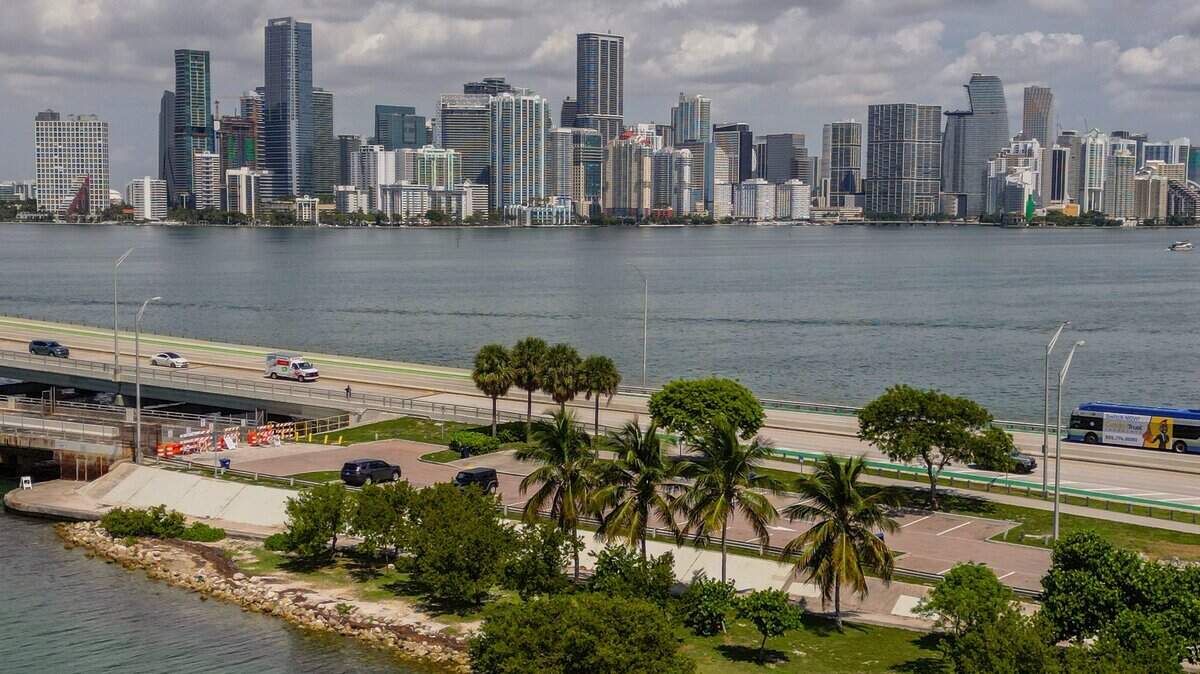
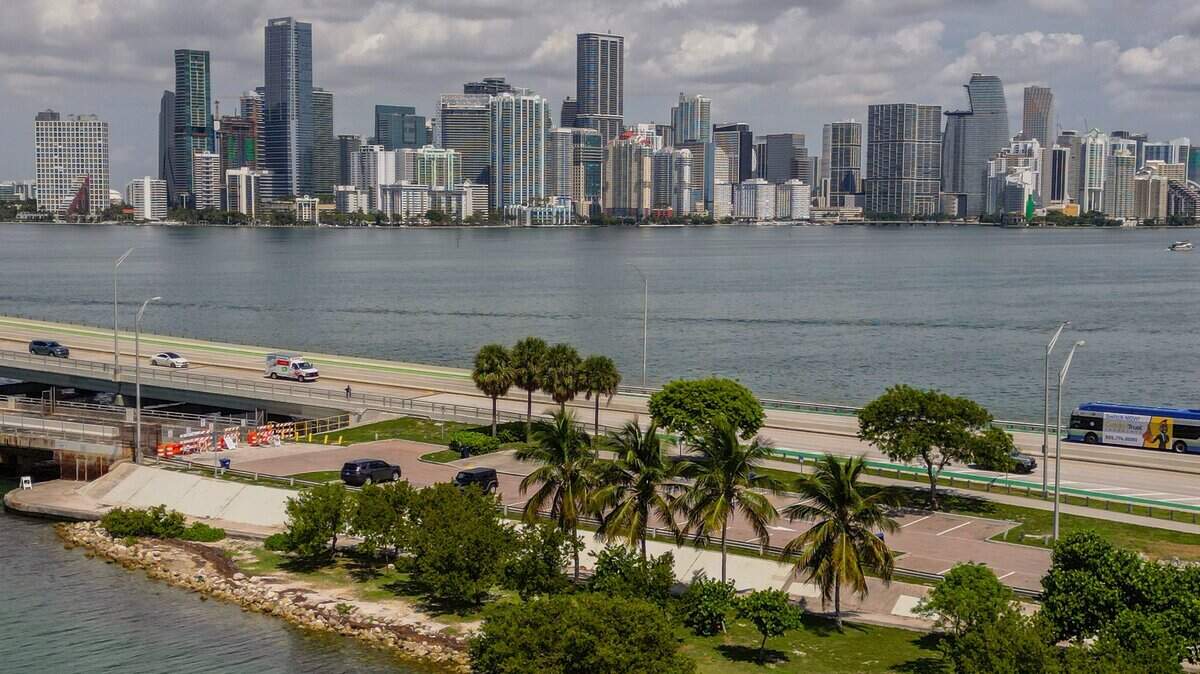
The Miami skyline from the Rickenbacker Causeway.
Pedro Portal
pportal@miamiherald.com
When Americans talk about the global economy, we tend to look to Europe or Asia for the next source of investment and growth.
Yet now, more than ever, we should look south and recognize the competitive advantage we already have at home to reach markets across the Americas, right here in Miami.
The U.S. Hispanic population has now reached 70 million. Its economic output was $4.4 trillion in 2024, enough to rank as the world’s fourth-largest economy if measured independently. Furthermore, the data shows that Hispanic ties to Ibero-America, including Spain and Latin America, connect us to over 680 million people across 22 nations with a combined GDP of nearly $9 trillion.
The question now is how much more American businesses could accomplish by drawing on this community’s connections to other markets?
Hispanic workers, entrepreneurs and executives bring bicultural experience and deep relationships across Latin America, the Caribbean and Spain. Their ability to navigate these cultures and markets gives companies a strategic advantage, helping them identify the right partners, understand customers and build the trust that international expansion requires.
Miami shows what that advantage looks like in practice.
Nearly seven in 10 Miami-Dade residents are Hispanic, and roughly two-thirds of residents speak Spanish at home, creating a distinctly bilingual business environment shaped by a far-reaching diaspora network. That cultural fluency carries economic weight: Latino-owned businesses accounted for more than 55% of Florida’s net new employer firms between 2017 and 2023.
In Miami, that entrepreneurial energy sits at the center of a major corridor for international commerce. Latin America and the Caribbean account for approximately 48% of PortMiami’s trade. Its cruise and cargo operations supported roughly 340,000 jobs and generated $61.4 billion in annual economic activity.
But Miami’s advantage extends beyond what moves through its ports and airports. Trade is built on relationships and knowing where opportunity exists. Miami businesses put those relationships to work.
This influence extends across sectors in the city. Hispanic-led marketing agencies like Republica Havas and Chemistry Cultura show how cross-cultural fluency creates business value for mainstream global brands. Marriott International’s Caribbean and Latin America operations and Four Seasons’ corporate office in Miami have positioned the city as a hub for global hospitality. Multilateral organizations like the Inter-American Development Bank and financial institutions including Bank of America and BlackRock are also expanding their Miami presence to deepen ties between Latin America and international capital markets.
Hispanic cultural fluency is strategic capital, and Miami demonstrates how it can support American businesses’ global ambitions.
That argument is at the heart of our white paper “Nearshoring, Hispanic Leadership, and U.S. Global Competitiveness.” The U.S. Hispanic workforce, with its bicultural experience and ties to Latin America, offers a human capital advantage that can strengthen regional integration and competitiveness.
These ideas will come alive on stage at Aspen Conexión’s sixth annual Advancing Economic Mobility Summit on October 18-19, developed in collaboration with McKinsey & Company. Miami offers a fitting backdrop for this year’s theme, Community, Culture and Cross-Border Commerce.
The summit creates a platform where Miami leaders across sectors can connect with people and perspectives beyond their usual orbit. A Latin American ambassador in conversation with a leading fintech entrepreneur. A business executive exchanging ideas with a fashion designer or cultural leader. These unlikely connections can open avenues for collaboration and sharpen our understanding of where Hispanic leadership can unlock greater hemispheric opportunities.
That idea is central to our work at Aspen Conexión: deepening understanding of the Hispanic community’s impact on economic growth, innovation and culture. Bringing together perspectives from trade and technology to finance, energy and the creative industries, our program makes clear what companies and institutions collectively stand to gain by partnering with and investing in this community.
For American companies, the implication is practical. Hispanic expertise belongs in senior decision-making about international growth. Latino-owned businesses need access to capital and partnerships that allow them to compete beyond their local markets. Bilingual workforce development can help more people turn cultural knowledge into professional opportunity.
As American companies shift their operations to Miami, they should invest in the multi-cultural talent that makes its global reach possible. Miami offers a lesson for U.S. competitiveness: our connections to other markets are only as strong as our willingness to invest in the people who understand them.
Pilar Frank-O’Leary is executive director of Aspen Conexión at the Aspen Institute.